May 30, 2026 Written by 

The Living One

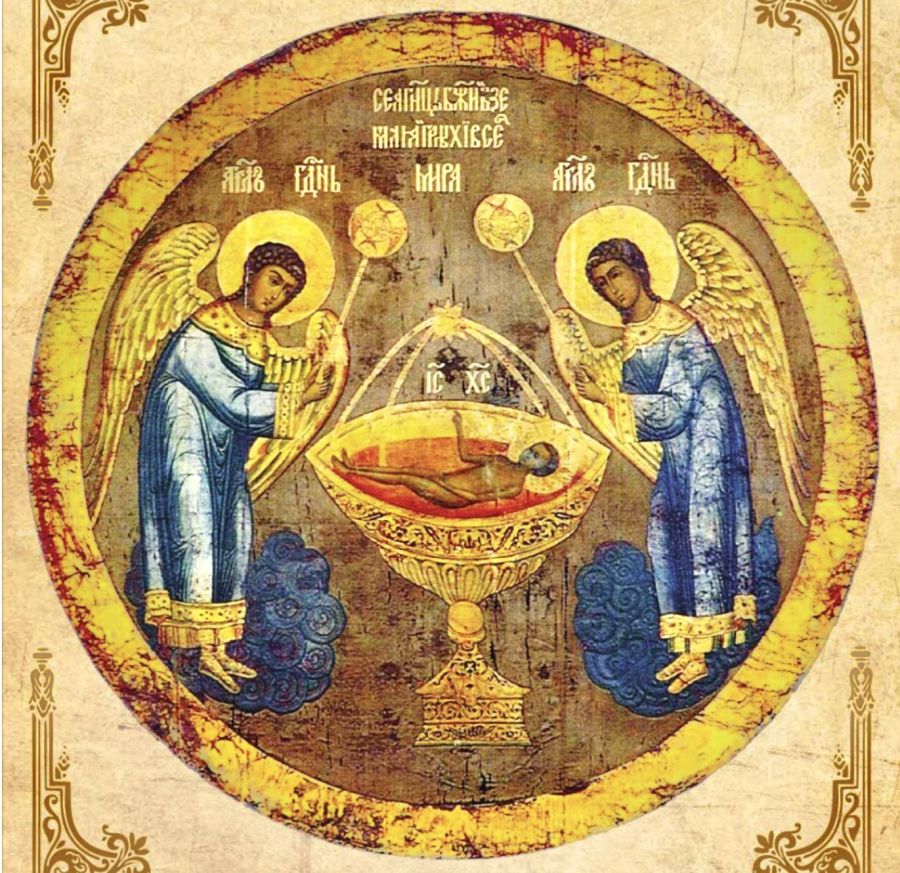
On this solemn Sunday of Corpus Christi, the liturgy presents a passage from John in which Jesus, addressing the Jews, says:

«I am the living bread that came down from heaven. Whoever eats this bread will live for ever, and the bread that I will give is my flesh for the life of the world» (Jn 6:51).


Francis was enamoured of France not because his mother, Monna Pica, came from those lands, but because of the flourishing of Eucharistic devotion, of which he had been informed by James of Vitry, a staunch advocate.

When he went into the woods or was in a particularly cheerful mood, he often sang the Lauds in French.

The Sources inform us of his deep devotion to the Body of Christ.

In Celano’s Second Life we read:

“He burned with love in every fibre of his being for the sacrament of the Lord’s Body, overcome with wonder beyond measure at such benevolent condescension and most generous charity.

He considered it a grave sign of contempt not to receive the Eucharist, even just once, if time permitted.

He received Communion frequently and with such devotion that he inspired devotion in others as well.

Indeed, being filled with reverence for this venerable sacrament, he offered the sacrifice of all his limbs, and when he received the slain Lamb, he offered up his spirit in that fire which always burned upon the altar of his heart.

For this reason he loved France, a land devoted to the Body of the Lord, and wished to die there because of the veneration he had for the sacred mysteries.

One day he wished to send the friars out into the world with precious ciboria, so that they might place the price of redemption in the most worthy place possible, wherever they saw it kept with little decorum” (FF 789).

“He wished great respect to be shown to the hands of the priest, for to them has been conferred the divine power to consecrate this sacrament.

«If it should happen to me,’ he often said, ‘to meet both a saint coming from heaven and a poor little priest, I would greet the priest first and run to kiss his hands.

For I would say: ‘Oh! Wait, Saint Lawrence*, for this man’s hands touch the Word of life and possess a superhuman power»” (FF 790).

And Saint Clare, faced with a shortage of bread in the monastery, obtained by Grace the power to multiply it.

“There was only one loaf of bread in the monastery, and the hour of supper was drawing near, and hunger was setting in.

Having summoned the stewardess, the Saint ordered her to divide the bread and send one portion to the friars, keeping the other inside for the sisters.

From this second half that had been set aside, she ordered fifty slices to be cut—the number of the women—and for them to be placed before them on the table of poverty.

And to the devout daughter, who replied:

«The ancient miracles of Christ would be needed to cut such a small amount of bread into fifty slices», the Mother replied, saying to her:

«Be certain of what I tell you, daughter!».

The daughter therefore hastens to carry out her Mother’s command; and the Mother hastens to offer pious sighs to her Christ, for her daughters.

And by divine grace that scant substance grows in the hands of the one who breaks it, so that there is an abundant portion for each member of the community” (FF 3189).

Francis and Clare’s love for the Body and Blood of Christ made them direct participants in that Holy Mystery.


* Saint Lawrence was only a deacon, like Francis.


Corpus Christi Sunday A  (Jn 6:51–58)

110 Last modified on Saturday, 30 May 2026 04:39
Teresa Girolami

Teresa Girolami è laureata in Materie letterarie e Teologia. Ha pubblicato vari testi, fra cui: "Pellegrinaggio del cuore" (Ed. Piemme); "I Fiammiferi di Maria - La Madre di Dio in prosa e poesia"; "Tenerezza Scalza - Natura di donna"; co-autrice di "Dialogo e Solstizio".

Email This email address is being protected from spambots. You need JavaScript enabled to view it.
"How will we be able to live without him?". In these words of St Ignatius we hear echoing the affirmation of the martyrs of Abitene: "Sine dominico non possumus" [Pope Benedict]
"Come potremmo vivere senza di Lui?". Sentiamo echeggiare in queste parole di Sant’Ignazio l’affermazione dei martiri di Abitene: "Sine dominico non possumus" [Papa Benedetto]
The kingdom of Christ is manifested, as the Council teaches, in the 'kingship' of man [John Paul II]
Il regno di Cristo si manifesta, come insegna il Concilio, nella “regalità” dell’uomo [Giovanni Paolo II]
In the middle of the dense forest of rules and regulations — to the legalisms of past and present — Jesus makes an opening through which one can catch a glimpse of two faces: the face of the Father and the face of the brother. He does not give us two formulas or two precepts: there are no precepts nor formulas. He gives us two faces [Pope Francis]
In mezzo alla fitta selva di precetti e prescrizioni – ai legalismi di ieri e di oggi – Gesù opera uno squarcio che permette di scorgere due volti: il volto del Padre e quello del fratello. Non ci consegna due formule o due precetti: non sono precetti e formule; ci consegna due volti [Papa Francesco]
Whoever is inscribed in God's name participates in God's life, and lives. Therefore to believe is to be inscribed in the name of God. Thus we are alive. Whoever has a share in God's name is not dead but rather belongs to the living God. In this sense we should be able to understand the dynamism of faith, which entails enrolling our names in the name of God and in this way entering into life [Pope Benedict]
Chi è scritto nel nome di Dio partecipa alla vita di Dio, vive. E così credere è essere iscritti nel nome di Dio. E così siamo vivi. Chi appartiene al nome di Dio non è un morto, appartiene al Dio vivente. In questo senso dovremmo capire il dinamismo della fede, che è un iscrivere il nostro nome nel nome di Dio e così un entrare nella vita [Papa Benedetto]
As sometimes happens in the Gospel, faced with the trap set for him by his enemies, Jesus, with his response, rises above the contingent controversy and goes far beyond the particular and mutually divergent positions (John Paul II)
Come talora accade nel Vangelo, di fronte al tranello mossogli dai suoi nemici, Gesù, con la sua risposta, s’innalza al di sopra della polemica contingente e va ben oltre le posizioni particolari e tra loro divergenti (Giovanni Paolo II)
This Name clearly expresses that the God of the Bible is not some kind of monad closed in on itself and satisfied with his own self-sufficiency but he is life that wants to communicate itself, openness, relationship [Pope Benedict]
Questo nome esprime dunque chiaramente che il Dio della Bibbia non è una sorta di monade chiusa in se stessa e soddisfatta della propria autosufficienza, ma è vita che vuole comunicarsi, è apertura, relazione [Papa Benedetto]
There, however, in the place that should have been taken up by the encounter between God and man, he found livestock merchants and money-changers who occupied this place of prayer with their commerce […] In the temple's purification, however, it was a matter of more than fighting abuses. A new time in history was foretold (Pope Benedict)
Ma là dove doveva esservi lo spazio dell’incontro tra Dio e l’uomo, Egli trova commercianti di bestiame e cambiavalute che occupano con i loro affari il luogo di preghiera […] Nella purificazione del tempio, però, si tratta di più che della lotta agli abusi. È preconizzata una nuova ora della storia (Papa Benedetto)

Due Fuochi due Vie - Vol. 1 Due Fuochi due Vie - Vol. 2 Due Fuochi due Vie - Vol. 3 Due Fuochi due Vie - Vol. 4 Due Fuochi due Vie - Vol. 5 Dialogo e Solstizio I fiammiferi di Maria

duevie.art

don Giuseppe Nespeca

Tel. 333-1329741


Disclaimer

Questo blog non rappresenta una testata giornalistica in quanto viene aggiornato senza alcuna periodicità. Non può pertanto considerarsi un prodotto editoriale ai sensi della legge N°62 del 07/03/2001.
Le immagini sono tratte da internet, ma se il loro uso violasse diritti d'autore, lo si comunichi all'autore del blog che provvederà alla loro pronta rimozione.
L'autore dichiara di non essere responsabile dei commenti lasciati nei post. Eventuali commenti dei lettori, lesivi dell'immagine o dell'onorabilità di persone terze, il cui contenuto fosse ritenuto non idoneo alla pubblicazione verranno insindacabilmente rimossi.






