Dec 11, 2025 Written by 

Great before the Lord

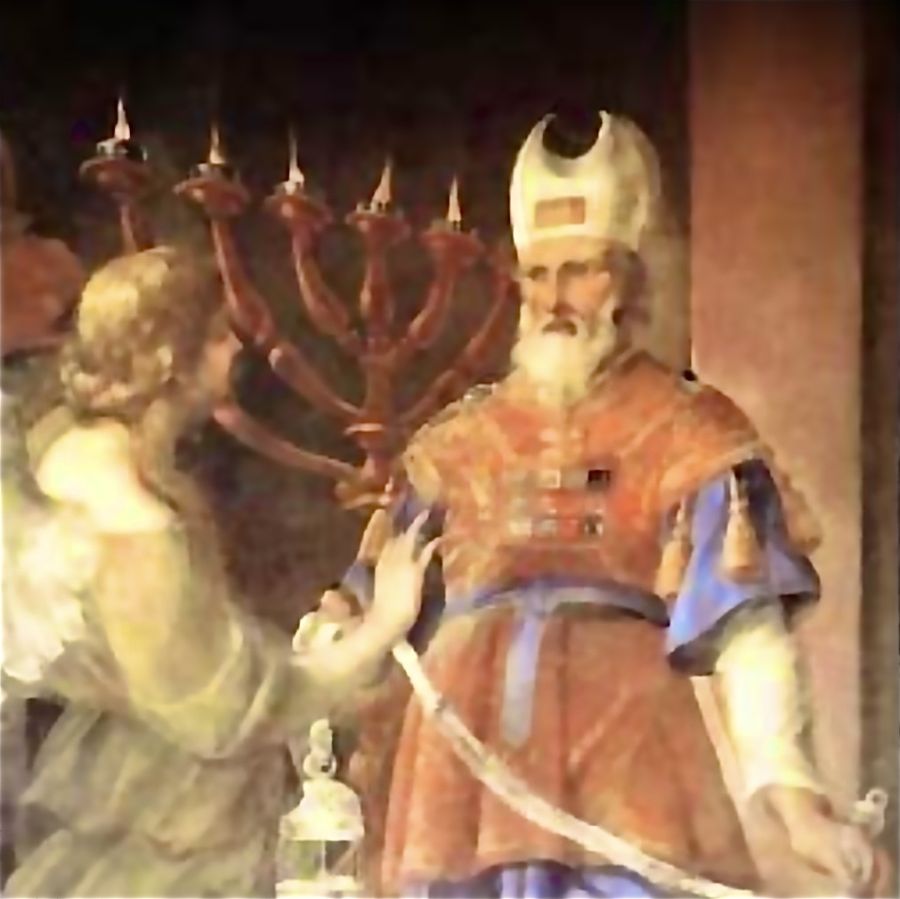
The Lucan passage considered in this feria of Advent is the announcement of the angel Gabriel to the priest Zechariah who was officiating in the temple: despite the advanced age of both spouses, they were to have a son named John.

But his lack of faith rendered him mute until the day of the fulfilment of that event, which also redeemed his wife Elizabeth from the infamy of the time for her barrenness.

As a new John, Francis was given to the world to announce salvation, to bring glad tidings to all.

His mother, Mona Pica, of marked interiority and openness to the new, immediately sensed that her son would be great before the Lord.

In the Franciscan Sources, his birth is presented as a new beginning of Christlikeness, spread through the folds of life.

In them we read: "The servant and friend of the Most High, Francis, was given this name by divine Providence, so that by his originality and novelty the fame of his mission might spread more easily throughout the world. His mother had called him John, when he was reborn of water and the Holy Spirit, and from a son of wrath had become a son of grace*.

A mirror of righteousness, that woman presented in her conduct, as it were, a visible sign of his virtue. In fact, she was made to share, as a privilege, a certain resemblance to the ancient Saint Elizabeth, both by the name she bestowed on her son and also by her prophetic spirit.

When neighbours expressed their admiration for Francis' generosity of spirit and moral integrity, she would repeat, almost divinely inspired:

«What do you think he will become, this son of mine? Know that by his merits he will become a son of God».

[...] Therefore, the name of John is appropriate to the mission he then carried out, that of Francis to his fame, which soon spread everywhere after his full conversion to God.

Above the feast of any other saint, he held that of John the Baptist to be most solemn, whose distinguished name had imprinted in his soul a sign of arcane power.

Among those born of women there arose none greater than this, and none more perfect than this among the founders of religious orders" (FF 583).

Francis put all his enthusiasm into understanding and realising the suggestions of the new Grace: to announce the perfection of the Gospel, preaching penance to all, with simplicity.

And since for the Poverello the voice of the smallest had the same weight as the voice of the great, indeed it is privileged, in the Spirit, because of that priority given to the smallest by the Gospel, the Lord took him at his word for his making himself the least in everything and among everyone.

"Often the Lord manifests what is best to the least" (Reg. c. IV. 18).


«And many will rejoice at his birth, for he will be great before the Lord» (Lk 1:14b-15a)


* Francis was baptised in the church of Santa Maria del Vescovado. The baptistery was later moved to the cathedral of San Rufino, where it still stands today.


Feria proper on December 19  (Lk 1:5-25)

183 Last modified on Thursday, 11 December 2025 15:26
Teresa Girolami

Teresa Girolami è laureata in Materie letterarie e Teologia. Ha pubblicato vari testi, fra cui: "Pellegrinaggio del cuore" (Ed. Piemme); "I Fiammiferi di Maria - La Madre di Dio in prosa e poesia"; "Tenerezza Scalza - Natura di donna"; co-autrice di "Dialogo e Solstizio".

Email This email address is being protected from spambots. You need JavaScript enabled to view it.
For those who first heard Jesus, as for us, the symbol of light evokes the desire for truth and the thirst for the fullness of knowledge which are imprinted deep within every human being. When the light fades or vanishes altogether, we no longer see things as they really are. In the heart of the night we can feel frightened and insecure, and we impatiently await the coming of the light of dawn. Dear young people, it is up to you to be the watchmen of the morning (cf. Is 21:11-12) who announce the coming of the sun who is the Risen Christ! (John Paul II)
Per quanti da principio ascoltarono Gesù, come anche per noi, il simbolo della luce evoca il desiderio di verità e la sete di giungere alla pienezza della conoscenza, impressi nell'intimo di ogni essere umano. Quando la luce va scemando o scompare del tutto, non si riesce più a distinguere la realtà circostante. Nel cuore della notte ci si può sentire intimoriti ed insicuri, e si attende allora con impazienza l'arrivo della luce dell'aurora. Cari giovani, tocca a voi essere le sentinelle del mattino (cfr Is 21, 11-12) che annunciano l'avvento del sole che è Cristo risorto! (Giovanni Paolo II)
Christ compares himself to the sower and explains that the seed is the word (cf. Mk 4: 14); those who hear it, accept it and bear fruit (cf. Mk 4: 20) take part in the Kingdom of God, that is, they live under his lordship. They remain in the world, but are no longer of the world. They bear within them a seed of eternity a principle of transformation [Pope Benedict]
Cristo si paragona al seminatore e spiega che il seme è la Parola (cfr Mc 4,14): coloro che l’ascoltano, l’accolgono e portano frutto (cfr Mc 4,20) fanno parte del Regno di Dio, cioè vivono sotto la sua signoria; rimangono nel mondo, ma non sono più del mondo; portano in sé un germe di eternità, un principio di trasformazione [Papa Benedetto]
In one of his most celebrated sermons, Saint Bernard of Clairvaux “recreates”, as it were, the scene where God and humanity wait for Mary to say “yes”. Turning to her he begs: “[…] Arise, run, open up! Arise with faith, run with your devotion, open up with your consent!” [Pope Benedict]
San Bernardo di Chiaravalle, in uno dei suoi Sermoni più celebri, quasi «rappresenta» l’attesa da parte di Dio e dell’umanità del «sì» di Maria, rivolgendosi a lei con una supplica: «[…] Alzati, corri, apri! Alzati con la fede, affrettati con la tua offerta, apri con la tua adesione!» [Papa Benedetto]
«The "blasphemy" [in question] does not really consist in offending the Holy Spirit with words; it consists, instead, in the refusal to accept the salvation that God offers to man through the Holy Spirit, and which works by virtue of the sacrifice of the cross [It] does not allow man to get out of his self-imprisonment and to open himself to the divine sources of purification» (John Paul II, General Audience July 25, 1990)
«La “bestemmia” [di cui si tratta] non consiste propriamente nell’offendere con le parole lo Spirito Santo; consiste, invece, nel rifiuto di accettare la salvezza che Dio offre all’uomo mediante lo Spirito Santo, e che opera in virtù del sacrificio della croce [Esso] non permette all’uomo di uscire dalla sua autoprigionia e di aprirsi alle fonti divine della purificazione» (Giovanni Paolo II, Udienza Generale 25 luglio 1990)
Seen from the capital Jerusalem, that land is geographically peripheral and religiously impure because it was full of pagans, having mixed with those who did not belong to Israel. Great things were not expected from Galilee for the history of salvation. Instead, right from there — precisely from there — radiated that “light” on which we meditated in recent Sundays: the light of Christ. It radiated right from the periphery (Pope Francis)

Due Fuochi due Vie - Vol. 1 Due Fuochi due Vie - Vol. 2 Due Fuochi due Vie - Vol. 3 Due Fuochi due Vie - Vol. 4 Due Fuochi due Vie - Vol. 5 Dialogo e Solstizio I fiammiferi di Maria

duevie.art

don Giuseppe Nespeca

Tel. 333-1329741


Disclaimer

Questo blog non rappresenta una testata giornalistica in quanto viene aggiornato senza alcuna periodicità. Non può pertanto considerarsi un prodotto editoriale ai sensi della legge N°62 del 07/03/2001.
Le immagini sono tratte da internet, ma se il loro uso violasse diritti d'autore, lo si comunichi all'autore del blog che provvederà alla loro pronta rimozione.
L'autore dichiara di non essere responsabile dei commenti lasciati nei post. Eventuali commenti dei lettori, lesivi dell'immagine o dell'onorabilità di persone terze, il cui contenuto fosse ritenuto non idoneo alla pubblicazione verranno insindacabilmente rimossi.






