Nov 21, 2026 Written by 

History opening up to Mystery

Dear Brothers and Sisters,

Today, together with the Church, we are beginning the new liturgical year: a new journey of faith to experience together in Christian communities but, as always, also to be taken within world history so as to open it to God's mystery, to the salvation that comes from his love. The liturgical year begins with the Season of Advent. It is a marvellous period in which the expectation of Christ's return and the memory of his first Coming — when he emptied himself of his divine glory to take on our mortal flesh — reawakens in hearts. 

"Watch!" This is Jesus' call in today's Gospel. He does not only address it to his disciples but to everyone: "Watch!" (Mk 13:37). It is a salutary reminder to us that life does not only have an earthly dimension but reaches towards a "beyond", like a plantlet that sprouts from the ground and opens towards the sky. A thinking plantlet, man, endowed with freedom and responsibility, which is why each one of us will be called to account for how he/she has lived, how each one has used the talents with which each is endowed: whether one has kept them to oneself or has made them productive for the good of one's brethren too.

Today, Isaiah, too, the prophet of Advent, with a heartfelt entreaty addressed to God on behalf of the people, gives us food for thought. He recognized the shortcomings of his people and said at a certain point: "There is no one who calls upon your name, who rouses himself to cling to you; for you have hidden your face from us and have delivered us up to our iniquities" (cf. Is 64:6).

How can we fail to find this description striking? It seems to reflect certain panoramas of the post-modern world: cities where life becomes anonymous and horizontal, where God seems absent and man the only master, as if he were the architect and director of all things: construction, work, the economy, transport, the branches of knowledge, technology, everything seems to depend on man alone. And in this world that appears almost perfect at times disturbing things happen, either in nature or in society, which is why we think that God has, as it were, withdrawn and has, so to speak, left us to ourselves.

In fact, the true "master" of the world is not the human being but God. The Gospel says: "Watch therefore — for you do not know when the master of the house will coming, in the evening, or at midnight, or at cockcrow, or in the morning — lest he come suddenly and find you asleep" (Mk 13:35-36). 

The Season of Advent returns every year to remind us of this in order that our life may find its proper orientation, turned to the face of God. The face is not that of a "master" but of a Father and a Friend. Let us make the Prophet's words our own, together with the Virgin Mary who guides us on our Advent journey."O Lord, you are our Father; we are the clay and you are our potter: we are all the work of your hand" (Is 64:8).

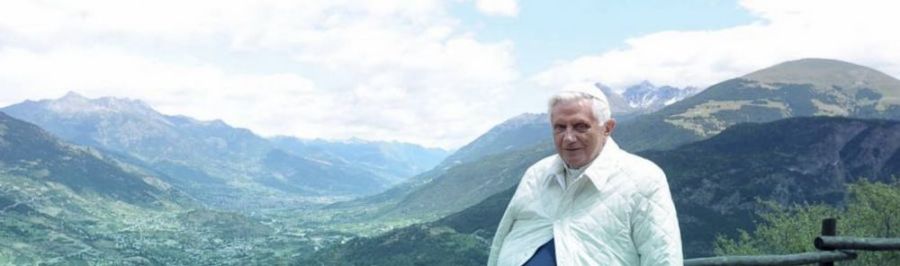
[Pope Benedict, Angelus, 27 November 2011]

8 Last modified on Saturday, 21 November 2026 05:33
don Giuseppe Nespeca

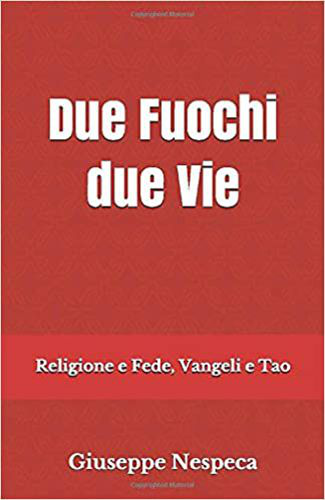
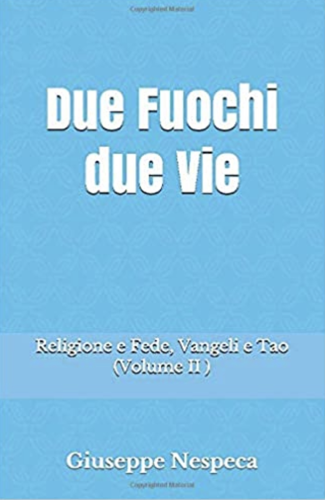
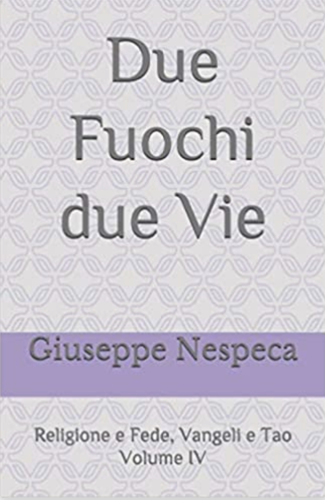
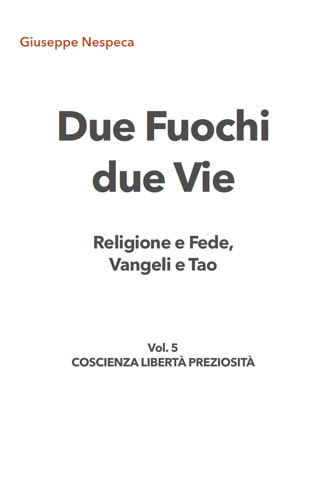
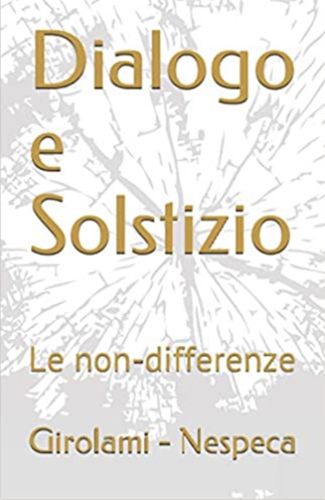
Giuseppe Nespeca è architetto e sacerdote. Cultore della Sacra scrittura è autore della raccolta "Due Fuochi due Vie - Religione e Fede, Vangeli e Tao"; coautore del libro "Dialogo e Solstizio".

Email This email address is being protected from spambots. You need JavaScript enabled to view it.
The community of believers is a sign of God’s love, of his justice which is already present and active in history but is not yet completely fulfilled and must therefore always be awaited, invoked and sought with patience and courage (Pope Benedict)
La comunità dei credenti è segno dell’amore di Dio, della sua giustizia che è già presente e operante nella storia ma che non è ancora pienamente realizzata, e pertanto va sempre attesa, invocata, ricercata con pazienza e coraggio (Papa Benedetto)
"In aeternum, Domine, verbum tuum constitutum est in caelo... firmasti terram, et permanet". This refers to the solidity of the Word. It is solid, it is the true reality on which one must base one's life (Pope Benedict)
«In aeternum, Domine, verbum tuum constitutum est in caelo... firmasti terram, et permanet». Si parla della solidità della Parola. Essa è solida, è la vera realtà sulla quale basare la propria vita (Papa Benedetto)
«The morning Resurrection gets us the sustenance of the celestial help. The Resurrection has rejected the night, has brought us the day» (St Ambrosius)
«La Risurrezione mattutina ci procura il sostentamento dell’aiuto celeste, essa che ha respinto la notte, ci ha riportato il giorno» (S. Ambrogio)
It has made us come here the veneration of martyrdom, on which, from the beginning, the kingdom of God is built, proclaimed and begun in human history by Jesus Christ (Pope John Paul II)
Ci ha fatto venire qui la venerazione verso il martirio, sul quale, sin dall’inizio, si costruisce il regno di Dio, proclamato ed iniziato nella storia umana da Gesù Cristo (Papa Giovanni Paolo II)
The evangelization of the world involves the profound transformation of the human person (Pope John Paul II)
L'opera evangelizzatrice del mondo comporta la profonda trasformazione delle persone (Papa Giovanni Paolo II)
The Church, which is ceaselessly born from the Eucharist, from Jesus' gift of self, is the continuation of this gift, this superabundance which is expressed in poverty, in the all that is offered in the fragment (Pope Benedict)
La Chiesa, che incessantemente nasce dall’Eucaristia, dall’autodonazione di Gesù, è la continuazione di questo dono, di questa sovrabbondanza che si esprime nella povertà, del tutto che si offre nel frammento (Papa Benedetto)
How we treat them will be taken as the way we treat Jesus himself. We do not see here a simple literary device, or a simple metaphor [Pope Benedict]
Il comportamento che noi abbiamo nei loro confronti sarà dunque considerato come il comportamento che abbiamo nei confronti di Gesù stesso. Non vediamo in questo una semplice formula letteraria, una semplice immagine! [Papa Benedetto]
The Sadducees, addressing Jesus for a purely theoretical "case", at the same time attack the Pharisees' primitive conception of life after the resurrection of the bodies; they in fact insinuate that faith in the resurrection of the bodies leads to admitting polyandry, contrary to the law of God (Pope John Paul II)
I Sadducei, rivolgendosi a Gesù per un "caso" puramente teorico, attaccano al tempo stesso la primitiva concezione dei Farisei sulla vita dopo la risurrezione dei corpi; insinuano infatti che la fede nella risurrezione dei corpi conduce ad ammettere la poliandria, contrastante con la legge di Dio (Papa Giovanni Paolo II)

Due Fuochi due Vie - Vol. 1 Due Fuochi due Vie - Vol. 2 Due Fuochi due Vie - Vol. 3 Due Fuochi due Vie - Vol. 4 Due Fuochi due Vie - Vol. 5 Dialogo e Solstizio I fiammiferi di Maria

duevie.art

don Giuseppe Nespeca

Tel. 333-1329741


Disclaimer

Questo blog non rappresenta una testata giornalistica in quanto viene aggiornato senza alcuna periodicità. Non può pertanto considerarsi un prodotto editoriale ai sensi della legge N°62 del 07/03/2001.
Le immagini sono tratte da internet, ma se il loro uso violasse diritti d'autore, lo si comunichi all'autore del blog che provvederà alla loro pronta rimozione.
L'autore dichiara di non essere responsabile dei commenti lasciati nei post. Eventuali commenti dei lettori, lesivi dell'immagine o dell'onorabilità di persone terze, il cui contenuto fosse ritenuto non idoneo alla pubblicazione verranno insindacabilmente rimossi.