Oct 7, 2026 Written by 

The Blood Theme

The theme of blood, linked to that of the Paschal Lamb, is of primary importance in Sacred Scripture. In the Old Testament, aspersion with the blood of sacrificed animals represented and established the covenant between God and his People, as we read in the Book of Exodus: "and Moses took the blood and threw it upon the people, and said, "Behold the blood of the covenant which the Lord has made with you in accordance with all these words' " (Ex 24: 8). 

Jesus refers explicitly to this formula during the Last Supper, when, offering the cup to the disciples, he says: "This is my blood of the covenant, which is poured out for many for the forgiveness of sins" (Mt 26: 28). And effectively, from the scourging to the piercing of his side after his death on the Cross, Christ poured out all his Blood as the true Lamb sacrificed for the redemption of all. The salvific value of his Blood is expressly stated in many passages of the New Testament. It suffices to mention, in this Year for Priests, the beautiful words of the Letter to the Hebrews: "Christ... entered once for all into the Holy Place, taking not the blood of goats and calves but his own Blood, thus securing an eternal redemption. For if the sprinkling of defiled persons with the blood of goats and bulls and with the ashes of a heifer sanctifies for the purification of the flesh, how much more shall the Blood of Christ, who through the eternal Spirit offered himself without blemish to God, purify your conscience from dead works to serve the living God" (9: 11-14). 

Dear Brothers, it is written in Genesis that the blood of Abel, killed by his brother Caine, cries to God from the earth (cf. 4: 10). And, unfortunately, today as in the past, this cry never ceases, as human blood continues to be shed because of violence, injustice and hatred. When will human beings learn that life is sacred and belongs to God alone? When will they understand that we are all brothers and sisters? To the cry which rises from so many parts of the earth for the blood that is spilled, God responds with the Blood of his Son, who gave his life for us. Christ did not respond to evil with evil but with goodness, with his infinite love. The Blood of Christ is the pledge of God's faithful love for humanity. Every human being, even in conditions of extreme moral wretchedness can say, fixing his eyes on the wounds of the Crucified One: "God has not abandoned me, he loves me, he has given his life for me", and thus rediscover hope. May the Virgin Mary, who at the foot of the Cross together with the Apostle John received the testament of Jesus' Blood, help us to rediscover the inestimable richness of this grace and to feel deep and everlasting gratitude for it.

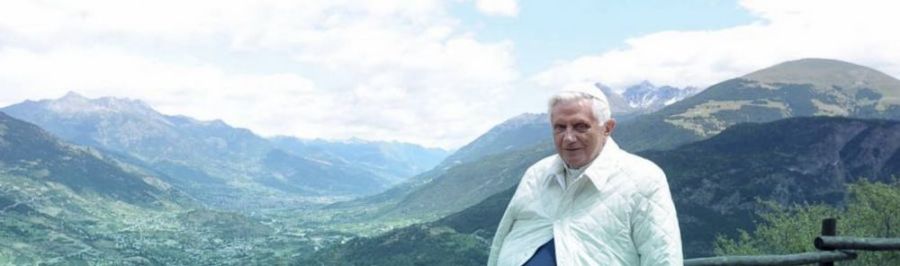
[Pope Benedict, Angelus 5 July 2009]

91 Last modified on Wednesday, 07 October 2026 02:40
don Giuseppe Nespeca

Giuseppe Nespeca è architetto e sacerdote. Cultore della Sacra scrittura è autore della raccolta "Due Fuochi due Vie - Religione e Fede, Vangeli e Tao"; coautore del libro "Dialogo e Solstizio".

Email This email address is being protected from spambots. You need JavaScript enabled to view it.
Each time we celebrate the dedication of a church, an essential truth is recalled: the physical temple made of brick and mortar is a sign of the living Church serving in history (Pope Francis)
Ogni volta che celebriamo la dedicazione di una chiesa, ci viene richiamata una verità essenziale: il tempio materiale fatto di mattoni è segno della Chiesa viva e operante nella storia (Papa Francesco)
It is a happy image with which, however, Jesus teaches a truth that calls us into question […] If we remove God, we remove Christ and the world falls back into emptiness and darkness (Pope Benedict)
E’ un’immagine felice, con cui però Gesù insegna una verità che ci mette in discussione […] Se togliamo Dio, se togliamo Cristo, il mondo ripiomba nel vuoto e nel buio (Papa Benedetto)
We would also like to set an example ourself, even if the smallness of our means might prevent anyone from appreciating the practical and quantitative significance of it. We want to see our own charitable institutions undergo a new development in the struggle against hunger and toward meeting the main needs of the world. This is the way and the only way to build peace (Pope Paul VI)
Vorremmo anche Noi dare l'esempio, sebbene l'esiguità dei Nostri mezzi ci impedisca di farne apprezzare la rilevanza pratica e quantitativa: Noi vogliamo dare alle Nostre istituzioni caritative un nuovo sviluppo in favore della fame e dei bisogni del mondo: è in questo modo, e non altrimenti, che si costruisce la pace (Papa Paolo VI)
As St. Ambrose put it: You are not making a gift of what is yours to the poor man, but you are giving him back what is his (Pope Paul VI, Populorum Progressio n.23)
Non è del tuo avere, afferma sant’Ambrogio, che tu fai dono al povero; tu non fai che rendergli ciò che gli appartiene (Papa Paolo VI, Populorum Progressio n.23)
Here is the entire Gospel! Here! The whole Gospel, all of Christianity, is here! But make sure that it is not sentiment, it is not being a “do-gooder”! (Pope Francis)
Qui c’è tutto il Vangelo! Qui! Qui c’è tutto il Vangelo, c’è tutto il Cristianesimo! Ma guardate che non è sentimento, non è “buonismo”! (Papa Francesco)
Christianity cannot be, cannot be exempt from the cross; the Christian life cannot even suppose itself without the strong and great weight of duty [Pope Paul VI]
Il Cristianesimo non può essere, non può essere esonerato dalla croce; la vita cristiana non può nemmeno supporsi senza il peso forte e grande del dovere [Papa Paolo VI]
The horizon of friendship to which Jesus introduces us is the whole of humanity [Pope Benedict]
L’orizzonte dell’amicizia in cui Gesù ci introduce è l’umanità intera [Papa Benedetto]
The Church invites believers to regard the mystery of death not as the "last word" of human destiny but rather as a passage to eternal life (Pope John Paul II)
La Chiesa invita i credenti a guardare al mistero della morte non come all'ultima parola sulla sorte umana, ma come al passaggio verso la vita eterna (Papa Giovanni Paolo II)
The saints: they are our precursors, they are our brothers, they are our friends, they are our examples, they are our lawyers. Let us honour them, let us invoke them and try to imitate them a little (Pope Paul VI)
I santi: sono i precursori nostri, sono i fratelli, sono gli amici, sono gli esempi, sono gli avvocati nostri. Onoriamoli, invochiamoli e cerchiamo di imitarli un po’ (Papa Paolo VI)

Due Fuochi due Vie - Vol. 1 Due Fuochi due Vie - Vol. 2 Due Fuochi due Vie - Vol. 3 Due Fuochi due Vie - Vol. 4 Due Fuochi due Vie - Vol. 5 Dialogo e Solstizio I fiammiferi di Maria

duevie.art

don Giuseppe Nespeca

Tel. 333-1329741


Disclaimer

Questo blog non rappresenta una testata giornalistica in quanto viene aggiornato senza alcuna periodicità. Non può pertanto considerarsi un prodotto editoriale ai sensi della legge N°62 del 07/03/2001.
Le immagini sono tratte da internet, ma se il loro uso violasse diritti d'autore, lo si comunichi all'autore del blog che provvederà alla loro pronta rimozione.
L'autore dichiara di non essere responsabile dei commenti lasciati nei post. Eventuali commenti dei lettori, lesivi dell'immagine o dell'onorabilità di persone terze, il cui contenuto fosse ritenuto non idoneo alla pubblicazione verranno insindacabilmente rimossi.