Aug 1, 2026 Written by 

«Truly, you are the Son of God»

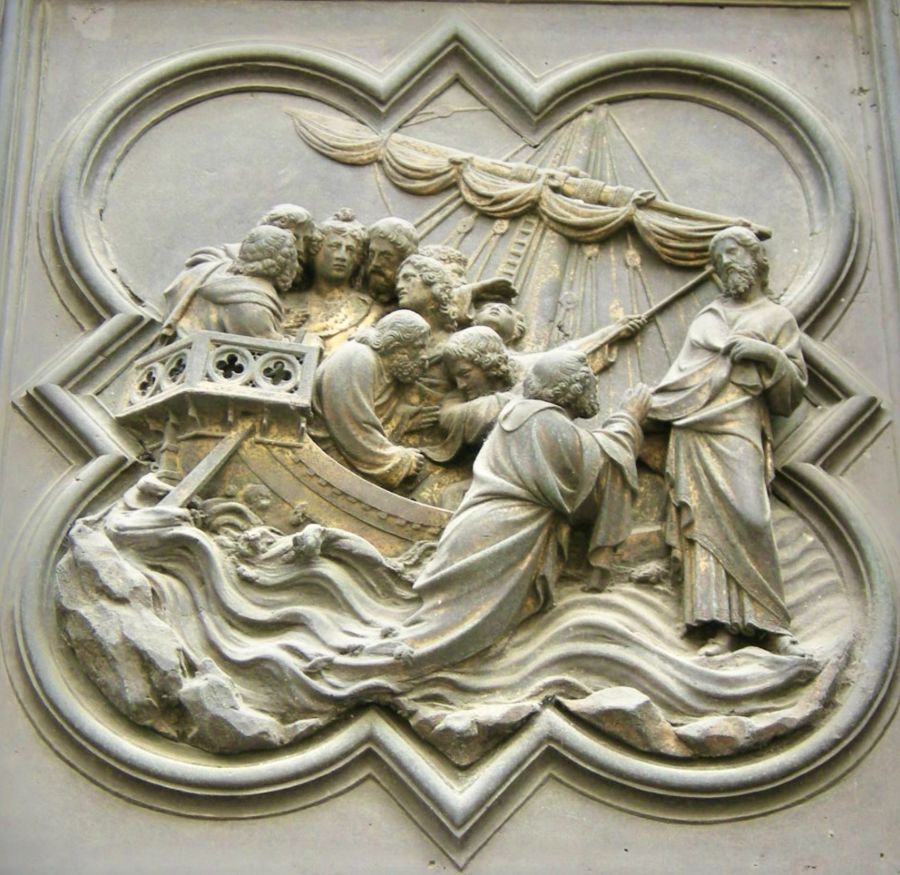
The passage from the Gospel of Matthew, read this Sunday, describes Jesus who, after praying in seclusion, approaches his disciples in the boat at the end of the night, walking on the water.

The Poor Man of Assisi, too, sought a solitary relationship with the Father before meeting the crowds, who sought healing of body and soul, perhaps by touching his rough habit.

The crowd flocked devoutly, for they longed to ‘be’ with God.

Francis, a servant of Christ, was a simple man yet eager to ‘dwell’ with the Lord, so that he might conform himself to the Gospel and help his friars to flourish and grow in the path of unwavering faith.

For this reason, as soon as he was free, he would withdraw into solitude to pray, seeking enlightenment and a deeper commitment to the divine plan, without fear.

The Sources portray Francis as an «Alter Christus», in His image even in his solitude ‘on the Mount’ to enter into the intimacy of the Father.

Indeed, we read:

“Desiring to devote himself solely to God and to purify his spirit from the dust of the world, which might have defiled him whilst living amongst men, the blessed and venerable Father Francis one day withdrew to a place of contemplation and silence [La Verna], leaving behind the crowds who flocked devoutly to him every day to hear and see him.

He was in the habit of dividing and allocating the time granted to him for the acquisition of graces, as he saw fit: one part for the good of his neighbour, the other reserved for solitary contemplation. He therefore took with him a very small number of companions, among the closest and most involved in his life, so that they might shield him from visits and the disturbance of others and serve as loving and faithful guardians of his peace.

He remained in that solitude for a certain period, and having attained, through intimate prayer and frequent contemplation, an extraordinary intimacy with God, he longed to know what about him and within him might be most pleasing to the eternal King” (FF 479).

He knew, in fact, that he would help to develop the disciples’ fearful faith only through a trusting surrender to God, who does not cause one to falter or drown in dangers.

In the face of adverse winds, the stability of the existential ‘boat’ in God’s hands brings salvation and leads to the profession of faith that recognises the Son of God without hesitation.


«And having sent the crowds behind, he went up the mountain by himself to pray» (Mt 14:23)


19th Sunday in Ordinary Time, year A  (Mt 14:22–33)

198 Last modified on Saturday, 01 August 2026 03:53
Teresa Girolami

Teresa Girolami è laureata in Materie letterarie e Teologia. Ha pubblicato vari testi, fra cui: "Pellegrinaggio del cuore" (Ed. Piemme); "I Fiammiferi di Maria - La Madre di Dio in prosa e poesia"; "Tenerezza Scalza - Natura di donna"; co-autrice di "Dialogo e Solstizio".

Email This email address is being protected from spambots. You need JavaScript enabled to view it.
We see this great figure, this force in the Passion, in resistance to the powerful. We wonder: what gave birth to this life, to this interiority so strong, so upright, so consistent, spent so totally for God in preparing the way for Jesus? The answer is simple: it was born from the relationship with God (Pope Benedict)
Noi vediamo questa grande figura, questa forza nella passione, nella resistenza contro i potenti. Domandiamo: da dove nasce questa vita, questa interiorità così forte, così retta, così coerente, spesa in modo così totale per Dio e preparare la strada a Gesù? La risposta è semplice: dal rapporto con Dio (Papa Benedetto)
The lamp is a symbol of the faith that illuminates our life, while the oil is a symbol of the charity that nourishes the light of faith, making it fruitful and credible (Pope Francis)
La lampada è il simbolo della fede che illumina la nostra vita, mentre l’olio è il simbolo della carità che alimenta, rende feconda e credibile la luce della fede (Papa Francesco)
Jesus wants our existence to be laborious, that we never lower our guard, so as to welcome with gratitude and wonder each new day given to us by God. Every morning is a blank page on which a Christian begins to write with good works (Pope Francis)
Gesù vuole che la nostra esistenza sia laboriosa, che non abbassiamo mai la guardia, per accogliere con gratitudine e stupore ogni nuovo giorno donatoci da Dio. Ogni mattina è una pagina bianca che il cristiano comincia a scrivere con le opere di bene (Papa Francesco)
And this is the problem: when the People put down roots in the land and are the depository of the Law, they are tempted to place their security and joy in something that is no longer the Word of God (Pope Benedict)
Ed ecco il problema: quando il popolo si stabilisce nella terra, ed è depositario della Legge, è tentato di riporre la sua sicurezza e la sua gioia in qualcosa che non è più la Parola del Signore (Papa Benedetto)
Despite the scarcity of information about him, St Bartholomew stands before us to tell us that attachment to Jesus can also be lived and witnessed to without performing sensational deeds. Jesus himself, to whom each one of us is called to dedicate his or her own life and death, is and remains extraordinary (Pope Benedict)
La figura di san Bartolomeo, pur nella scarsità delle informazioni che lo riguardano, resta comunque davanti a noi per dirci che l'adesione a Gesù può essere vissuta e testimoniata anche senza il compimento di opere sensazionali. Straordinario è e resta Gesù stesso, a cui ciascuno di noi è chiamato a consacrare la propria vita e la propria morte (Papa Benedetto)
Faith is more than just empirical or historical facts; it is an ability to grasp the mystery of Christ’s person in all its depth [Pope Benedict]
La fede va al di là dei semplici dati empirici o storici, ed è capace di cogliere il mistero della persona di Cristo nella sua profondità [Papa Benedetto]
More than 600 precepts are mentioned in the Law of Moses. How should the great commandment be distinguished among these? (Pope Francis)
Nella Legge di Mosè sono menzionati oltre seicento precetti. Come distinguere, tra tutti questi, il grande comandamento? (Papa Francesco)
The invitation has three characteristics: freely offered, breadth and universality. Many people were invited, but something surprising happened: none of the intended guests came to take part in the feast, saying they had other things to do; indeed, some were even indifferent, impertinent, even annoyed (Pope Francis)

Due Fuochi due Vie - Vol. 1 Due Fuochi due Vie - Vol. 2 Due Fuochi due Vie - Vol. 3 Due Fuochi due Vie - Vol. 4 Due Fuochi due Vie - Vol. 5 Dialogo e Solstizio I fiammiferi di Maria

duevie.art

don Giuseppe Nespeca

Tel. 333-1329741


Disclaimer

Questo blog non rappresenta una testata giornalistica in quanto viene aggiornato senza alcuna periodicità. Non può pertanto considerarsi un prodotto editoriale ai sensi della legge N°62 del 07/03/2001.
Le immagini sono tratte da internet, ma se il loro uso violasse diritti d'autore, lo si comunichi all'autore del blog che provvederà alla loro pronta rimozione.
L'autore dichiara di non essere responsabile dei commenti lasciati nei post. Eventuali commenti dei lettori, lesivi dell'immagine o dell'onorabilità di persone terze, il cui contenuto fosse ritenuto non idoneo alla pubblicazione verranno insindacabilmente rimossi.






