Apr 19, 2026 Written by 

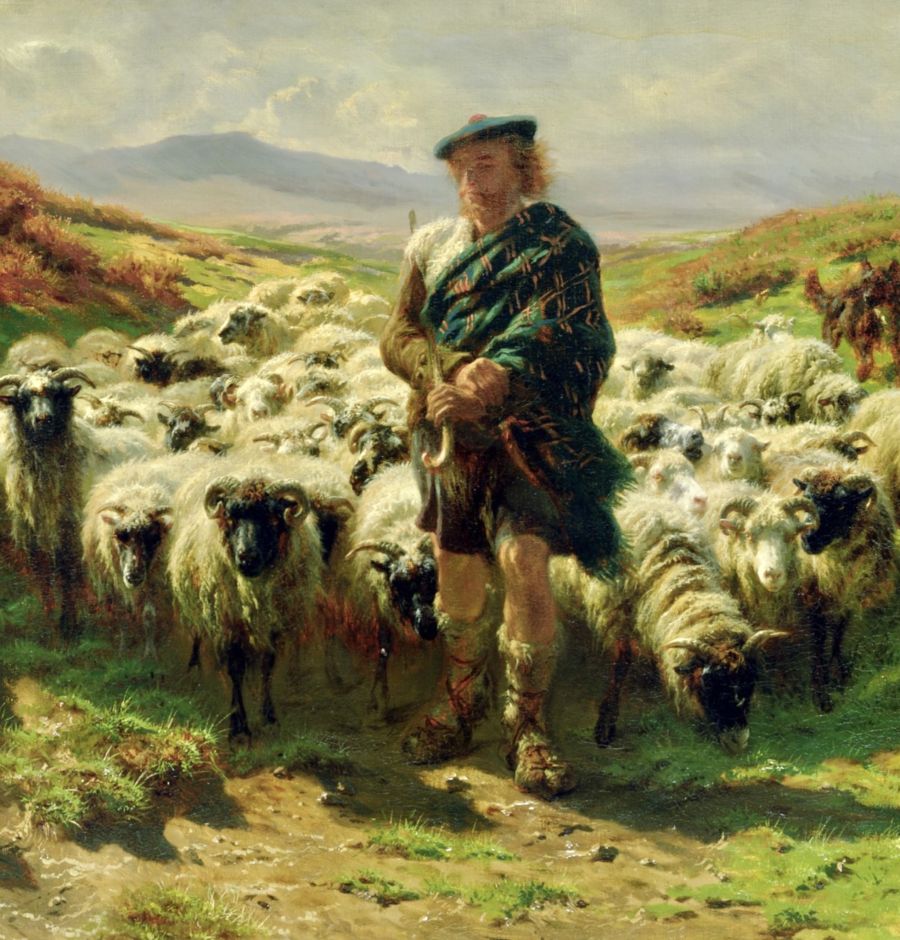
One people one Shepherd

Today's liturgy offers us a passage from John's Gospel, emphasising the universal mission of the disciples.  They listen to the voice of the Shepherd and become one people in Christ and for Christ.


In the Franciscan Sources, the missionary nature of Francis and his disciples is narrated several times.

We read:

"Then the blessed Francis gathered them all together, and after speaking to them at length about the Kingdom of God, about contempt for the world, about denying one's own will, about the dominion one must exercise over one's own body, he divided them into four groups, of two each, and said to them:

«Go, beloved, two by two to the various parts of the world and proclaim to men peace and penance for the remission of sins; and be patient in persecution, confident that the Lord will fulfil his plan and keep his promises.

Respond with humility to those who question you, bless those who persecute you, thank those who insult and slander you, for in return the eternal kingdom is prepared for us» (FF 366).

"Then Brother Bernard with Brother Aegidius set out for Compostella, to the shrine of St James, in Galicia; St Francis with another companion chose another part; the other four, two by two, set out in the other two directions" (FF 368).

Thus they put the Word of the Gospel into practice, without sweetening it.

To all they brought the Good News of the Kingdom, proclaiming it even before their lips, with their simple and authentic behaviour.

Sylvester himself, who was a priest, had a dream before entering the Order:

"[...] he saw an immense cross, the summit of which touched heaven and the foot of which rested on Francis' mouth, and the arms stretched out on either side of the world.

Awakened, the priest understood and firmly believed that Francis was a true friend and servant of Christ, and his religious movement would spread prodigiously throughout the world" (FF 1434).


It often happened that they encountered rejection and harassment:

"Because of such hostility, the brothers were forced to flee from various nations. 

Thus, distressed, afflicted, not infrequently stripped of their robes and beaten by brigands, they returned to Francis with great bitterness.

They suffered such harassment in almost all the countries beyond the Alps, as in Germany, Hungary, and many others" (FF 1475).


«And they will listen to my voice and become one flock one shepherd»  (Jn 10:16b)

97 Last modified on Sunday, 19 April 2026 05:03
Teresa Girolami

Teresa Girolami è laureata in Materie letterarie e Teologia. Ha pubblicato vari testi, fra cui: "Pellegrinaggio del cuore" (Ed. Piemme); "I Fiammiferi di Maria - La Madre di Dio in prosa e poesia"; "Tenerezza Scalza - Natura di donna"; co-autrice di "Dialogo e Solstizio".

Email This email address is being protected from spambots. You need JavaScript enabled to view it.
Let us permit St Augustine to speak once more: "If only good shepherds be not lacking! Far be it from us that they should be lacking, and far be it from divine mercy not to call them forth and establish them. It is certain that if there are good sheep, there are also good shepherds: in fact it is from good sheep that good shepherds are derived." (Sermones ad populum, Sermo XLIV, XIII, 30) [John Paul II]
Lasciamo ancora una volta parlare Sant’Agostino: “Purché non vengano a mancare buoni pastori! Lungi da noi che manchino, e lungi dalla misericordia divina il non farli sorgere e stabilirli. Certo è che se ci sono buone pecore, ci sono anche buoni pastori: infatti è dalle buone pecore che derivano i buoni pastori” (S. Agostino, Sermones ad populum, I, Sermo XLIV, XIII, 30) [Giovanni Paolo II]
Jesus, Good Shepherd and door of the sheep, is a leader whose authority is expressed in service, a leader who, in order to command, gives his life and does not ask others to sacrifice theirs. One can trust in a leader like this (Pope Francis)
Gesù, pastore buono e porta delle pecore, è un capo la cui autorità si esprime nel servizio, un capo che per comandare dona la vita e non chiede ad altri di sacrificarla. Di un capo così ci si può fidare (Papa Francesco)
To be Christians means to be missionaries, to be apostles (cfr. Decree Apostolicam Actuositatem, n.2). It is not enough to discover Christ - you must bring Him to others! [John Paul II]
Essere cristiani significa essere missionari-apostoli (cfr. «Apostolicam Actuositatem», 2). Non basta scoprire Cristo - bisogna portarlo agli altri! [Giovanni Paolo II]
What is meant by “eat the flesh and drink the blood” of Jesus? Is it just an image, a figure of speech, a symbol, or does it indicate something real? (Pope Francis)
Che significa “mangiare la carne e bere il sangue” di Gesù?, è solo un’immagine, un modo di dire, un simbolo, o indica qualcosa di reale? (Papa Francesco)
What does bread of life mean? We need bread to live. Those who are hungry do not ask for refined and expensive food, they ask for bread. Those who are unemployed do not ask for enormous wages, but the “bread” of employment. Jesus reveals himself as bread, that is, the essential, what is necessary for everyday life; without Him it does not work (Pope Francis)
Che cosa significa pane della vita? Per vivere c’è bisogno di pane. Chi ha fame non chiede cibi raffinati e costosi, chiede pane. Chi è senza lavoro non chiede stipendi enormi, ma il “pane” di un impiego. Gesù si rivela come il pane, cioè l’essenziale, il necessario per la vita di ogni giorno, senza di Lui la cosa non funziona (Papa Francesco)
In addition to physical hunger man carries within him another hunger — all of us have this hunger — a more important hunger, which cannot be satisfied with ordinary food. It is a hunger for life, a hunger for eternity which He alone can satisfy, as he is «the bread of life» (Pope Francis)
Oltre alla fame fisica l’uomo porta in sé un’altra fame – tutti noi abbiamo questa fame – una fame più importante, che non può essere saziata con un cibo ordinario. Si tratta di fame di vita, di fame di eternità che Lui solo può appagare, in quanto è «il pane della vita» (Papa Francesco)
The Eucharist draws us into Jesus' act of self-oblation. More than just statically receiving the incarnate Logos, we enter into the very dynamic of his self-giving [Pope Benedict]
L'Eucaristia ci attira nell'atto oblativo di Gesù. Noi non riceviamo soltanto in modo statico il Logos incarnato, ma veniamo coinvolti nella dinamica della sua donazione [Papa Benedetto]

Due Fuochi due Vie - Vol. 1 Due Fuochi due Vie - Vol. 2 Due Fuochi due Vie - Vol. 3 Due Fuochi due Vie - Vol. 4 Due Fuochi due Vie - Vol. 5 Dialogo e Solstizio I fiammiferi di Maria

duevie.art

don Giuseppe Nespeca

Tel. 333-1329741


Disclaimer

Questo blog non rappresenta una testata giornalistica in quanto viene aggiornato senza alcuna periodicità. Non può pertanto considerarsi un prodotto editoriale ai sensi della legge N°62 del 07/03/2001.
Le immagini sono tratte da internet, ma se il loro uso violasse diritti d'autore, lo si comunichi all'autore del blog che provvederà alla loro pronta rimozione.
L'autore dichiara di non essere responsabile dei commenti lasciati nei post. Eventuali commenti dei lettori, lesivi dell'immagine o dell'onorabilità di persone terze, il cui contenuto fosse ritenuto non idoneo alla pubblicazione verranno insindacabilmente rimossi.






