Dec 12, 2025 Written by 

«Let no thought disturb you»

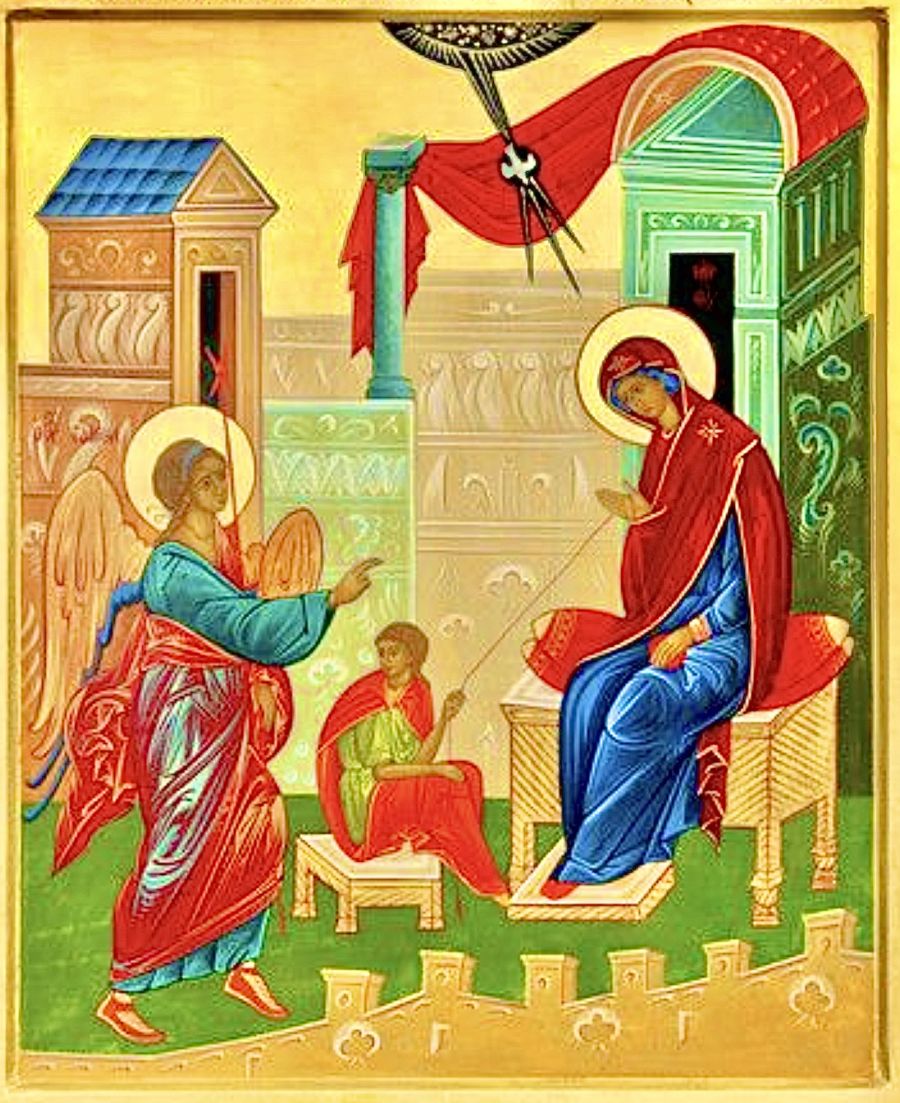
Today's Gospel turns its gaze on Mary of Nazareth and gives us the principal expression of the Annunciation:

«Fear not, Mary, for you have found grace with God» (Lk 1:30).

Francis made himself a jester of God, but as he loved her, we might add: 'jester of the Blessed Virgin'. He saw in the divine favour poured out by God upon Mary the gift par excellence of the Giver of all good.

Clare herself, in her Spiritual Testament, addressed to her daughters, says:

"By means of these virtues, and not by our own merits, but by the sole mercy and Grace of the Giver, the Father of mercies himself, may they always pour out the perfume of their good name on those who are far off, as on those who are near" (FF 2846).

Thus highlighting how the enemy of Grace is detraction, which Mary never knew.

Grace was the travelling companion of Francis and Clare of Assisi.

We find wonderful expressions in this regard in the second letter addressed by Clare to Agnes of Prague. In various passages, they well recall the beauty of Mary of Nazareth:

"I give thanks to the Author of grace, from whom, as we believe, comes every supreme good and every perfect gift, because he has adorned you with so many recognitions of virtue and has illustrated you with the insignia of such high perfection that, having made you a diligent imitator of the Father, in whom is all perfection, you deserve to become perfect in your turn, so that his eyes find in you no sign of imperfection" (FF 2872).

Clare, 'àltera Maria', unwillingly conveys to Agnes in these few lines what she lives by Grace, offering the testimony of the Marian perfume of a handmaiden wide open to the Gift.

And Francis, on the other hand, on his path of conversion had so well understood the beneficial effects of Grace, that he put into action the same gratuitousness he received towards his brothers, especially towards those who showed the greatest need.

The Sources, in fact, narrate of a friar who in his heart pondered whether he could consider himself worthy of the Grace of heaven to those whom the Saint treated with familiarity.

Whereupon Francis, enlightened by the Spirit, addressed this friar saying:

"Let no thought disturb you, O son, for I hold you the dearest of all those who are particularly dear to me, and I gladly make you a gift of my familiarity and love".

The friar was amazed and, having become even more devout since then, not only did he grow in love towards the Saint, but by the work and Grace of the Holy Spirit he was enriched with ever greater gifts (FF 1196).


Feria proper of December 20  (Lk 1:26-38)

205 Last modified on Friday, 12 December 2025 03:27
Teresa Girolami

Teresa Girolami è laureata in Materie letterarie e Teologia. Ha pubblicato vari testi, fra cui: "Pellegrinaggio del cuore" (Ed. Piemme); "I Fiammiferi di Maria - La Madre di Dio in prosa e poesia"; "Tenerezza Scalza - Natura di donna"; co-autrice di "Dialogo e Solstizio".

Email This email address is being protected from spambots. You need JavaScript enabled to view it.
For those who first heard Jesus, as for us, the symbol of light evokes the desire for truth and the thirst for the fullness of knowledge which are imprinted deep within every human being. When the light fades or vanishes altogether, we no longer see things as they really are. In the heart of the night we can feel frightened and insecure, and we impatiently await the coming of the light of dawn. Dear young people, it is up to you to be the watchmen of the morning (cf. Is 21:11-12) who announce the coming of the sun who is the Risen Christ! (John Paul II)
Per quanti da principio ascoltarono Gesù, come anche per noi, il simbolo della luce evoca il desiderio di verità e la sete di giungere alla pienezza della conoscenza, impressi nell'intimo di ogni essere umano. Quando la luce va scemando o scompare del tutto, non si riesce più a distinguere la realtà circostante. Nel cuore della notte ci si può sentire intimoriti ed insicuri, e si attende allora con impazienza l'arrivo della luce dell'aurora. Cari giovani, tocca a voi essere le sentinelle del mattino (cfr Is 21, 11-12) che annunciano l'avvento del sole che è Cristo risorto! (Giovanni Paolo II)
Christ compares himself to the sower and explains that the seed is the word (cf. Mk 4: 14); those who hear it, accept it and bear fruit (cf. Mk 4: 20) take part in the Kingdom of God, that is, they live under his lordship. They remain in the world, but are no longer of the world. They bear within them a seed of eternity a principle of transformation [Pope Benedict]
Cristo si paragona al seminatore e spiega che il seme è la Parola (cfr Mc 4,14): coloro che l’ascoltano, l’accolgono e portano frutto (cfr Mc 4,20) fanno parte del Regno di Dio, cioè vivono sotto la sua signoria; rimangono nel mondo, ma non sono più del mondo; portano in sé un germe di eternità, un principio di trasformazione [Papa Benedetto]
In one of his most celebrated sermons, Saint Bernard of Clairvaux “recreates”, as it were, the scene where God and humanity wait for Mary to say “yes”. Turning to her he begs: “[…] Arise, run, open up! Arise with faith, run with your devotion, open up with your consent!” [Pope Benedict]
San Bernardo di Chiaravalle, in uno dei suoi Sermoni più celebri, quasi «rappresenta» l’attesa da parte di Dio e dell’umanità del «sì» di Maria, rivolgendosi a lei con una supplica: «[…] Alzati, corri, apri! Alzati con la fede, affrettati con la tua offerta, apri con la tua adesione!» [Papa Benedetto]
«The "blasphemy" [in question] does not really consist in offending the Holy Spirit with words; it consists, instead, in the refusal to accept the salvation that God offers to man through the Holy Spirit, and which works by virtue of the sacrifice of the cross [It] does not allow man to get out of his self-imprisonment and to open himself to the divine sources of purification» (John Paul II, General Audience July 25, 1990)
«La “bestemmia” [di cui si tratta] non consiste propriamente nell’offendere con le parole lo Spirito Santo; consiste, invece, nel rifiuto di accettare la salvezza che Dio offre all’uomo mediante lo Spirito Santo, e che opera in virtù del sacrificio della croce [Esso] non permette all’uomo di uscire dalla sua autoprigionia e di aprirsi alle fonti divine della purificazione» (Giovanni Paolo II, Udienza Generale 25 luglio 1990)
Seen from the capital Jerusalem, that land is geographically peripheral and religiously impure because it was full of pagans, having mixed with those who did not belong to Israel. Great things were not expected from Galilee for the history of salvation. Instead, right from there — precisely from there — radiated that “light” on which we meditated in recent Sundays: the light of Christ. It radiated right from the periphery (Pope Francis)

Due Fuochi due Vie - Vol. 1 Due Fuochi due Vie - Vol. 2 Due Fuochi due Vie - Vol. 3 Due Fuochi due Vie - Vol. 4 Due Fuochi due Vie - Vol. 5 Dialogo e Solstizio I fiammiferi di Maria

duevie.art

don Giuseppe Nespeca

Tel. 333-1329741


Disclaimer

Questo blog non rappresenta una testata giornalistica in quanto viene aggiornato senza alcuna periodicità. Non può pertanto considerarsi un prodotto editoriale ai sensi della legge N°62 del 07/03/2001.
Le immagini sono tratte da internet, ma se il loro uso violasse diritti d'autore, lo si comunichi all'autore del blog che provvederà alla loro pronta rimozione.
L'autore dichiara di non essere responsabile dei commenti lasciati nei post. Eventuali commenti dei lettori, lesivi dell'immagine o dell'onorabilità di persone terze, il cui contenuto fosse ritenuto non idoneo alla pubblicazione verranno insindacabilmente rimossi.






