


don Giuseppe Nespeca
Giuseppe Nespeca è architetto e sacerdote. Cultore della Sacra scrittura è autore della raccolta "Due Fuochi due Vie - Religione e Fede, Vangeli e Tao"; coautore del libro "Dialogo e Solstizio".
New interpretation of the different Grounds
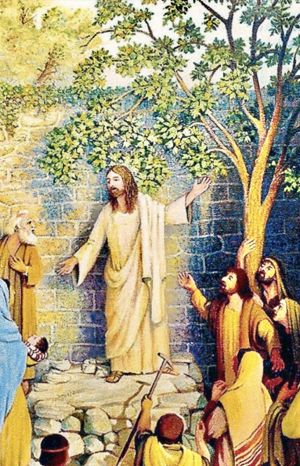
Evolution of the Alliance in times of crisis: usual flaws, different harmonizations
(Mt 13:18-23)
God is munificent, especially in the age of rebirth from crisis: also a time of generous sowing by the Father.
He remains Farmer of his seedlings - more adventurous and less respectable ones than traditionalist, or fashionable.
Obviously, the Word of the Master and Lord warns against anything that might prevent a new Genesis - first of all, that we often wait to mechanically return to the roles and the old system of things; to the habituated, outward-looking, dirigiste model.
We are perhaps still too tied to cravings and previous economic levels (v.22) overwhelmed by things... not accepting the emergence of opposites that we had never experienced or planned for (v.19).
We still think we can go back to “everything as before”; to the superficiality of the society of the look not rooted in conviction; of the immediately enthusiastic exteriority (vv.20-21) that does not move the eye.
Instead, the dissimilar tide Comes so that we learn to fix our eye within, elsewhere, and beyond - to focus on our own and others' 'unique figure' in the conviviality of differences.
It is likely that the knowledge or way of life that we would like to reaffirm is still tied to pleasing, old, or à la page standards - now inadequate to provide new answers to new questions.
And perhaps this has led us to tracing and imitating the disqualified “having-appearing”, instead of the precious being, and that character at the heart of our Call by Name.
It is not out of the question that we have allowed ourselves to become accustomed to decision-making nomenclatures or to the rushing through performance anxiety.
They disregard the «beautiful terrain» of uniqueness, of the unprecedented vocational gift [it would lead to better contact with the disregarded energies of our genuine inclination - nested among the inconsistencies].
Here we are, indeed, all caught up in the concerns of restoring “as before” or “as we should be”...
This, despite the fact that the present traumas are explicit signals to broaden the hitherto stifled consciousnesses (as in «brambles»: v.22).
Eloquent Appeals - even contemporary ones - to launch each side towards the Exodus, for the conquest of renewed freedom; territories of the soul, albeit hidden, in the core of essence.
All the imprint of an empty, formal spirituality that we drag along, still inhibits a good perception of today, and it enervates, takes away intimate strength.
It does not allow one to follow one's own impulse in harmony with the inner world - or one's own tendencies in listening to the unceasing call of the Gospels [which is still being disseminated by unaccredited prophets, to announce the truth and the creation of an alternative world].
Well, something or the whole of life may turn out to be dazed; and more than ever not going the right way and clear: not making us as special as the Sower would wish - precisely because of the stereotypes or the emotional vacuums that steal the Seed, or rather choke the plant; or because of the usual presumption that resumes to dominate immediately and thus prevents us from putting down «deep roots».
We will then have to lay aside the cerebral whirlwinds and unilateral volitional paraphernalia; leaving space and indulging to the new current of quality that is bringing us.
By surrendering to the proposals of the tide of 'coming grains' to guide us beyond the old contentions: to the natural, original energy of Providence, which knows more than we do.
To the Wind of the Spirit that deploys the grains beyond - where you do not expect - it does not matter what percentage is productive (v.23b) but our «beautiful» attunement (v.23a Greek text) that helps to bring us up to speed with the reality of farsighted blending.
They will tidy everything up, otherwise: beyond habitual mental systems - and every result will be more shrewd, in favour of the Peripheries.
Without too much disposition and calculation in the choice of ground [once pretentiously removed and sanitized upstream] we will realize that the Sower will have finally crumbled so many worldly pedestals; not to humiliate anyone, but to bestow surprises of astounding fruitfulness, even for the growth of every creed (all denominations).
His is everywhere and always an exceptional generous and creative Action, put in place to regenerate and empower convictions.
Not to make us redo the usual textbook actions or clichés - and resume playing with performance, or with shackled restraints of widely approved patterns.
If we want to synchronize the same movement as the Sower, we must with Him and like Him move towards the indigence of the various terrains (existential situations).
A special narrowness - even more acute in times of global emergency - that forces one to 'move', to become itinerant, to disseminate everywhere.
And not only collecting the «hundred for one» (v.23) in the usual protected 'centre'.
[Friday 16th wk. in O.T. July 24, 2026]
Word and Joy

123. The greater our openness to God’s word, the more will we be able to recognize that today too the mystery of Pentecost is taking place in God’s Church. The Spirit of the Lord continues to pour out his gifts upon the Church to guide us into all truth, to show us the meaning of the Scriptures and to make us credible heralds of the word of salvation before the world. Thus we return to the First Letter of Saint John. In God’s word, we too have heard, we too have seen and touched the Word of life. We have welcomed by grace the proclamation that eternal life has been revealed, and thus we have come to acknowledge our fellowship with one another, with those who have gone before us marked with the sign of faith, and with all those who throughout the world hear the word, celebrate the Eucharist and by their lives bear witness to charity. This proclamation has been shared with us – the Apostle John reminds us – so that “our joy may be complete” (1 Jn 1:4).
The synodal assembly enabled us to experience all that Saint John speaks of: the proclamation of the word creates communion and brings about joy. This is a profound joy which has its origin in the very heart of the trinitarian life and which is communicated to us in the Son. This joy is an ineffable gift which the world cannot give. Celebrations can be organized, but not joy. According to the Scripture, joy is the fruit of the Holy Spirit (cf. Gal 5:22) who enables us to enter into the word and enables the divine word to enter into us and to bear fruit for eternal life. By proclaiming God’s word in the power of the Holy Spirit, we also wish to share the source of true joy, not a superficial and fleeting joy, but the joy born of the awareness that the Lord Jesus alone has words of everlasting life (cf. Jn 6:68).
[Pope Benedict, Post Synodal Exhortation Verbum Domini]
Inner availability
4. In the parable of the sower and the sowing, the growth of the Kingdom of God certainly appears as the fruit of the work of the sower, but it is in relation to the soil and the climatic conditions that the sowing produces a harvest: "where the hundred, where the sixty, where the thirty" (Mt 13:8). The soil means the inner readiness of men. Therefore, according to Jesus, the growth of the Kingdom of God is also conditioned by man. Human free will is responsible for this growth. This is why Jesus recommends to all to pray: "Thy kingdom come" (cf. Mt 6:10; Lk 11:2): it is one of the first questions of the Pater noster.
[John Paul II, General Audience 25 September 1991]
Introduction to all the parables
The Gospel [...] shows us Jesus preaching on the shore of the Lake of Galilee, and because a large crowd surrounds him, He climbs into a boat, goes a little away from the shore and preaches from there. When he speaks to the people, Jesus uses many parables: in language understandable to everyone, with images from nature and from everyday situations.
The first story he tells is an introduction to all the parables: that of the sower, who sows his seed unsparingly on every type of soil. And the real protagonist of this parable is actually the seed, which produces more or less according to the type of soil upon which it falls. The first three areas are unproductive: along the path the seed is eaten by birds; on rocky ground the sprouts are scorched and wither away because they have no roots; among the briars the seed is choked by thorns. The fourth piece of ground is good soil, and only there does the seed take root and bear fruit.
In this case, Jesus does not limit himself to presenting this parable, he also explains it to his disciples. The seed fallen on the path stands for those who hear the message of the Kingdom of God but do not understand it; thus the evil one comes and snatches it away. Indeed, the evil one does not want the seed of the Gospel to sprout in the heart of man. This is the first analogy. The second is that of the seed fallen among the stones: this represents the people who hear the word of God and understand it immediately, but superficially, because they have no roots and they are unsettled; and when trials and tribulations arise, these people give up immediately. The third case is that of the seed fallen among the briars: Jesus explains that this refers to the people who hear the word but they, because of the cares of the world and the seduction of riches, are choked. Finally, the seed fallen on fertile soil represents those who hear the word, accept it, cherish it and understand it, and they bear fruit. The perfect model of this good soil is the Virgin Mary.
This parable speaks to each of us today, as it spoke to those who listened to Jesus 2,000 years ago. It reminds us that we are the soil where the Lord tirelessly sows the seed of his Word and of his love. How do we receive it? And we can ask ourselves: how is our heart? Which soil does it resemble: that of the path, the rocks, the thorns? It’s up to us to become good soil with neither thorns nor stones, but tilled and cultivated with care, so it may bear good fruit for us and for our brothers and sisters.
And it will do us good not to forget that we too are sowers. God sows good seed, and here too we can also ask ourselves: which type of seed comes out of our heart and our mouth? Our words can do much good and also much harm; they can heal and they can wound; they can encourage and they can dishearten. Remember: what counts is not what goes in but what comes out of the mouth and of the heart.
Our Lady teaches us, by her example, to understand the Word, cherish it and make it bear fruit in us and in others.
[Pope Francis, Angelus 13 July 2014]
Vine and branches: New Mysticism
Jn 15:1-8(.9-11)
The allegory of the vine and the branches describes the Presence of the Lord in the midst of His own. He is the source of intimate life and works.
The imperative to believe in Him (c.14) becomes a requirement to ‘abide’ in Him [cf. Jn 6:56: Eucharistic theme of the ‘one body’].
Jesus uses the image of the vine and the branches to convey a teaching on familiarity with Him and fraternity among disciples, illustrating the profound bond.
Intimate union, common nourishment, solidarity, continuity of the friendship, require careful and constant work, including «cutting and cleaning» because not all shoots and sprouts bear fruitfulness.
But beware: divine Love is an impulse that demands that we “allow ourselves to be carried”. It drags; it takes us and becomes nourishing Sap. It invests us, purifying us.
It is not a dimension to be understood as an “effort” (basically ours) but as a... being grasped and becoming involved in the motion of the life of Grace.
Jesus invites us to take care of the codes of interiority: to take from them the resolute impulse to which we entrust our choices, and which has already guided us to grow.
In the Gospel passage the Creator-peasant «cuts and purifies», to rekindle this personal ‘understanding’.
Jesus speaks of «the Vine the real one» (v.1): He alone is the authentic Bud of the People planted by the Father.
It means that deviant teachings were inculcated around, and false “vines” were planted or displayed [like the fabulous one filled with golden pampins, on the door of the inner Sanctuary of the Jerusalem’s Temple].
The lifeblood does not flow from riches, nor from doctrines and disciplines - not even from the great, impressive magnificence of the old cult.
And the farmer’s interest is that the Vine brings more and more «Fruit»: Love, nothing else.
Christ's «abiding» in the disciples, His ‘union’ with each one, is essential to live the same divine life on earth.
Faith-love ‘incorporates’ and is contagious.
Where it meets with resistance, it is precisely this obstacle that will incite it to greater purity, hence to more vigour (v.2).
For this reason He first «Cuts off» what was lush in the past but would no longer give anything.
We realize this in the time of the crisis, which unmasks and overturns nagging and importunate positions that deaden development.
Then he «Purifies» (v.2: Greek text) i.e. He proceeds, as the good peasant does, to a second light pruning of the shoots of the vine; by detaching those that absorb sap but thicken too much and lack proper vitality [so as not to deprive the propulsive points of nourishment].
This passage has often been interpreted as an invitation par excellence to embrace a spirituality of 'pruning' [the term in the Gospels does not exist] that makes no sense from the perspective of Faith, that is, of Love.
In traditional religions it is the subject - the «branch» - that has to focus on himself, to identify the shortcomings, defects and vices, and “lopping”, "trimming” them.
Instead, only the Father-farmer knows how to recognize the harmful elements, those parasitic ones and without a future, that are not worth continuing to support.
Life in Christ does not settle us on an image of sterile external perfection, which God is not interested in.
A spontaneous Power, the mystery of vocational roots, the multi-layered work of a radical essence, innate, that accompanies us, are able to feed and correct any geometry at the desk.
It is the Father that takes care of the hindrances, not the individual branch or other branches.
In this way - by giving up external dirigisme - we will not produce irreparable damage.
To internalize and live the message:
Which Lymph satiates you, the external one? What mundane, normal geometry do you follow? What is your idea of improvement in the Faith?
Mysticism of Joy: being oneself, sudden Revelation
Resilience not teeth clenched, and Resemblance not possessive
(Jn 15:9-11)
Jesus has just used the image of the «vineyard» to configure the “character” of his new people and the ‘circulation of life’ that unites them.
«Life» of particular intensity and temperament.
The allegory of the Vine and the branches is now translated into existential terms.
The propagation of divine dynamism in us initiates a particular and accentuated ‘current of love’.
The fate of the «withered» branch [deprived of the Spirit's lymph] and cut off, is the sense of futility and distress (v.6).
But - to the Vine - even cutting, cleansing and purifying (v.2) do not prevent it from producing abundant and juicy clusters.
A new song, finally free of dissociation.
In fact, the discomfort brings to the bower an even more pronounced flow, an itinerary of character, and a dilation.
The farmer is the Father (v.1) who cuts and prunes in order to the greater vitality of the field.
Here we linger, surrendering our “predictions” to Grace - in the paradoxical protection of personal concentration.
Let us leave it to Him to bring down the infecund disguises.
In doing so, it will be the wise Farmer who will extinguish the dispersive patterns and turn on our ‘voice’ - the one that belongs to us.
The energy of the metamorphosis that will expand from critical situations will make us «be» instead of “look like” [outside].
From within, the ‘gaze in state of search’ will be shifted and made essential, making room for the virtue of one’s own ‘roots’.
Gradually, the play that required sterile forcing will be skilfully dismantled - so that we do not close ourselves off in preconceptions.
Apparent strength will have to give way to real strength.
Along the Journey, everyone will accept another self-image; without detaching themselves from living together.
Holding hard will leave room for flexibility, for vocational melody.
Thus, making space for the authentic way of being.
By learning to perceive well and rely on all that providentially peeks out, elastic responses will spring forth.
Personal Gaiety will pour into the soul - not the fatuous one of euphoria or exaltation, transient of many leaves.
Because, by not having to hide other preferences, a different identifying character, or our own frailties, we will become stronger.
Without having to control the situation all the time.
The intimate Merriment that will activate us will be the fruit of a new awareness, which finally contributes to the ‘catholic’ conviviality of differences.
Consciousness that combines the divine proposal of non-possessive Similarity with our ability to welcome ourselves - and not fighting unnaturally.
Even in vulnerabilities. Despite the different tastes around.
An ‘ad personam’ vital wave that becomes uncommon resilience, and different Happiness.
As we remain in the Father-Son circulation of love, we will be enveloped by an intoxication that intuits the meaning and uniqueness of our Seed.
This changes the way we see life, relationships, suffering, and Joy.
Laying down the efforts and brooding, encountering the enigmas and unknown sides, here is the Wisdom that dwells within us.
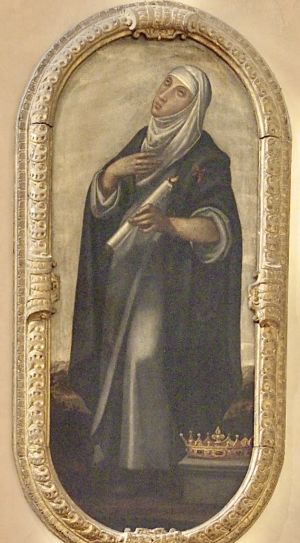
[st Bridget of Sweden, July 23]
Vine and branches: the new Mysticism
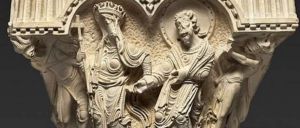
Jn 15:1-8 (.9-11)
The allegory of the vine and the branches describes the Presence of the Lord in the midst of His own. He is the source of intimate life and works.
The imperative to believe in Him (c.14) becomes a requirement to abide in Him [cf. Jn 6:56: Eucharistic theme of the "one body"].
The vine is a plant that demands much attention. In the biblical texts it is taken as a symbol of God's care for his people, and conversely its destruction depicted the ancient national calamities.
Jesus uses the image of the vine and the branches to convey a teaching on familiarity with Him and fraternity between disciples, illustrating the profound bond.
Intimate union, common nourishment, solidarity and continuity of the bond require careful and constant work, including cutting and mowing, because not all the shoots and sprouts bear fruitfulness.
But beware: divine Love is an impulse that demands that we allow ourselves to be carried. It drags; it takes us in and becomes nourishing sap. It purifies us.
It is not a dimension to be understood as an effort (basically ours) but as a... Be grasped and become involved in the motion of the life of Grace.
In comparison with the allusions of the First Testament, one notices a substitution: although the vine-dresser continues to represent the Father, the vine is no longer a figure of the people, but of Jesus.
And 'bearing fruit' is a frequent expression that indicates only Love: the true result that God expects, the unique work to be achieved in all our works.
Christ's abiding in the disciples, his union with each one, is essential to living the same divine life on earth.
Faith-love incorporates and is contagious. Where it meets with resistance, it is precisely this obstacle that will incite it to greater purity, hence to greater vigour (v.2).
The man, on the other hand, left to himself does not prolong the influence of Christ; he does not overcome the barriers of nomenclature and the normal.
He who imagines himself self-sufficient - by breaking the union - cracks the Mystery that envelops him, and will fall prey to his own festering clusters.
But it is also true that a vine-love is intrusive by its very nature: it blatantly demonstrates a full willingness to express... love (fruit, taste, life).
In short, if mission is marking time today, it is because it has already lost its dynamic vitality: adaptation plans or narratives and external reform will not suffice to resurrect it.
It is the vital encounter that brings out the waves of strength and friendliness.
Over the years, the Vocation has guided and led us to a personal way of being and a characterising sphere of relationships.
Again, the Lord continues to call, so that by entering into his language [unrepeatable, commensurate with each story and sensitivity] we are removed from conditioning that does not belong to us.
Jesus invites us to take care of the codes of interiority, and from them take the resolute impulse to which we entrust our choices and which has already guided us to grow.
From the dawn of our history and personality, He alone continues to be the intimate and gushing source of development - even of the footprints we had withheld.
If we had relied on externality, the soul would have dispersed its sap, losing the essence that belonged to it and specified it.
In this way, we would not have encountered ourselves and would not have been nourished by the more efficient constituent resources, which now together give balance, greater completeness, the ability to judge in a situation, amiable transparency.
One becomes oneself, one becomes a well-rounded person, one becomes a missionary, in the same way: by understanding that a lymph, a stimulus, flows through one's veins, which comes from One who knows more than us and opinions.
There are plants in the undergrowth, others towering up; still others, sneaking into the empty areas and mysteriously left to the full light are growing at a much faster rate than those that have been planted and installed for a long time - habitués to the point of seeming homologated.
The magic of creation - vines, shoots - speaks of another realm, of a Logos that correlates with us and wisely directs its flows and life forces.
This is what happens in the Spirit, which internalises, calls, nourishes, transmits balance or prophecy, and generates the astonishment of the whole and uniqueness.
How did those seeds (in the example I have in front of me, a double pine and a single pine) take root in precisely the right, intermediate and characteristic places - both aesthetically and in terms of utility, density and breadth? Not even I could have thought of them so neatly arranged; so aligned in perfect proportion, measure, volume and scale.
Only the Hidden Ally sees the whole, the structure, the functionality and the details of our fibres well.
He knows where to lead, and how to nourish us to regain the 'I', the qualitative unity of being.
He does this by sowing, injecting, regenerating, calibrating the energy of his and our Dream. At a convenient pace, and taking care of the rational utilitarian banality of our projects.
Unceasingly refocusing personal bearing, self-awareness, spontaneous inclination.
As well as detaching the soul from those who in a thousand ways want to leave us in ignorance of the Creatural Way, to hold on to the commonplaces and totems of their habitual, unnerving world.
This is while the Spirit separates our multifaceted thinking from false one-sided guides [old-fashioned and narrow-minded, or hysterical and sophisticated, but disembodied].
Those at the top of the class perhaps stalk, chase, and plagiarise, distracting us from the non-conformist Dialogue with the unrepeatable task of personal life.
In the Gospel passage, the Creator-farmer cuts and purifies, to reconnect.
Jesus speaks of "Vine the true one" (v.1): He alone is the authentic seed of the People planted by the Father.
It means that deviant teachings were inculcated around, and false vines were buried or displayed - like the fabulous one filled with golden vines on the door of the inner sanctum of the Temple of Jerusalem.
The lifeblood does not flow from riches, nor from doctrines and disciplines - not even from the grand, impressive magnificence of the old cult.
Not even from spineless, à la page fantasies.
The interest of the Farmer is that the Vine bears more and more Fruit, that is, Love, nothing else.
In such a trajectory, the Peasant who knows what to do, "cuts" (v.2) [also so that there are no ropes, no organised ruffians. They who absorb the energies of his people [milked and sheared] without the slightest thought of communicating - in turn - authentic life to others.
First it 'cuts' what was lush in the past but would no longer give anything.
We realise this in the time of the crisis, which unmasks and overturns nagging and importunate positions that deaden development.
Then he "purifies" (v.2: Greek text) i.e. he proceeds, as the good peasant does, to a second light pruning of the shoots of the vine; detaching those that absorb sap but thicken too much and do not have the right vitality [so as not to take nourishment away from the propulsive points].
This passage has often been interpreted as an invitation par excellence to embrace a spirituality of 'pruning' [the term in the Gospels does not exist] that makes no sense from the perspective of Faith, that is, of Love.
In ancient religions, it is the subject - the 'branch' - that has to focus on itself, identify its shortcomings, faults and vices, and 'prune' them.
Instead, only the Father-farmer knows how to identify the harmful elements, those parasitic and without a future, which are not worth continuing to support.
He acts in the reality of our journey, as one would do with an antiquated and intimately corrupt papier-mâché construction [as well as, with fashionable fantasies, which lead to emptiness].
Life in Christ does not concern itself with external limits; on the contrary, it avoids making the faults [renegades!] of the spiritual life protagonists.
Such a configuration would be obsessive, inconclusive, because settled on an image of sterile 'perfection' that God is not interested in.
Rather, it will be an astonishment to observe how in the path of Faith precisely the uncertain souls, their unsteady steps and sides considered dark, can hide the true Pearls of the world.
Spontaneous power, the mystery of images that spring from the depths of vocational roots and reactivate energies; the multi-layered work of a radical, innate essence that accompanies us [immanent being and knows more about it than we do] are energies all capable of nourishing and correcting any geometry at the table.
How not to produce irreparable damage? It yields to external dirigisme.
The impediments are taken care of by the Father, not by the individual branch, nor by other branches - veterans, experts, veterans that is.
Though higher, bigger... elected to life, they would not provide the right vital mood, nor organic bonding: they would only present us with buried contents, and the bill.
To internalise and live the message:
Which lymph satiates you, the external one?
What worldly, normal geometry do you follow?
What is your idea of improvement in the Faith?
Mysticism of Joy: being oneself, sudden revelation
Resilience not gritted teeth, and Resemblance not possessiveness
(Jn 15:9-11)
"Abide in love, my love [...] If my commandments you keep, you will abide in my love [...] I have told you these things so that the joy that is mine may be in you and your joy may be full."
Jesus just used the image of the vineyard to configure the character of his new people and the circulation of life that unites them.
Life of special intensity and temperament.
The allegory of the vine and the branches is now translated into existential terms.
The propagation of divine dynamism in us initiates a particular and accentuated current of love.
The Lord does not ask to be loved, but to receive (before transfusing) God's way - the Gift that descends from the Father and from Him.The fate of the withered branch [deprived of the sap of the Spirit] and cut off is the sense of futility and anguish (v.6).
But - in the Vineyard - even the cuts, castings, cleanings and purifications (v.2) that life imposes do not prevent it from producing abundant and juicy clusters.
A new song, finally free of dissociation.
In fact, discomfort brings an even more pronounced flow to the bower, a walk of character, and a dilation.
It is the liberating opportunity that re-actualises being, and can overflow.
He wants to bring us to the house that belongs to us, not into a territory of chronicity [nailed to the yoke of the canons].
The farmer is the Father (v.1) who cuts and trims the vine of useless shoots - though they too appear green (v.2) - in order to increase the vitality of the field.
Here we linger, surrendering our forecasts to Grace - in the paradoxical protection of personal concentration.
Let us leave it to Him to bring down the infecund disguises.
In this way, it will be the wise Farmer who extinguishes the dispersive patterns and ignites our voice - the voice that belongs to us.
The energy of metamorphosis that will expand from critical situations will make us be, instead of look like [outside].
From within, the searching gaze will be shifted and made essential, leaving room for the virtue of one's own roots.
Gradually the act that required sterile forcing will be skilfully dismantled - so that we do not close ourselves off in preconceptions.
Apparent strength will have to give way to real strength.
By Way, everyone will accept another self-image; without detaching themselves from living together.
Holding on will give way to flexibility, to vocational melody.
Thus, making way for the authentic way of being.
As we learn to take a good look and rely on all that providentially appears, elastic answers will spring forth.
Personal Joy will pour into the soul - not the fatuous one of euphoria or exaltation, transient of the many leaves [to be e.g. like the others; at all costs 'safe', accompanied or crowded].
Because by not having to hide other preferences, a different identifying character, or our own frailties, we will become stronger.
Without always having to control the situation.
The intimate joy that will activate us will be the fruit of a new awareness, which finally contributes to the 'catholic' conviviality of differences.
Awareness that combines the divine proposal of non-possessive similarity with our capacity to welcome ourselves - not to struggle unnaturally.
Even in vulnerability. Despite the different tastes around.
An ad personam life-wave that becomes uncommon resilience, and different Happiness.
The experience of fullness, of correspondence in understanding the meaning of one's being, is an impossible task in terms of both capacity and project.
Or of cerebral predictions, normalised expectations, intentions of perfection. That would be a grave commandment.
By forcing, by not laying down mental models, by not stepping back a little in the induced thoughts, the feeling of a human being's condition on earth as a conflicting event, woven with restlessness - unfulfilled, tragic, absurd - would finally prevail.
Taking possession of God is not the result of any expectation, nor of emotions, situations on command, but of letting oneself be saved: being introduced into a saved life - which sometimes comes suddenly, always unexpectedly.
Loving (even) God cannot be a devout initiative: it is only an ungritted response to an unthinking and unprepared Manifestation, which precedes and astounds the religious, personal identification of the world.
By remaining in the Father-Son circulation of love, we will be enveloped by an intoxication that intuits the meaning and uniqueness of our seed.
It changes the way we see life, relationships, suffering, and Joy.
Laying down the efforts and brooding, encountering the enigmas and unknown sides, the Wisdom that inhabits us emerges.
To internalise and live the message:
What sap satiates you, the external one?
What is your idea of improvement and Happiness?
What is your existential awareness of Revelation?
Belonging, or dissatisfaction

If we consider these beati and the great throng of those who have been canonized and beatified, we can understand what it means to live as branches of Christ, the true vine, and to bear fruit. Today’s Gospel puts before us once more the image of this climbing plant, that spreads so luxuriantly in the east, a symbol of vitality and a metaphor for the beauty and dynamism of Jesus’ fellowship with his disciples and friends – with us.
In the parable of the vine, Jesus does not say: “You are the vine”, but: “I am the vine, you are the branches” (Jn 15:5). In other words: “As the branches are joined to the vine, so you belong to me!
But inasmuch as you belong to me, you also belong to one another.” This belonging to each other and to him is not some ideal, imaginary, symbolic relationship, but – I would almost want to say – a biological, life-transmitting state of belonging to Jesus Christ. Such is the Church, this communion of life with Jesus Christ and for one another, a communion that is rooted in baptism and is deepened and given more and more vitality in the Eucharist. “I am the true vine” actually means: “I am you and you are I” – an unprecedented identification of the Lord with us, with his Church.
On the road to Damascus, Christ himself asked Saul, the persecutor of the Church: “Why do you persecute me?” (Acts 9:4). With these words the Lord expresses the common destiny that arises from his Church’s inner communion of life with himself, the risen one. He continues to live in his Church in this world. He is present among us, and we with him. “Why do you persecute me?” It is ultimately at Jesus that persecution of his Church is directed. At the same time, this means that when we are oppressed for the sake of our faith, we are not alone: Jesus Christ is beside us and with us.
Once again, Jesus says in the parable, and I quote: “I am the true vine, and my Father is the vinedresser” (Jn 15:1), and he goes on to explain that the vinedresser reaches for his knife, cuts off the withered branches and prunes the fruit-bearing ones, so that they bring forth more fruit. Expressed in terms of the image from the prophet Ezekiel that we heard in the first reading, God wants to take the dead heart of stone out of our breast and give us a living heart of flesh (cf. Ez 36:26), a loving heart, a heart of gentleness and peace. He wants to bestow new life upon us, full of vitality. Christ came to call sinners. It is they who need the doctor, not the healthy (cf. Lk 5:31f.). Hence, as the Second Vatican Council expresses it, the Church is the “universal sacrament of salvation” (Lumen Gentium, 48), existing for sinners, for us, in order to open up to us the path of conversion, healing and life. That is the Church’s great perennial mission, entrusted to her by Christ.
Many people see only the outward form of the Church. This makes the Church appear as merely one of the many organizations within a democratic society, whose criteria and laws are then applied to the task of evaluating and dealing with such a complex entity as the “Church”. If to this is added the sad experience that the Church contains both good and bad fish, wheat and darnel, and if only these negative aspects are taken into account, then the great and beautiful mystery of the Church is no longer seen.
It follows that belonging to this vine, the “Church”, is no longer a source of joy. Dissatisfaction and discontent begin to spread, when people’s superficial and mistaken notions of “Church”, their “dream Church”, fail to materialize! Then we no longer hear the glad song “Thanks be to God who in his grace has called me into his Church” that generations of Catholics have sung with conviction.
But let us return to the Gospel. The Lord continues thus: “Abide in me, and I in you. As the branch cannot bear fruit by itself, unless it abides in the vine, neither can you, unless you abide in me ... for apart from me [i.e. separated from me, or outside me] you can do nothing” (Jn 15:4f.).
Every one of us is faced with this choice. The Lord reminds us how much is at stake as he continues his parable: “If a man does not abide in me, he is cast forth as a branch and withers; and the branches are gathered, thrown into the fire and burned” (Jn 15:6). In his commentary on this text, Saint Augustine says: “The branch is suitable only for one of two things, either the vine or the fire: if it is not in the vine, its place will be in the fire; and that it may escape the latter, may it have its place in the vine” (In Ioan. Ev. Tract. 81:3 [PL 35, 1842]).
The decision that is required of us here makes us keenly aware of the fundamental significance of our life choices. But at the same time, the image of the vine is a sign of hope and confidence. Christ himself came into this world through his incarnation, to be our root. Whatever hardship or drought befall us, he is the source that offers us the water of life, that feeds and strengthens us. He takes upon himself all our sins, anxieties and sufferings and he purifies and transforms us, in a way that is ultimately mysterious, into good branches that produce good wine. In such times of hardship we can sometimes feel as if we ourselves were in the wine-press, like grapes being utterly crushed. But we know that if we are joined to Christ we become mature wine. God can transform into love even the burdensome and oppressive aspects of our lives. It is important that we “abide” in Christ, in the vine. The evangelist uses the word “abide” a dozen times in this brief passage. This “abiding in Christ” characterizes the whole of the parable. In our era of restlessness and lack of commitment, when so many people lose their way and their grounding, when loving fidelity in marriage and friendship has become so fragile and short-lived, when in our need we cry out like the disciples on the road to Emmaus: “Lord, stay with us, for it is almost evening and darkness is all around us!” (cf. Lk 24:29), in this present era, the risen Lord gives us a place of refuge, a place of light, hope and confidence, a place of rest and security. When drought and death loom over the branches, then in Christ we find future, life and joy. In him we always find forgiveness and the opportunity to begin again, to be transformed as we are drawn into his love.
To abide in Christ means, as we saw earlier, to abide in the Church as well. The whole communion of the faithful has been firmly incorporated into the vine, into Christ. In Christ we belong together. Within this communion he supports us, and at the same time all the members support one another. We stand firm together against the storm and offer one another protection. Those who believe are not alone. We do not believe alone, we believe with the whole Church of all times and places, with the Church in heaven and the Church on earth.
The Church, as the herald of God’s word and dispenser of the sacraments, joins us to Christ, the true vine. The Church as “fullness and completion of the Redeemer”, as Pius XII expressed it (Pius XII, Mystici Corporis, AAS 35 [1943] p. 230: “plenitudo et complementum Redemptoris”), is to us a pledge of divine life and mediator of those fruits of which the parable of the vine speaks. Thus the Church is God’s most beautiful gift. Therefore Saint Augustine could say: “as much as any man loves the Church, so much has he the Holy Spirit” (In Ioan. Ev. Tract. 32:8 [PL 35:1646]). With and in the Church we may proclaim to all people that Christ is the source of life, that he exists, that he is the great one for whom we keep watch, for whom we long so much. He gives himself, and thus he gives us God, happiness, and love. Whoever believes in Christ has a future. For God has no desire for what is withered, dead, ersatz, and finally discarded: he wants what is fruitful and alive, he wants life in its fullness and he gives us life in its fullness.
[Pope Benedict, homily in Berlin, 22 September 2011]
Young and articulate Church
Dear young people!
1. I come to you to announce the next World Youth Day. As I write these words, the memory is still fresh of the last Youth Day, culminating in the unforgettable meeting at Santiago de Compostela where, together with many of you, I went on pilgrimage. That was an ecclesial event of great importance, an exceptional witness of faith on the part of thousands of young people from every continent, an intense moment of evangelization. At Santiago, the Church presented once again to the world her youthful image, full of joy, of hope and of enthusiasm in the faith. The Santiago event was a great gift for the Church; I would even venture to say, for society as a whole. For this I shall never cease to thank Our Lord.
The theme of the last Youth Day, as you will remember, was centred on Christ. This year, instead, I should like to propose that you reflect on the theme of the Church. The correlation is not haphazard. Between Christ and his Church there is a very close and deep organic relationship. Christ lives in the Church, the Church is the mystery of Christ living and working among us, as St Paul says: "Christ in you, the hope of glory" (Col 1:27); and again: "You are the body of Christ and individually members of it" (1Co 12: 27).
On the occasion of this V World Youth Day, I want therefore to invite you all to a new discovery of the Church and of your mission in the Church, as young people.
The Church of Christ is a fascinating and wonderful reality. She is ancient, being almost two thousand years old, but, at the same time, forever young, thanks to the Holy Spirit working within her. The Church is young because her message of salvation is young, that is, relevant for all times. That is why there is a dialogue of such importance between the Church and youth: "The Church has so much to talk about with youth and youth have so much to share with the Church. This mutual dialogue, by taking place with great cordiality, clarity and courage ... will be a source of richness and youthfulness for the Church ...", as I wrote in the Apostolic Exhortation Christifideles Laici (n. 46). I should like the V Day to contribute towards developing this dialogue both at the level of the Church’s life and in the existence of each one of you.
2. In the Bible, among the many images expressing the mystery of the Church, we find also the image of the vine (cf. Jer 2:21; Is 5:1-7). The Church is the vine planted by the Lord himself, a vine that rejoices in his special love.
In John’s Gospel, Christ explains the fundamental principle of the life of this vine when He says: "I am the vine, you are the branches" (Jn 15:5). These are the very words that I have chosen as theme for the next World Youth Day. And so, I appeal to all of you: Young people, be living branches in the Church, be branches laden with fruit!
To be living branches in the vineyard of the Church means above all to be in living communion with Christ the vine. The branches are not self-sufficient; they are totally dependent on the vine. In the vine is the source of their life. Likewise, in Baptism, each one of us was grafted onto Christ, and received the free gift of new life. To be living branches, you must live this reality of your Baptism, deepening every day your communion with the Lord, by listening to his Word and obeying it, by participating in the Eucharist and the sacrament of Reconciliation, and by speaking personally with Our Lord in prayer. Jesus says: "He who abides in me and I in him bears much fruit, for apart from me you can do nothing" (Jn 15:5).
To be living branches in the vineyard of the Church also means accepting a commitment in the ecclesial community and in society. The Second Vatican Council explains this very clearly: "As in the structure of a living body no member is merely passive, but each has a share in the functioning as well as in the life of the body: so too, in the Body of Christ, which is the Church, ‘the whole body ... when each part is working properly, makes bodily growth’ (Eph 4:16)" (Apostolicam Actuositatem, 2). We all share, according to our particular vocations, in the mission of Christ and of his Church. Ecclesial communion is a missionary communion.
The Church needs many labourers. For this V World Day, Christ himself extends to you young people a great invitation: "You go into my vineyard too" (Mt 20:4).
The Church is an organic communion, in which each one has his or her own place and his or her own task. You young people have also your own place. A very important one. On the threshold of the year Two Thousand, the Church feels called by the Lord to an ever more intense effort of evangelization; she has special need of you, of your dynamism, your authenticity, your ardent will to grow, the freshness of your faith. So, place your youthful talents unreservedly at the service of the Church, with the generosity that is characteristic of your age. Take your place in the Church. It is not merely the place of objects of pastoral care. It is above all one of active protagonists in the Church’s mission (cf.
Christifideles Laici, 46). The Church is yours. More still, you yourselves are the Church!
For her part, the Church has so much to offer to you young people. We are witnessing today a very significant phenomenon. After a period of distrust and indifference with regard to the Church, many young people are now rediscovering the Church as a sure and faithful guide, as an indispensable point of communion with God and with their brothers and sisters, as an area of spiritual growth and commitment. This is a most eloquent sign. Many of you are no longer content just with belonging to the Church formally, statistically. They are looking for something more.
Special opportunities for rediscovering the Church and ecclesial commitment are found in associations, movements and the various ecclesial communities for youth. Today, indeed, we speak of a "new era of group endeavours" within the Church (cf.
Christifideles Laici , 29). This is an immense treasure and a precious gift of the Holy Spirit, for which we should be most grateful.
"You go into my vineyard too" (Mt 20: 4). The vineyard of the Church also needs special labourers, serving her in a specific way, with the radicalism of the Gospel, consecrating their whole life to her service. I refer to priestly and religious vocations, and also to the vocations of consecrated lay people in the world. I am sure that many of you, as you meditate on the mystery of the Church, will hear in the depths of your soul the call of Christ: "You go into my vineyard too ...". If you hear this voice addressed to you personally, do not hesitate to answer "yes" to Our Lord. Do not be afraid. Total service of Christ and his Church is a wonderful vocation and a magnificent gift. Christ will help you.
This, in broad outline, is the substance of the theme for the next World Day, a day for rediscovering the Church.
3. The V World Youth Day 1990 will be celebrated on Palm Sunday in each of your dioceses.
It is precisely the diocesan Church that you must discover. The Church is not an abstract and disembodied reality. On the contrary, it is a very concrete reality: precisely, a diocesan Church gathered around the Bishop, successor of the Apostles. It is also the parish Church that you must discover, its life, its needs and the many communities that exist and work within it. You will bring to this Church the joy and the enthusiasm you have experienced in world-wide encounters like that of Santiago and in the meetings of the movements and associations to which you belong. In this concrete Church you young people must be living and fruitful branches; you must, that is, be conscious and responsible sharers in its mission. Welcome this Church with all its spiritual riches; welcome it in the person of your Bishops, of the Priests, of the Religious and also of your brothers and sisters in the faith; welcome it with faith and with filial love.
The World Day, as you see, is not only a festival, but also a serious spiritual commitment. To be able to gather its fruits, it is necessary to follow a path of preparation under the guidance of your Pastors in the dioceses, in the parishes, in the associations, the movements and the ecclesial communities for youth. Try to know the Church better: her nature, her two thousand years of history, and her present situation. Try to discover your place in the Church and your mission as young people.
In this spiritual journey you can be helped by my Apostolic Exhortation Christifideles Laici (1988), dedicated precisely to meditation on the vocation and mission of the lay faithful in the Church and in the world. I invite your Pastors to help you in gaining a better understanding of its message.
I entrust the process of spiritual preparation and the actual celebration of the forthcoming World Youth Day 1990 to the special intercession of Our Lady. May She, whom we venerate as Mother of the Church, be your Teacher and Guide in this renewal of your ecclesial commitment.
To all of you I send, affectionately, my Blessing.
From the Vatican, 26 November 1989, Solemnity of O.L. Jesus Christ, King of the Universe.
[Pope John Paul II, Message for the III. World Youth Day]
United with Him in a new way
Today’s Gospel shows us Jesus during the Last Supper, in the moment He knows His death is close at hand. His ‘hour’ has come. For it is the last time He is with His disciples, and now He wants to impress firmly a fundamental truth in their minds: even when He will no longer be physically present in the midst of them, they will still be able to remain united to Him in a new way, and thus bear much fruit. Everyone can be united to Jesus in a new way. If, on the contrary, one should lose this unity with Him, this union with Him, would become sterile, or rather, harmful to the community. And to express this reality, this new way of being united to Him, Jesus uses the image of the vine and the branches: Just “as a branch cannot bear fruit by itself, unless it abides in the vine, neither can you, unless you abide in me. I am the vine, you are the branches” (Jn 15:4-5). With this image He teaches us how to abide Him, to be united to Him, even though He is not physically present.
Jesus is the vine, and through Him — like the sap in the tree — the very love of God, the Holy Spirit is passed to the branches. Look: we are the branches, and through this parable, Jesus wants us to understand the importance of remaining united to him. The branches are not self-sufficient, but depend totally on the vine, in which the source of their life is found. So it is with us Christians. Grafted by Baptism in Christ, we have freely received the gift of new life from Him; and thanks to the Church we are able to remain in vital communion with Christ. We must remain faithful to Baptism, and grow in intimacy with the Lord through prayer, listening and docility to His Word — read the Gospel —, participation in the Sacraments, especially the Eucharist and Reconciliation.
When one is intimately united to Jesus, he enjoys the gifts of the Holy Spirit, which are — as St Paul tells us — “love, joy, peace, patience, kindness, generosity, faithfulness, gentleness, self-control” (Gal 5:22). These are the gifts that we receive if we remain united in Jesus; and therefore a person who is so united in Him does so much good for neighbour and society, is a Christian person. In fact, one is recognized as a true Christian by this attitude, as a tree is recognized by its fruit. The fruits of this profound union with Christ are wonderful: our whole person is transformed by the grace of the Spirit: soul, understanding, will, affections, and even body, because we are united body and soul. We receive a new way of being, the life of Christ becomes our own: we are able to think like Him, to act like Him, to see the world and the things in it with the eyes of Jesus. And so we are able to love our brothers, beginning with the poorest and those who suffer the most, as He did and love them with His heart, and so bear fruits of goodness, of charity, and of peace in the world.
Each one of us is a branch of the one vine; and all of us together are called to bear the fruits of this common membership in Christ and in the Church. Let us entrust ourselves to the intercession of the Virgin Mary, so that we might be able to be living branches in the Church and witness to our faith in a consistent manner — consistency of one’s own life and thought, of life and faith — knowing that all of us, according to our particular vocations, participate in the one saving mission of Christ.
[Pope Francis, Regina Coeli 3 May 2015]
16th Sunday in O.T.
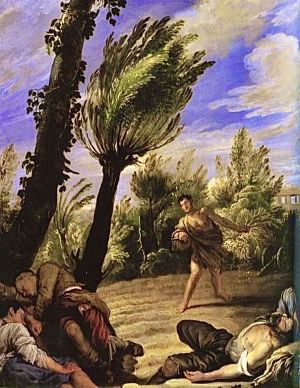
16th Sunday in Ordinary Time (year A) [19 July 2026]
First Reading from the Book of Wisdom (12:3, 16–19)
The Book of Wisdom, written in Greek by a Jew from Alexandria shortly before the coming of Christ, is addressed to people steeped in Greek culture, which exalted intelligence and philosophy as the highest paths to knowledge. The author, however, reminds us that true wisdom belongs to God and that his mysteries are not attained through human knowledge, but are received as a gift and with humility. This is the same truth that Jesus expresses when he points out that the Father reveals his secrets to the little ones rather than to the wise of this world (Mt 11:25, Lk 10:21). The central theme of the text is the relationship between omnipotence and mercy. On the one hand, God is the absolute Lord of the universe: there is no other God; he rules over all things and possesses infinite power. On the other hand, this power is not manifested through violence, but through gentleness and goodness: God cares for all things, judges with leniency, governs with tenderness and, after sin, always offers the possibility of conversion. The author puts forward a surprising idea: God is merciful precisely because he is almighty. Human beings, often insecure about their own authority, feel the need to flaunt their power; God, on the other hand, who possesses all power, has nothing to prove. This is why his power is expressed in patience, forgiveness and tenderness. This image of God is the fruit of a long journey of revelation. Through the prophets, Israel learnt that God is not a tyrannical ruler, but a loving Father. Like Elijah on Mount Horeb, believers discover that God does not reveal himself in the storm or the earthquake, but in the gentle breeze. His strength is unobtrusive yet invincible, for it is the strength of love. This discovery also has implications for humankind. If we are created in God’s image, we are called to imitate his way of acting. Therefore, the righteous do not seek domination or violence, but humanity, compassion and service. Jesus takes up this same teaching when he instructs his disciples that the logic of power must not prevail amongst them, but rather that of the service of love (Mk 9:35; Mt 20:26–27; Mt 23:11; Lk 22:26). In short, God’s greatness does not lie in dominating by force, but in saving through mercy; and his omnipotence is manifested in forbearance, forgiveness and the ability to always offer humankind a new chance. Those who wish to resemble God must make goodness—and not power—the measure of their lives.
Responsorial Psalm (85/86)
In this psalm, the image of a tender and merciful God emerges, one who reveals his power through mercy. If we read the psalm in the light of the first reading, taken from the Book of Wisdom, we realise that the author marvels at both God’s greatness and his tenderness. One explains the other, for if God is forgiving towards humankind, it is precisely because He is almighty. And this dual emphasis – forgiveness and greatness – recurs in the stanzas of the psalm: the 1st and 3rd stanzas focus on forgiveness; the second stanza is about greatness. First stanza: ‘You who are good and forgiving, you are full of mercy towards those who call upon you.’ Third stanza: ‘You, Lord, are a merciful and compassionate God, slow to anger, abounding in love and faithfulness. Turn to me and have mercy.’ 2nd stanza: “Great are You and You work wonders; You alone are God”. In the third stanza, “a merciful and compassionate God” leads us to God’s great revelation to Moses on Mount Sinai (Ex 34:6). It comes at the worst possible moment, immediately after the episode of the golden calf, when Moses, in his anger, had broken the tablets of the Law. The Covenant had been desecrated by the people, who had made themselves an idol. God does not renounce the Covenant: he tells Moses to carve two new stone tablets, upon which he will inscribe the same words. This is a sign of mercy. And it is precisely here that he says: “God, merciful and gracious, slow to anger…”. It is interesting to note Moses’ reaction here (cf. Ex 34:8–9). The author of the psalm reacts just as Moses did: he recalls God’s mercy and ‘takes Him at His word’, imploring Him: ‘You, Lord, God of tenderness and compassion… Turn your gaze upon me and have mercy on me’. In all our prayers, we too recall his merciful plan for humanity and implore him to hasten its fulfilment (cf. Rom 8:26–27). The parallel with the Book of Exodus continues because, following the revelation and Moses’ response, God establishes a covenant (cf. Ex 34:10). But the psalm adds something new compared with the Book of Exodus, as it was written much later. During the Babylonian exile, Israel became aware of the universal nature of God’s plan—namely, that all nations are called to know him. But how can they come to know him? By discovering God’s work on behalf of his people. The Jewish people do not presume to convert others, but they understand that God’s work on their behalf becomes a means of conversion for other nations: if they open their eyes, they recognise the God of Israel as their Saviour and turn to him.
Second Reading from the Letter of Saint Paul the Apostle to the Romans (8:26–27)
Saint Paul has already said that the life of the baptised is under the influence of the Spirit. He emphasises once again the role of the Holy Spirit (in this chapter he mentions him 18 times). He highlights that the life of the baptised unfolds entirely under his influence, if we allow ourselves to be guided by him. The Spirit dwells within us, and God’s great plan is like the process of childbirth. The labour pains are the prelude to great joy. “I consider that the sufferings of the present time are not worth comparing with the glory that is to be revealed… We know that the whole creation groans and suffers the pains of childbirth.” And it is the Spirit who guides our prayer, as we read in this very brief text which nevertheless contains an important contrast: on the one hand, in the last verse: ‘it is in accordance with God’s will that the Spirit intercedes for the saints’; on the other: ‘he comes to the aid of our weakness, for we do not know how to pray as we ought’. It teaches us that we pray by entering into God’s will, looking at the world and at ourselves through God’s eyes; rejoicing in the signs—however small—of the Kingdom’s advance, which are brotherhood, sharing, solidarity and respect. We must never lose heart in the face of humanity’s slow progress, for the Spirit blows ceaselessly even if it is not always visible. The reference to the Lord’s Prayer is immediate: ‘Hallowed be thy name, thy kingdom come, thy will be done on earth as it is in heaven’—three expressions that draw us into God’s plans. We need the help of the Holy Spirit to enlighten our prayer, just as Jesus promised: “I will pray to the Father, and he will give you another Paraclete to be with you for ever” (Jn 14:16). He knows the secrets of God’s plan, as Paul so aptly puts it: “The Spirit searches everything, even the depths of God… We have not received the spirit of the world, but the Spirit who comes from God, so that we may know what God has bestowed upon us’ (1 Cor 2:10–12). And the model is Jesus, always guided by the Spirit: his whole life is marked by the fulfilment of the Father’s mission, right up to Gethsemane, when he proclaims, ‘Father, not my will, but yours be done’ (Mark 14:36). And the author of the Letter to the Hebrews sums up his life thus: “Upon entering the world, Christ says… ‘Behold, I have come to do your will, O God’” (Hebrews 10:5, 9).
From the Gospel according to Matthew (13:24–43)
The parable of the weeds is not primarily intended to explain the origin of evil, although it reaffirms a fundamental principle: God is not the author of evil. As in the account in Genesis, everything God has created is good; the owner of the field sows only good wheat, whilst the weeds are the work of an enemy. In the context of the Gospel of Matthew, however, this parable is linked to that of the sower. Having shown that the proclamation of the Kingdom does not always bear the hoped-for fruit, Jesus addresses a new question: why not immediately remove what stands in the way of good? The servants suggest pulling up the weeds, but the owner forbids this so as not to uproot the wheat as well. Only at harvest time will the separation take place.
The message is clear: it is not for human beings to pass final judgement or to eliminate evil in others; this task belongs to God. Jesus therefore invites us to live with the simultaneous presence of good and evil in the world and within communities, avoiding elitist or fanatical attitudes. Matthew was probably addressing a community tempted to draw a rigid distinction between the ‘good’ and the ‘bad’. At the end of time, God will make the final judgement. The Bible often presents judgement as a separation between the righteous and the wicked, but the reality is deeper: the line separating good from evil runs through the heart of every person. No one is merely righteous or merely holy, but we all carry within us both the good wheat and the weeds. God will not destroy the good along with the evil: he will save that which, in each of us, is capable of bearing fruit. After the parable of the weeds, Jesus tells the parables of the mustard seed and the yeast. Whilst the previous parables highlighted the obstacles to the Kingdom, these reveal its inner strength. What is small and hidden inevitably grows to full realisation: the seed becomes a great tree and the yeast causes the whole dough to rise. Herein lies the central teaching that Jesus sets out in three fundamental attitudes: trust, because the Kingdom of God grows even when we cannot see it; patience, because the harvest will come at the time appointed by God; and humility, because no one can consider themselves entirely righteous or authorised to judge others. God’s patience stems from his desire not to lose even a single good ear of corn amongst the weeds. But above all, it reveals that God never ceases to hope for humanity’s conversion and for the transformation of the ‘tares’ in our hearts into good grain. This is the true meaning of his merciful patience.
+Giovanni D’Ercole
The Gospel of Matthew written in Hebrew or Aramaic is no longer extant, but in the Greek Gospel that we possess we still continue to hear, in a certain way, the persuasive voice of the publican Matthew, who, having become an Apostle, continues to proclaim God's saving mercy to us. And let us listen to St Matthew's message, meditating upon it ever anew also to learn to stand up and follow Jesus with determination (Pope Benedict)
Non abbiamo più il Vangelo scritto da Matteo in ebraico o in aramaico, ma nel Vangelo greco che abbiamo continuiamo a udire ancora, in qualche modo, la voce persuasiva del pubblicano Matteo che, diventato Apostolo, séguita ad annunciarci la salvatrice misericordia di Dio e ascoltiamo questo messaggio di san Matteo, meditiamolo sempre di nuovo per imparare anche noi ad alzarci e a seguire Gesù con decisione (Papa Benedetto)
That denarius clearly represents eternal life, a gift that God reserves for all. Indeed those who are considered the "last", if they accept, become the "first", whereas the "first" can risk becoming the "last" [Pope Benedict]
Quel denaro rappresenta la vita eterna, dono che Dio riserva a tutti. Anzi, proprio quelli che sono considerati "ultimi", se lo accettano, diventano "primi", mentre i "primi" possono rischiare di finire "ultimi" [Papa Benedetto]
The sower is Jesus. With this image, we can see that he presents himself as one who does not impose himself, but rather offers himself. He does not attract us by conquering us, but by donating himself: he casts seeds. With patience and generosity, he spreads his Word, which is not a cage or a trap, but a seed which can bear fruit (Pope Francis)
Il seminatore è Gesù. Notiamo che, con questa immagine, Egli si presenta come uno che non si impone, ma si propone; non ci attira conquistandoci, ma donandosi: butta il seme. Egli sparge con pazienza e generosità la sua Parola, che non è una gabbia o una trappola, ma un seme che può portare frutto (Papa Francesco)
The Church desires to give thanks to the Most Holy Trinity for the "mystery of woman" and for every woman - for that which constitutes the eternal measure of her feminine dignity, for the "great works of God", which throughout human history have been accomplished in and through her (Mulieris Dignitatem n.31)
La Chiesa desidera ringraziare la Santissima Trinità per il «mistero della donna», e, per ogni donna - per ciò che costituisce l'eterna misura della sua dignità femminile, per le «grandi opere di Dio» che nella storia delle generazioni umane si sono compiute in lei e per mezzo di lei (Mulieris Dignitatem n.31)
Simon, a Pharisee and rich 'notable' of the city, holds a banquet in his house in honour of Jesus. Unexpectedly from the back of the room enters a guest who was neither invited nor expected […] (Pope Benedict)
Simone, fariseo e ricco “notabile” della città, tiene in casa sua un banchetto in onore di Gesù. Inaspettatamente dal fondo della sala entra un’ospite non invitata né prevista […] (Papa Benedetto)
God excludes no one […] God does not let himself be conditioned by our human prejudices (Pope Benedict)
The “reading and meditation of the word of God root us more deeply in Christ and guide our ministry as servants of reconciliation, justice and peace” (second Synod for Africa, Propositio 46)
La lettura e la meditazione della Parola di Dio ci radicano più profondamente in Cristo e orientano il nostro ministero di servitori della riconciliazione, della giustizia e della pace (Secondo Sinodo per l’Africa, Propositio 46)
duevie.art
don Giuseppe Nespeca
Tel. 333-1329741
Disclaimer
Questo blog non rappresenta una testata giornalistica in quanto viene aggiornato senza alcuna periodicità. Non può pertanto considerarsi un prodotto editoriale ai sensi della legge N°62 del 07/03/2001.
Le immagini sono tratte da internet, ma se il loro uso violasse diritti d'autore, lo si comunichi all'autore del blog che provvederà alla loro pronta rimozione.
L'autore dichiara di non essere responsabile dei commenti lasciati nei post. Eventuali commenti dei lettori, lesivi dell'immagine o dell'onorabilità di persone terze, il cui contenuto fosse ritenuto non idoneo alla pubblicazione verranno insindacabilmente rimossi.