Oct 10, 2026 Written by 

Returning the image of the most authentic humanity to God

What Uniqueness characterizes it?

(Mt 22,15-21)


After the expulsion of the sellers from the Temple, the objection on authority and the parables of the two sons, the murderous vinedressers, the rejected banquet [all referred to the élite], here is another clash between Jesus and the political chiefs and religious leaders - the latter ones placed behind the scenes.


Jesus [present in his intimates] systematically dismantles the traps set up by the authorities and the experts.

With tested double-dealing, they approach Him trying to stroke his self-love [v.16: situations that also often occur to critical witnesses].

The interest of the clever clashes, however, with the focus of Christ on the real good of people and respect for the intelligence of things - not to eagerness for approval or opportunism.

Right in the Temple (Mt 21:23) - the eminent Abode of the one Lord God - these gendarmes provoke the new Rabbi about paying taxes to the Romans (22:17).

We know what was at stake: the accusation of not being a prophet according to divine right, or [vice versa] that of collaborationism with the occupiers.

The Master does not allow himself to be fooled by the ostentation of closeness to the God of Israel - which is false because it is externally sought - and He plays them all off easily.

In the Temple of Jerusalem, it was forbidden to carry Roman coins, which depicted imperial profiles and insignia contrary to the Commandment 'Thou shalt not make unto thee any image'.

He asked for them, however, because He did not actually have any.

But the paladin saints themselves hand Him one.... The scene borders on the ridiculous.

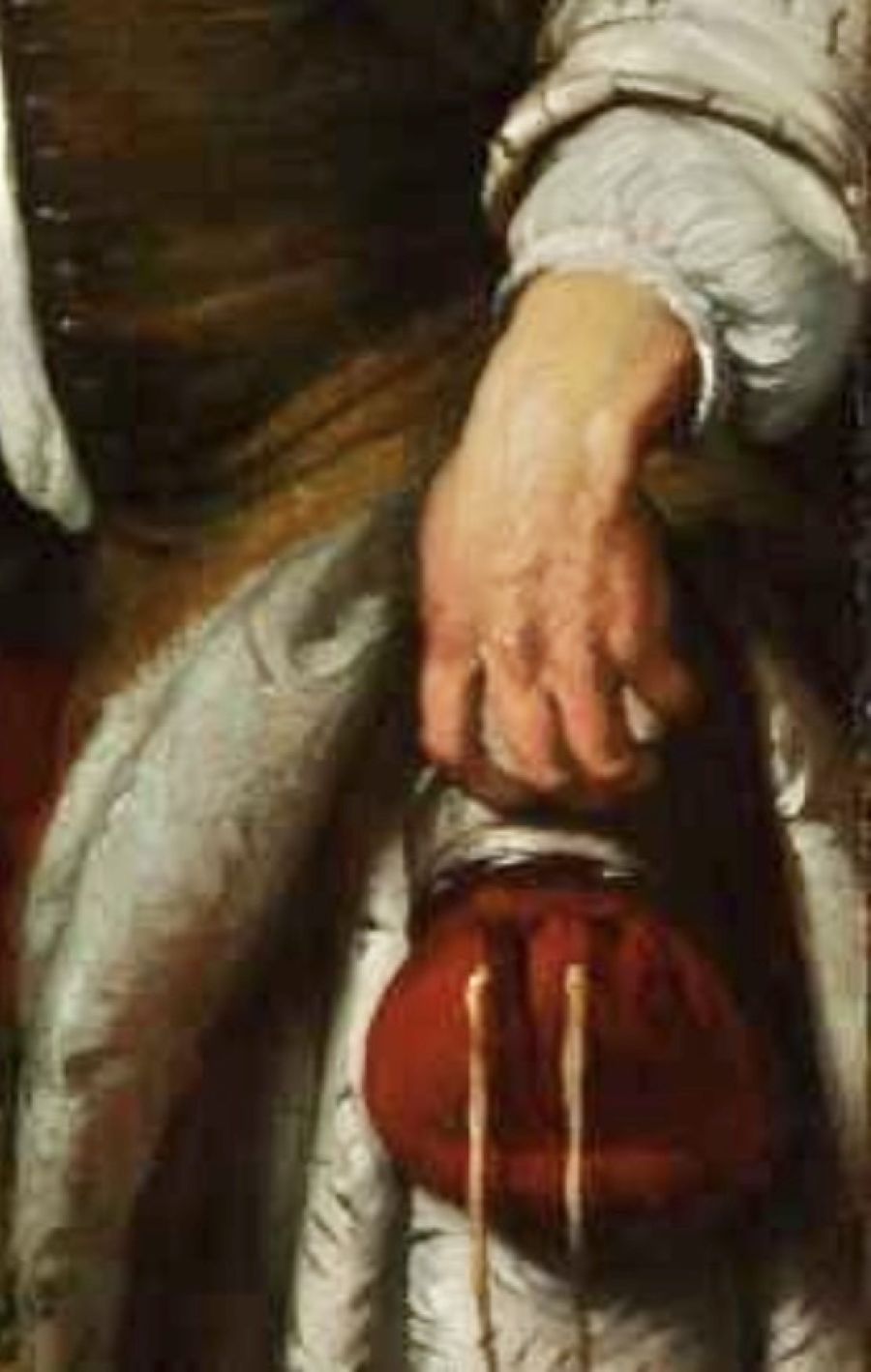
Drawing the forbidden coin from the pouch concealed under the cloak, the very chiefs reveal their true God: self-interest [well concealed under devout and ostentatious manners, which only act as a smokescreen].

Christ invites us not to allow ourselves to be flattered by the exhibitionist duplicity of the “signs”: what is important is not to deceive people by using pious forms as theatrical masquerades [v.18 Greek text].

The à la page or purity fanatics live only the epidermic angle; and they rely on it: they not infrequently hide well the very material passions they disdain.

It does not work with Christ.

It is a primary element of the testimony of authentic Faith - not the flaunted one.

Not parading dissimulation and material intrigue is crucial. It is also so in difficult, unstable, or seductive situations.

Each one is called to «return» to his true Lord the indelible «image and likeness» engraved on him.

So let the coin be «given back» to its 'master'. This remains essential for anyone to be fully realized, and to flourish.

Woman and man - creatures in whom the «image and likeness» of God is imprinted - have to «render» themselves to the Creator (v.21) who dwells in their essence as persons.


So where, in short, has the dominant man left his mark? On money.

Money perfectly reflects his icon.

Therefore, if you wish to know who the emperor is and what the exercise of power entails, look at the coin.

If, on the other hand, you wish to know God, His glory, and His humanising and genuine prestige, look at authentic women and men.

Humanity is sealed by far more intimate and natural affiliations than those of convenience.


[29th Sunday in O.T. (year A), October 18, 2026]

303 Last modified on Sunday, 18 October 2026 12:50
don Giuseppe Nespeca

Giuseppe Nespeca è architetto e sacerdote. Cultore della Sacra scrittura è autore della raccolta "Due Fuochi due Vie - Religione e Fede, Vangeli e Tao"; coautore del libro "Dialogo e Solstizio".

Each time we celebrate the dedication of a church, an essential truth is recalled: the physical temple made of brick and mortar is a sign of the living Church serving in history (Pope Francis)
Ogni volta che celebriamo la dedicazione di una chiesa, ci viene richiamata una verità essenziale: il tempio materiale fatto di mattoni è segno della Chiesa viva e operante nella storia (Papa Francesco)
It is a happy image with which, however, Jesus teaches a truth that calls us into question […] If we remove God, we remove Christ and the world falls back into emptiness and darkness (Pope Benedict)
E’ un’immagine felice, con cui però Gesù insegna una verità che ci mette in discussione […] Se togliamo Dio, se togliamo Cristo, il mondo ripiomba nel vuoto e nel buio (Papa Benedetto)
We would also like to set an example ourself, even if the smallness of our means might prevent anyone from appreciating the practical and quantitative significance of it. We want to see our own charitable institutions undergo a new development in the struggle against hunger and toward meeting the main needs of the world. This is the way and the only way to build peace (Pope Paul VI)
Vorremmo anche Noi dare l'esempio, sebbene l'esiguità dei Nostri mezzi ci impedisca di farne apprezzare la rilevanza pratica e quantitativa: Noi vogliamo dare alle Nostre istituzioni caritative un nuovo sviluppo in favore della fame e dei bisogni del mondo: è in questo modo, e non altrimenti, che si costruisce la pace (Papa Paolo VI)
As St. Ambrose put it: You are not making a gift of what is yours to the poor man, but you are giving him back what is his (Pope Paul VI, Populorum Progressio n.23)
Non è del tuo avere, afferma sant’Ambrogio, che tu fai dono al povero; tu non fai che rendergli ciò che gli appartiene (Papa Paolo VI, Populorum Progressio n.23)
Here is the entire Gospel! Here! The whole Gospel, all of Christianity, is here! But make sure that it is not sentiment, it is not being a “do-gooder”! (Pope Francis)
Qui c’è tutto il Vangelo! Qui! Qui c’è tutto il Vangelo, c’è tutto il Cristianesimo! Ma guardate che non è sentimento, non è “buonismo”! (Papa Francesco)
Christianity cannot be, cannot be exempt from the cross; the Christian life cannot even suppose itself without the strong and great weight of duty [Pope Paul VI]
Il Cristianesimo non può essere, non può essere esonerato dalla croce; la vita cristiana non può nemmeno supporsi senza il peso forte e grande del dovere [Papa Paolo VI]
The horizon of friendship to which Jesus introduces us is the whole of humanity [Pope Benedict]
L’orizzonte dell’amicizia in cui Gesù ci introduce è l’umanità intera [Papa Benedetto]
The Church invites believers to regard the mystery of death not as the "last word" of human destiny but rather as a passage to eternal life (Pope John Paul II)
La Chiesa invita i credenti a guardare al mistero della morte non come all'ultima parola sulla sorte umana, ma come al passaggio verso la vita eterna (Papa Giovanni Paolo II)
The saints: they are our precursors, they are our brothers, they are our friends, they are our examples, they are our lawyers. Let us honour them, let us invoke them and try to imitate them a little (Pope Paul VI)
I santi: sono i precursori nostri, sono i fratelli, sono gli amici, sono gli esempi, sono gli avvocati nostri. Onoriamoli, invochiamoli e cerchiamo di imitarli un po’ (Papa Paolo VI)

Due Fuochi due Vie - Vol. 1 Due Fuochi due Vie - Vol. 2 Due Fuochi due Vie - Vol. 3 Due Fuochi due Vie - Vol. 4 Due Fuochi due Vie - Vol. 5 Dialogo e Solstizio I fiammiferi di Maria

duevie.art

don Giuseppe Nespeca

Tel. 333-1329741


Disclaimer

Questo blog non rappresenta una testata giornalistica in quanto viene aggiornato senza alcuna periodicità. Non può pertanto considerarsi un prodotto editoriale ai sensi della legge N°62 del 07/03/2001.
Le immagini sono tratte da internet, ma se il loro uso violasse diritti d'autore, lo si comunichi all'autore del blog che provvederà alla loro pronta rimozione.
L'autore dichiara di non essere responsabile dei commenti lasciati nei post. Eventuali commenti dei lettori, lesivi dell'immagine o dell'onorabilità di persone terze, il cui contenuto fosse ritenuto non idoneo alla pubblicazione verranno insindacabilmente rimossi.