Oct 6, 2026 Written by 

Hidden tombs: monuments and trifles

Serving oneself and "the audience"

(Lk 11:42-46)


The conflict between Jesus and the religious authorities takes on violent features.

Ideological or devout choice can be lost in the formalism of those who endlessly discuss minutiae and forget the goals of inner commitment, in favor of a sort of circus show (v.43).

When the notables disdain service and choose honors, the simple passing by them causes to contract the same impurity of the soul: average and normal life, internal corruption.

In short, the Divine Law has been so burdened as to make devout practice suffocating, worried about quibbles.

For those who can bear the procedures, then, perfection in outward things can nourish pride even in interhuman relationships. And the Grace that enriches will no longer dictate the conduct.

The willingness to build up the Church in Christ requires us to be authentic and simple, not dehumanized; a sign of the Covenant, not hateful.

There is a counter-witness that stifles the growth of life and crushes the freedom of those who are animated by Spirit of God.

Among other things, leaders and “jurists” willingly leave their privacy outside the provisions they impose on others (v.46).

In short, the care for details is good and propulsive (v.42) only if it joins the intimate discovery of one’s Mission and Call, character that promotes growth and our future.


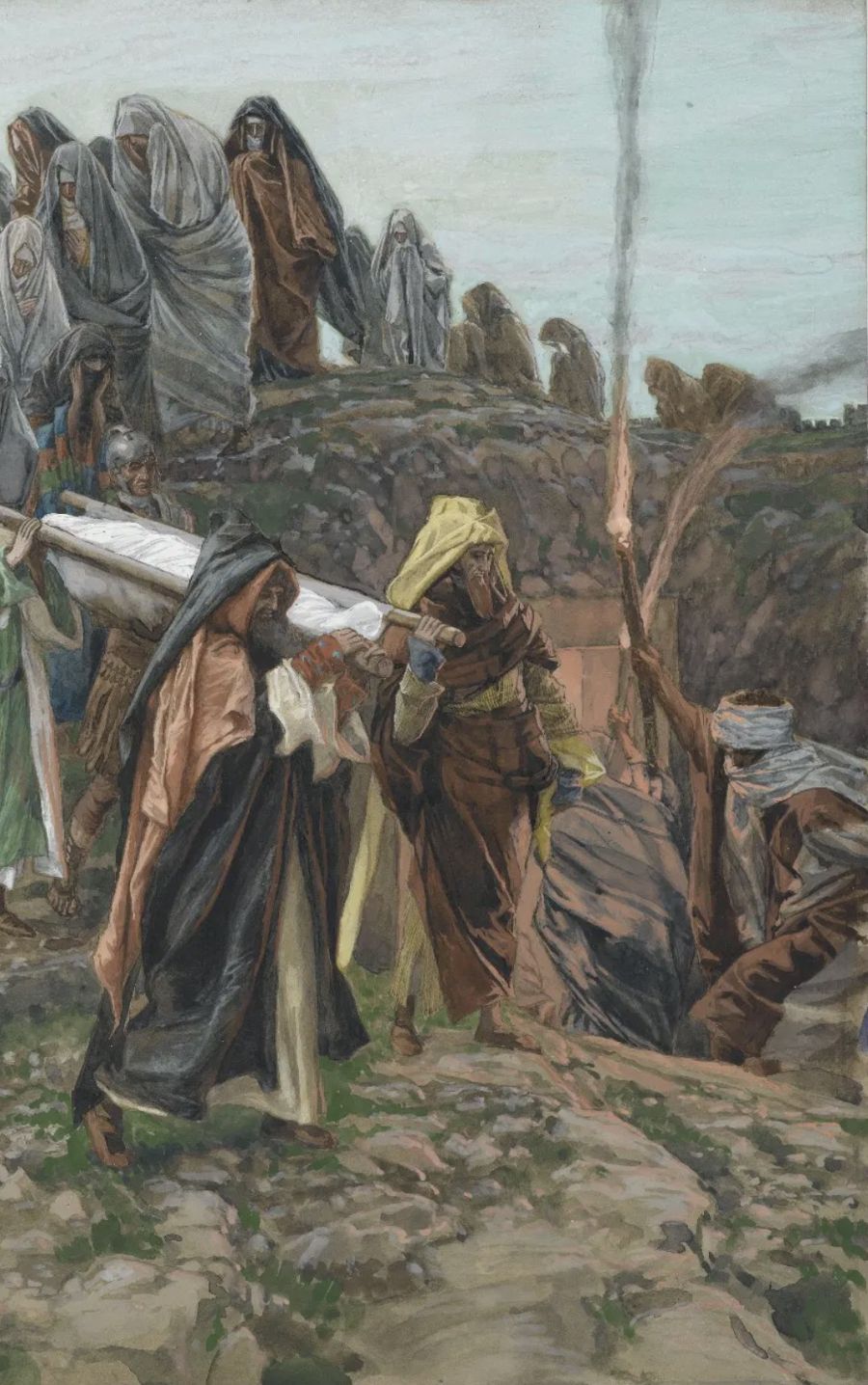
While Mt 23:27 speaks of whitewashed tombs, Lk speaks of hidden sepulchers, which are not seen (v.44).

Simple, naïve, pure people who approach it, do not realize that they are insisting on dead idols.

In the Semitic mentality, touching or trampling on a tomb meant contracting impurities.

Jesus means that we must be very careful of these dangerous people, who seize and plagiarize souls, turning them away from God in the name of God.

Manipulative guides, who distract from the sense of the Good News in our favor, inoculating a mentality that annihilates growth.

At all times the recitation of disembodied, schematic, off-scale or confusing and empty holiness retains deviant appearances.

But the proponents of the soul’s death are immediately recognized: they are those who insist on sophisticated worldviews, on abstract ideas; on the trifles of habits, or disciplinary appearances - and forget the goals of the Kingdom.

The topic is crucial:

«We want to be a Church that serves, that leaves home and goes forth from its places of worship, goes forth from its sacristies, in order to accompany life, to sustain hope, to be the sign of unity […] to build bridges, to break down walls, to sow seeds of reconciliation» (FT n.276).

Resolutive work, obtained in a laborious, «craftsmanship» way (n.217).


As with fashions, attention to the too great or to the unincarnated modes brings people closer to skeletons.

Let us therefore help ourselves to bring the Word back inside, so that it becomes our active face, without duplicity, with broad hope, separated from the present scene and from any narcissistic workshop.


[Wednesday 28th wk. in O.T.  October 14, 2026]

291 Last modified on Wednesday, 14 October 2026 11:59
don Giuseppe Nespeca

Giuseppe Nespeca è architetto e sacerdote. Cultore della Sacra scrittura è autore della raccolta "Due Fuochi due Vie - Religione e Fede, Vangeli e Tao"; coautore del libro "Dialogo e Solstizio".

Each time we celebrate the dedication of a church, an essential truth is recalled: the physical temple made of brick and mortar is a sign of the living Church serving in history (Pope Francis)
Ogni volta che celebriamo la dedicazione di una chiesa, ci viene richiamata una verità essenziale: il tempio materiale fatto di mattoni è segno della Chiesa viva e operante nella storia (Papa Francesco)
It is a happy image with which, however, Jesus teaches a truth that calls us into question […] If we remove God, we remove Christ and the world falls back into emptiness and darkness (Pope Benedict)
E’ un’immagine felice, con cui però Gesù insegna una verità che ci mette in discussione […] Se togliamo Dio, se togliamo Cristo, il mondo ripiomba nel vuoto e nel buio (Papa Benedetto)
We would also like to set an example ourself, even if the smallness of our means might prevent anyone from appreciating the practical and quantitative significance of it. We want to see our own charitable institutions undergo a new development in the struggle against hunger and toward meeting the main needs of the world. This is the way and the only way to build peace (Pope Paul VI)
Vorremmo anche Noi dare l'esempio, sebbene l'esiguità dei Nostri mezzi ci impedisca di farne apprezzare la rilevanza pratica e quantitativa: Noi vogliamo dare alle Nostre istituzioni caritative un nuovo sviluppo in favore della fame e dei bisogni del mondo: è in questo modo, e non altrimenti, che si costruisce la pace (Papa Paolo VI)
As St. Ambrose put it: You are not making a gift of what is yours to the poor man, but you are giving him back what is his (Pope Paul VI, Populorum Progressio n.23)
Non è del tuo avere, afferma sant’Ambrogio, che tu fai dono al povero; tu non fai che rendergli ciò che gli appartiene (Papa Paolo VI, Populorum Progressio n.23)
Here is the entire Gospel! Here! The whole Gospel, all of Christianity, is here! But make sure that it is not sentiment, it is not being a “do-gooder”! (Pope Francis)
Qui c’è tutto il Vangelo! Qui! Qui c’è tutto il Vangelo, c’è tutto il Cristianesimo! Ma guardate che non è sentimento, non è “buonismo”! (Papa Francesco)
Christianity cannot be, cannot be exempt from the cross; the Christian life cannot even suppose itself without the strong and great weight of duty [Pope Paul VI]
Il Cristianesimo non può essere, non può essere esonerato dalla croce; la vita cristiana non può nemmeno supporsi senza il peso forte e grande del dovere [Papa Paolo VI]
The horizon of friendship to which Jesus introduces us is the whole of humanity [Pope Benedict]
L’orizzonte dell’amicizia in cui Gesù ci introduce è l’umanità intera [Papa Benedetto]
The Church invites believers to regard the mystery of death not as the "last word" of human destiny but rather as a passage to eternal life (Pope John Paul II)
La Chiesa invita i credenti a guardare al mistero della morte non come all'ultima parola sulla sorte umana, ma come al passaggio verso la vita eterna (Papa Giovanni Paolo II)
The saints: they are our precursors, they are our brothers, they are our friends, they are our examples, they are our lawyers. Let us honour them, let us invoke them and try to imitate them a little (Pope Paul VI)
I santi: sono i precursori nostri, sono i fratelli, sono gli amici, sono gli esempi, sono gli avvocati nostri. Onoriamoli, invochiamoli e cerchiamo di imitarli un po’ (Papa Paolo VI)

Due Fuochi due Vie - Vol. 1 Due Fuochi due Vie - Vol. 2 Due Fuochi due Vie - Vol. 3 Due Fuochi due Vie - Vol. 4 Due Fuochi due Vie - Vol. 5 Dialogo e Solstizio I fiammiferi di Maria

duevie.art

don Giuseppe Nespeca

Tel. 333-1329741


Disclaimer

Questo blog non rappresenta una testata giornalistica in quanto viene aggiornato senza alcuna periodicità. Non può pertanto considerarsi un prodotto editoriale ai sensi della legge N°62 del 07/03/2001.
Le immagini sono tratte da internet, ma se il loro uso violasse diritti d'autore, lo si comunichi all'autore del blog che provvederà alla loro pronta rimozione.
L'autore dichiara di non essere responsabile dei commenti lasciati nei post. Eventuali commenti dei lettori, lesivi dell'immagine o dell'onorabilità di persone terze, il cui contenuto fosse ritenuto non idoneo alla pubblicazione verranno insindacabilmente rimossi.