Aug 13, 2026 Written by 

No forced surrendering

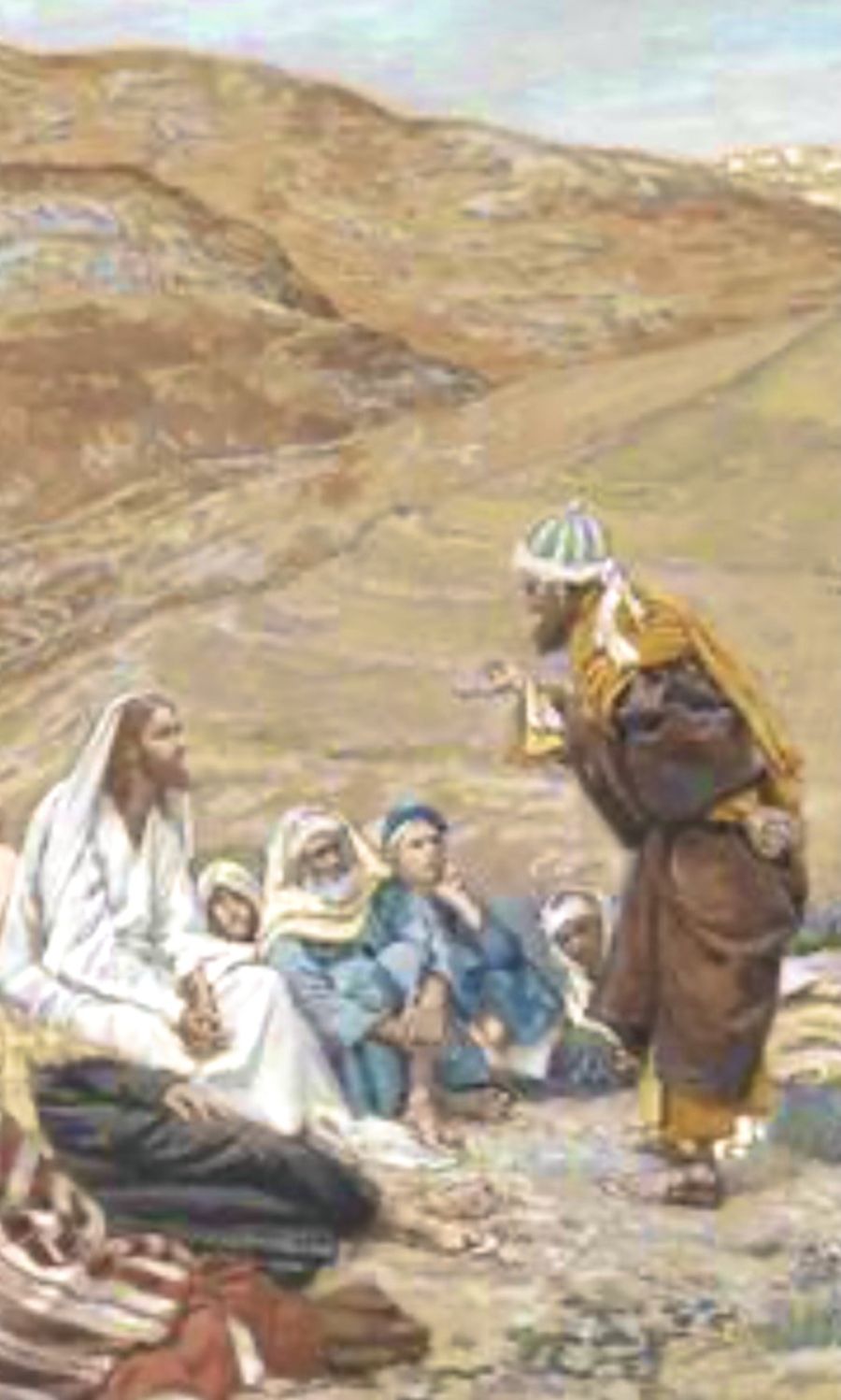
The Great Commandment: only profound Quality obliges

(Mt 22:34-40)


That of the ‘Great commandment’ was the most familiar catechism rule, even to infants.

Jesus is questioned to retort: and why do you not keep the one commandment that even God fulfils - the Sabbath rest?

The unique disposition in which the Father recognizes himself is Love, not some particular precept - because only profound Quality obliges.

The spiritual proposal of the Master makes the narrative of God's people and the practice of the Prophets its own: all heart, feet, hands - and intelligence.

Complete Love for God envelops the creature in every decision [heart], every moment and aspect of its concrete 'life', all its resources [strength].

Mt does not explicitly mention this last aspect, perhaps to emphasize that the Father does not absorb energies in any way, but transmits them.

And Jesus adds to the nuances of authentic understanding with God enumerated in the First Testament an unexpected side to those who think of love as a feeling only emotional.

The Lord suggests study, discernment and understanding of our perceptions (v.37) - the mental and deep intelligence aspect that complements Dt 6.

At first glance, it appears to be a secondary facet or even a frill for the qualitative leap from a common religious sense to the wisely and personally configured existence of Faith.

The exact opposite is true: we are children of a Father who does not supplant us, nor absorb our forces or potential, depersonalising us; not even from the mental point of view.

Practicality alone makes us fragile, not very aware; and when we are not convinced, we will not be reliable either, always at the mercy of changing situations and the conformist, fashionable, other people’s opinion.

Jesus does not speak of love for God in terms of intimacy and feeling, but of a totally involving affinity, made less oscillating precisely by the development of our sapiential measure on issues.

Here is a decisive appointment, of the Love in the round.

It would be unnatural to recognise a Lord of Heaven who does not come to meet us and instead towers over us with an objective of his own, which is extrinsic to us and makes us marginal.


Loving «How [and Because] yourself»: it is a new Genesis in the spirit of Giving.

The paradox suggested by Jesus is that we love for the care to meet - and because we love ourselves - by expanding the I into the You.

God’s «great command» affects real life and concerns not only the quality of relationship with the world and neighbour, but the reflexive global with oneself. 

We should not be afraid of other doctrines and disciplines, neglecting the challenges even intellectual ones that call into question beliefs, works, one’s worldview, language, style, and thought itself.

All added values.

Needless to complain, if the ecclesial realities that do not update or deepen, and remain in the inherited commonplaces [or vogues] slowly decay, then disappear.

Therefore to the ancient notes of true love, the Son of God adds the ‘quality of mind’: we are not gullible, clueless, one-sided.

Our outstretched hands are the result of free and conscious choice. No forced surrender.

«Faith that does not become culture is a faith that is not fully accepted, not entirely thought out, not faithfully lived» [John Paul II].


To internalize and live the message:


What is Great for you? Do you document and update yourself in order to better correspond to God’s Call?


[Friday 20th wk. in O.T.  August 21, 2026]

261 Last modified on Friday, 21 August 2026 12:02
don Giuseppe Nespeca

Giuseppe Nespeca è architetto e sacerdote. Cultore della Sacra scrittura è autore della raccolta "Due Fuochi due Vie - Religione e Fede, Vangeli e Tao"; coautore del libro "Dialogo e Solstizio".

These divisions are seen in the relationships between individuals and groups, and also at the level of larger groups: nations against nations and blocs of opposing countries in a headlong quest for domination [Reconciliatio et Paenitentia n.2]
Queste divisioni si manifestano nei rapporti fra le persone e fra i gruppi, ma anche a livello delle più vaste collettività: nazioni contro nazioni, e blocchi di paesi contrapposti, in un'affannosa ricerca di egemonia [Reconciliatio et Paenitentia n.2]
Mary "Girl" [...] point of convergence and arrival of a complex of divine promises, mysteriously echoed in the very heart of history (Pope John Paul II)
Maria “Bambina” […] punto di convergenza e di arrivo di un complesso di promesse divine, echeggiate misteriosamente nel cuore stesso della storia (Papa Giovanni Paolo II)
Luke’s passage puts before the eyes a double slavery: that of man «with his hand paralyzed, slave of his illness», and that of the «Pharisees, scribes, slaves of their rigid, legalistic attitudes» (Pope Francis)
Il racconto di Luca mette davanti agli occhi una duplice schiavitù: quella dell’uomo «con la mano paralizzata, schiavo della sua malattia», e quella «dei farisei, degli scribi, schiavi dei loro atteggiamenti rigidi, legalistici» (Papa Francesco)
Origen says “we should practise this symphony” (Commentary on the Gospel according to Matthew, 14,1), in other words this harmony within the Christian community [Pope Benedict]
Dice Origene che “dobbiamo esercitarci in questa sinfonia” (Commento al Vangelo di Matteo 14, 1), cioè in questa concordia all’interno della comunità cristiana [Papa Benedetto]
Thus in communion with Christ, in a faith that creates charity, the entire Law is fulfilled. We become just by entering into communion with Christ who is Love (Pope Benedict)
Così nella comunione con Cristo, nella fede che crea la carità, tutta la Legge è realizzata. Diventiamo giusti entrando in comunione con Cristo che è l'amore (Papa Benedetto)
«Francis was reproaching his brethren too harsh towards themselves, and who came to exhaustion by means of vigils, fasts, prayers and corporal penances» [FS 1470]
«Francesco muoveva rimproveri ai suoi fratelli troppo duri verso se stessi, e che arrivavano allo sfinimento a forza di veglie, digiuni, orazioni e penitenze corporali» [FF 1470]
From a human point of view, he thinks that there should be distance between the sinner and the Holy One. In truth, his very condition as a sinner requires that the Lord not distance Himself from him, in the same way that a doctor cannot distance himself from those who are sick (Pope Francis)
Da un punto di vista umano, pensa che ci debba essere distanza tra il peccatore e il Santo. In verità, proprio la sua condizione di peccatore richiede che il Signore non si allontani da lui, allo stesso modo in cui un medico non può allontanarsi da chi è malato (Papa Francesco)
The life of the Church in the Third Millennium will certainly not be lacking in new and surprising manifestations of "the feminine genius" (Pope John Paul II)
The basis of Christian construction is listening to and the fulfilment of the word of Christ (Pope John Paul II)
Alla base della costruzione cristiana c’è l’ascolto e il compimento della parola di Cristo (Papa Giovanni Paolo II)

Due Fuochi due Vie - Vol. 1 Due Fuochi due Vie - Vol. 2 Due Fuochi due Vie - Vol. 3 Due Fuochi due Vie - Vol. 4 Due Fuochi due Vie - Vol. 5 Dialogo e Solstizio I fiammiferi di Maria

duevie.art

don Giuseppe Nespeca

Tel. 333-1329741


Disclaimer

Questo blog non rappresenta una testata giornalistica in quanto viene aggiornato senza alcuna periodicità. Non può pertanto considerarsi un prodotto editoriale ai sensi della legge N°62 del 07/03/2001.
Le immagini sono tratte da internet, ma se il loro uso violasse diritti d'autore, lo si comunichi all'autore del blog che provvederà alla loro pronta rimozione.
L'autore dichiara di non essere responsabile dei commenti lasciati nei post. Eventuali commenti dei lettori, lesivi dell'immagine o dell'onorabilità di persone terze, il cui contenuto fosse ritenuto non idoneo alla pubblicazione verranno insindacabilmente rimossi.






