Jul 5, 2026 Written by 

Itinerant Activity, Vocation, Prayer

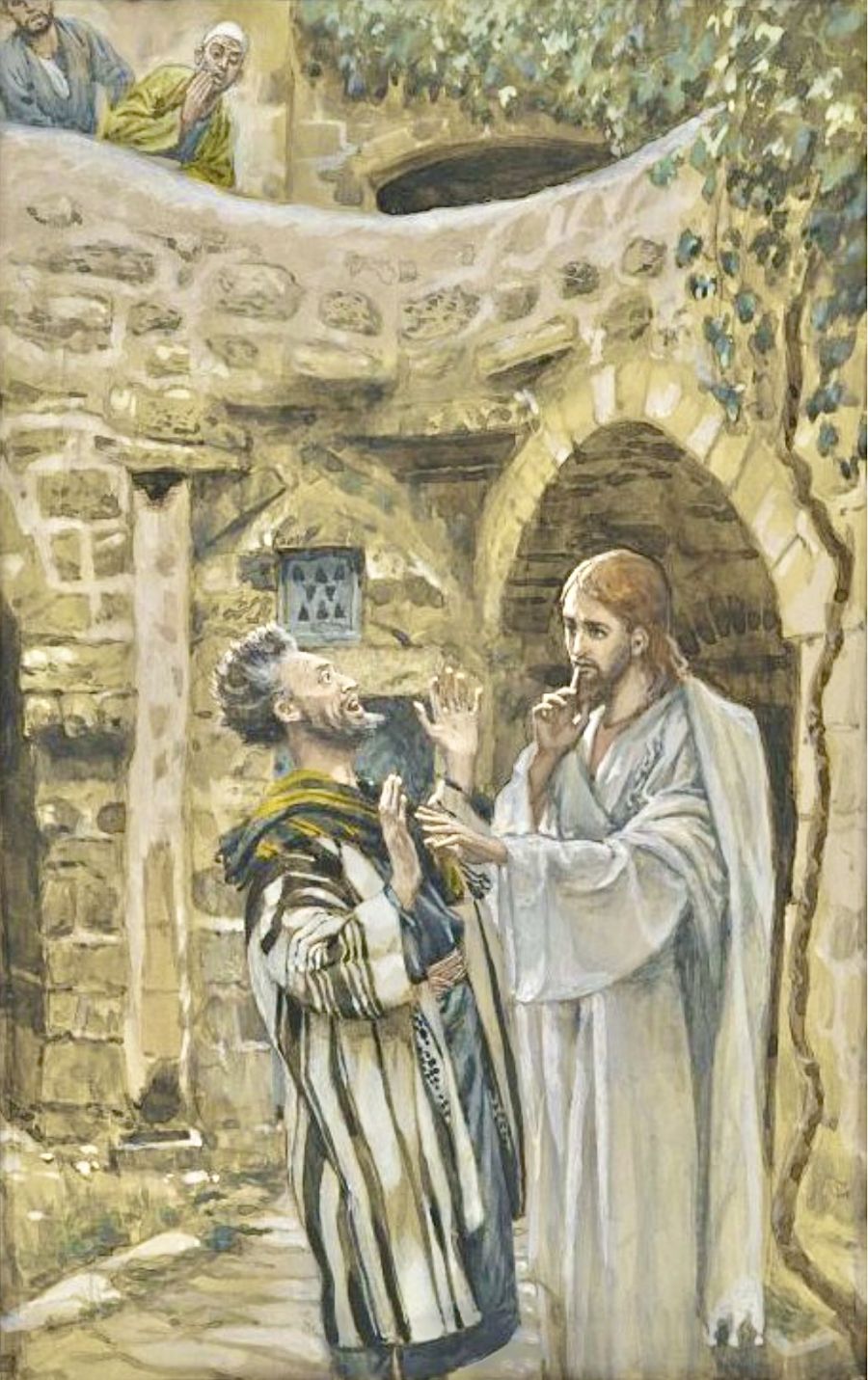
(Mt 9:32-38)


In the Gospels the recoveries from diseases describe and manifest an experience of Faith.

The first forms of community [here in Mt, of Galilee and Syria] have grown through tireless activity of redemption and people reintegration, even from the ideal point of view.

In a brutally competitive, ruthless and disheartening world, the life of communion in Christ enabled a recovery from any situation of personal debasement and social abandoning.

At the origin of the Mission there is both the Compassion of Jesus and the Prayer of the disciple (so that he overcomes disappointments, freely establishes himself on a good disposition, and does not look for anything else).

Prayer does not convince the Father, but transforms the believer. It awakens consciences to perceive, sense, listen, welcome, and move - in any external condition.

Prayer allows sons to be reborn from the heart - in the small, in the unsteady, in the child, in the adolescent, in the adult, in nature, in history, in themselves, and in God.


In a situation of social collapse and economic exploitation, even the official religion inculcated the idea that material blessings were a sign of spiritual rank, and vice versa.

People consciousness was also stifled by the feeling of exclusion (and punishment for guilt) that emphasized disdain.

The incredible Novelty of the first fraternal realities of Faith detached itself from every "competition": the ability to concretely re-establish discouraged people emerged, and weave both the quality of life and relationships.

The official guides, disinterested in the real life of the people, maliciously defended their positions and tried to exorcise the persons admiration towards the friends of Jesus - with the usual nonsense about evil.

Here the Prayer, which was addressed to the Father so that He would help all his sons in their radiating work, of support, for the birth of a new and urgent vital awareness, and of bonds - for goodness to the needy.


God’s pedagogy is transmitted in available listening, in contemplative Prayer, yet it is not abstract.

The idea and work of Faith are detached from the world of sophisticated, or empty, homologating spirituality.

It is that of leaven that ferments the mass: it saves men through men - starting from the gaze of the soul [shiny, which overcomes the breathlessness].

For a wise recomposition of being, the Master invites precisely to Prayer (v.38) - the first form of disciples commitment.

Access to different harmonies within the Spirit teaches us to cultivate our insightful eye, and to appreciate and understand everything and everyone.

We recognize ourselves and become aware of things through Prayer-presentiment, unitive.

Mission grows from a small but boundless dimension - that of intimate perception, which is aware of the needs and Mystery of a favourable Presence.

New configurations in spirit: fully discovered only in deep Prayer (v.38). Embodied.


[Tuesday 14th wk. in O.T.  July 7, 2026]

330 Last modified on Tuesday, 07 July 2026 12:00
don Giuseppe Nespeca

Giuseppe Nespeca è architetto e sacerdote. Cultore della Sacra scrittura è autore della raccolta "Due Fuochi due Vie - Religione e Fede, Vangeli e Tao"; coautore del libro "Dialogo e Solstizio".

The dialogue of Jesus with the rich young man, related in the nineteenth chapter of Saint Matthew's Gospel, can serve as a useful guide for listening once more in a lively and direct way to his moral teaching [Veritatis Splendor n.6]
Il dialogo di Gesù con il giovane ricco, riferito nel capitolo 19 del Vangelo di san Matteo, può costituire un'utile traccia per riascoltare in modo vivo e incisivo il suo insegnamento morale [Veritatis Splendor n.6]
St Augustine rightly commented: “Christ showed himself indifferent to her, not in order to refuse her his mercy but rather to inflame her desire for it” (Sermo 77, 1: PL 38, 483) [Pope Benedict]
Sant’Agostino commenta giustamente: “Cristo si mostrava indifferente verso di lei, non per rifiutarle la misericordia, ma per infiammarne il desiderio” (Sermo 77, 1: PL 38, 483) [Papa Benedetto]
In the divine attitude justice is pervaded with mercy, whereas the human attitude is limited to justice. Jesus exhorts us to open ourselves with courage to the strength of forgiveness, because in life not everything can be resolved with justice. We know this (Pope Francis)
Nell’atteggiamento divino la giustizia è pervasa dalla misericordia, mentre l’atteggiamento umano si limita alla giustizia. Gesù ci esorta ad aprirci con coraggio alla forza del perdono, perché nella vita non tutto si risolve con la giustizia; lo sappiamo (Papa Francesco)
The Second Vatican Council's Constitution on the Sacred Liturgy refers precisely to this Gospel passage to indicate one of the ways that Christ is present:  "He is present when the Church prays and sings, for he has promised "where two or three are gathered together in my name there am I in the midst of them' (Mt 18: 20)" [Sacrosanctum Concilium, n. 7]
La Costituzione sulla Sacra Liturgia del Concilio Vaticano II si riferisce proprio a questo passo del Vangelo per indicare uno dei modi della presenza di Cristo: "Quando la Chiesa prega e canta i Salmi, è presente Lui che ha promesso: "Dove sono due o tre riuniti nel mio nome, io  sono in mezzo a loro" (Mt 18, 20)" [Sacrosanctum Concilium, 7]
For Jesus we are not a "mass", a "multitude"! We are individual "persons" with an eternal value, both as creatures and as re-deemed persons! He knows us! He knows me, and loves me and gave himself for me! (Gal 2:20) [John Paul II]
Non siamo “massa”, “moltitudine”, per Gesù! Siamo “persone” singole con un valore eterno, sia come creature sia come persone redente! lui ci conosce! lui mi conosce, e mi ama e ha dato se stesso per me! (Gal 2,20) [Giovanni Paolo II]
The grain of wheat that "falls to the ground and dies" becomes the promise of bread (Pope John Paul II)
Il chicco di grano che “cade in terra e muore” diventa la promessa del pane (Papa Giovanni Paolo II)
The power of faith can move mountains (cf. Mt 17:20): the Lord can illuminate even the deepest darkness [Pope Benedict]
La forza della fede può spostare le montagne (cfr Mt 17,20): il Signore può illuminare anche la tenebra più profonda [Papa Benedetto]
By willingly accepting death, Jesus carries the cross of all human beings and becomes a source of salvation for the whole of humanity. St Cyril of Jerusalem commented: “The glory of the Cross led those who were blind through ignorance into light, loosed all who were held fast by sin and brought redemption to the whole world of mankind” (Catechesis Illuminandorum XIII, 1: de Christo crucifixo et sepulto: PG 33, 772 B) [Pope Benedict]

Due Fuochi due Vie - Vol. 1 Due Fuochi due Vie - Vol. 2 Due Fuochi due Vie - Vol. 3 Due Fuochi due Vie - Vol. 4 Due Fuochi due Vie - Vol. 5 Dialogo e Solstizio I fiammiferi di Maria

duevie.art

don Giuseppe Nespeca

Tel. 333-1329741


Disclaimer

Questo blog non rappresenta una testata giornalistica in quanto viene aggiornato senza alcuna periodicità. Non può pertanto considerarsi un prodotto editoriale ai sensi della legge N°62 del 07/03/2001.
Le immagini sono tratte da internet, ma se il loro uso violasse diritti d'autore, lo si comunichi all'autore del blog che provvederà alla loro pronta rimozione.
L'autore dichiara di non essere responsabile dei commenti lasciati nei post. Eventuali commenti dei lettori, lesivi dell'immagine o dell'onorabilità di persone terze, il cui contenuto fosse ritenuto non idoneo alla pubblicazione verranno insindacabilmente rimossi.






