


And God binding His heart to humanity
(Lk 20:27-40)
The defeat of death is the cruel destiny that has clouded the minds of all civilisations, infusing disorientation and anguished thoughts about the meaning of life, about why each of us exists.
If God creates us and calls us ceaselessly, to enter into dialogue with us, then what is left? Is the goal of all our agitation a pit?
The Sadducees want to ridicule the doctrine of resurrection dear to the Pharisees and - it seems - to Jesus as well.
He, however, held that the Father was far more than a Living One... who finally began to raise corpses!
[This is why we call our departed loved ones 'deceased' - not 'dead'].
In the Semitic mentality, the norm of 'levirate' mirrored a feeble idea of existence after death - relegated to mere continuity of name.
The members of the priestly class did not believe in another life: they preached the religion that served to obtain blessings for existing on this earth in a comfortable manner - and that was enough for them.
In short, they conceived their relationship with God in the dimension of life on earth.
The Sadducees had already built their 'paradise' for themselves in the city and outside.
Their large villas with courtyards and private pools for ablutions were right on the hill opposite the Temple in Jerusalem, on the opposite side of the Mount of Olives (i.e. towards the west).
Their second homes - where they spent the winter - were in Jericho.
Also because of their direct interest in the sacrificial activity they carried out, they still believed that prophetic texts had no dignity as sacred Scripture: only the Law reflected God's will.
And in the Torah it seemed to them that there was no note about the resurrection of the dead.
So they also tried to frame Jesus, with an artfully constructed paradox, to highlight the contradictions of this belief - which only appeared from the 2nd century BC in the book of Daniel and in Maccabees.
They considered it absurd - therefore they intended to discredit the 'Master' [a term they used to designate him in order to ridicule him: v.28].
Indeed, the foothold was there, for the Pharisees believed in the resurrection in the trivial sense. A kind of accentuation, improvement or sublimation of (the same) natural living conditions - and bonds.
Thus not a definitive, boundless, qualitatively indestructible form.
In essence, in the 'world beyond' everyone would fully enjoy the family and clan affections of the previous form of life - and so on.
The 'afterlife' was to be nothing more than a sublimated, ennobled and embellished extension of this way of existing; without disease, suffering, various problems.
[In short, life only advanced; perhaps as it was once conveyed to us by willing catechists... but little attentive to the Word of God].
So precisely the Sadducees - conservatives - who only accepted the Pentateuch - where they maintained that there is no mention of another, further life.
In this way, they had an easy job of exposing the fragility of that popular belief, to which the leaders of Phariseeism were conversely attached.
However, the Master does not apply categories of this world, provisional, to dimensions that go beyond.
Even bonds must be conceived in the relief of divine reality.
In the Latin milieu, even today, the way of understanding the Resurrection is influenced not a little by the representational modes of the pictorial tradition.
Reading the representations to which we are accustomed... we notice that immediately the Risen One puts down the gendarmes and frightens everyone.
He emerges from the tomb with the banner of victory, strong and muscular. He bursts in as if coming back this way to beat his adversaries.
Descriptive and naturalistic claims that do not do credit to the Faith and almost ridicule the Gospels.
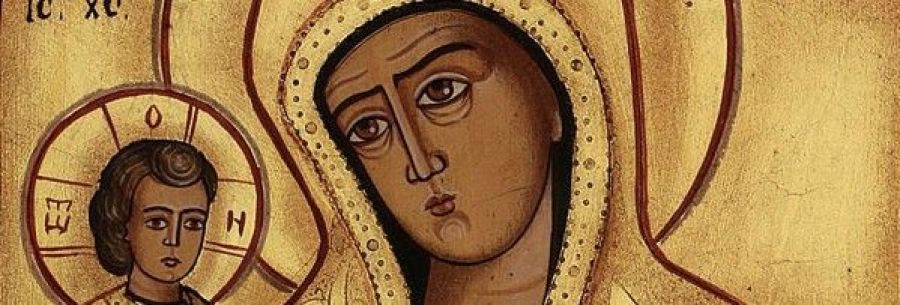
Conversely, in Eastern icons, the Resurrection is understood and depicted in a substantial, mysterious way: the Descent to the Underworld.
It is not a triumph of God, who imposes himself on the world. He has no need of it.
Rather, the theological event remains in support of the victory of his children, who receive life directly from the Father.
Here is the redemption of the ordinary woman and man [Adam and Eve] who are drawn from the tombs by the divine - not natural - power of the Risen Christ.
The ultimate world turns the idea of the Sheôl upside down and totally unhinges it, clearing away the darkness - and that great drama of humanity.
One enters God's world; one does not return this way - perhaps to live better: rejuvenated and healthy rather than sick, in a villa with a garden rather than a studio apartment.
Life 'in the age of that' [v.35 Greek text] is not an enhanced mode of existence, but an indescribable and new condition - as of direct communication.
Comparable to the immediacy of love: a being-with and for others. Collimating to the Angels' mode of existence (v.36): they do not have a life transmitted by parents, but by God himself.The body decays, falls ill and goes into dissolution: it is a natural cycle.
"Resurrection of the flesh" designates access to an intimate existence of pure relationship, to the very intimacy of God - in our weakness and precariousness, assumed.
Obviously we cannot believe that we are being brought into the Divine Condition if during our earthly course we have not experienced a constant existential death-resurrection vector.
It is the experience of gain in defeat; in particular, the discovery of an unthinkable life, which made us rejoice with Happiness. For Amazement: in the providential transmutation of our weak and obscure sides, from sluggish appearances to strengths.
Becoming evolutionary, perhaps the best of us.
The evangelists use two terms to indicate the difference between these two forms of being: (transliterating from the Greek) Bìos, and Zoè Aiònios.
The Zoë, Life itself of the Eternal, is keenly relational and experienceable - but it has nothing to do with biological existence and our carcass ["equal to the angels" v.36].
What does not die is not the DNA of the body, but the heavenly DNA, which we have received as a gift from the Father.
The divine Gold dwells in us and - if we wish - can surface already, in a full existence, of realisation of one's Vocation, in an atmosphere of Communion.
Life "in the age of the one" is not an enhanced existence compared to this mode of existence, but an indescribable and new condition - as of direct communication.
Comparable to the face-to-face of Friendship: a being-with and for others; readily, everywhere.
Collimating to the Angels' way of existence: they do not have a life transmitted by parents, but precisely by God Himself.
"About the Bush..." - Jesus retorts.
He also muzzles the Sadducees, making them think, treating them as incompetent.
He draws the foundation of the 'doctrine' of the Resurrection [but as He understands it] precisely from the book of Exodus.
Thus he shows that right from the scrolls of the Law there is a presentation of the Eternal One that is incompatible with the destiny of a humanity doomed to extermination.
The Father does not seek dialogue with His children only to have them fall at the most beautiful moment.
Since creation He has delighted in walking with man, and since the patriarchs He has sought empathy with us.
His Love does not abandon.
In the archaic religious mentality, each shrine was named after the deity, specified by its territory or the heights in its borders [e.g. Baal of Gad, Baal of Saphon, Baal of Peor, etc.].
A bad pagan vice that we have unfortunately inherited.
The God of Israel since the First Testament binds his heart to man - no longer to a territory: the 'God of Abraham, Isaac, Jacob'.
It was possible for the three Patriarchs to have descendants, not by natural concatenation.
In that mentality, the only possibility of perpetuating life from generation to generation was to be able to pass on one's name to the firstborn male.
This happened instead by intervention from above, while the wives were sterile [infertile matriarchs: Sarah, Rebecca, Rachel, long without heirs].
The Father of life gives rise to all understandings, covenants, and if the ally could be annihilated, the divine identity itself would crumble.
All Scripture attests to this: he is a God of the living - not of the dead (of dust, of insubstantiality, of nothingness).








