

1. The ‘miracles and signs’ that Jesus performed to confirm his messianic mission and the coming of the Kingdom of God are ordered and closely linked to the call to faith. This call, in relation to the miracle, takes two forms: faith precedes the miracle; indeed, it is a condition for its occurrence; faith is an effect of the miracle, for it is brought about by the miracle in the souls of those who have received it or witnessed it.
It is well known that faith is man’s response to the word of divine revelation. The miracle takes place in an organic connection with this revealing word of God. It is a ‘sign’ of his presence and his working—a sign, one might say, of particular intensity. All this sufficiently explains the special bond that exists between Christ’s ‘miracles-signs’ and faith: a bond so clearly outlined in the Gospels.
6. Particularly moving is the episode of the Canaanite woman, who kept asking Jesus for help for her daughter, who was ‘cruelly tormented by a demon’. When the Canaanite woman prostrated herself before Jesus to ask for his help, he replied: ‘It is not right to take the children’s bread and throw it to the little dogs’ (this was a reference to the ethnic difference between the Israelites and the Canaanites, which Jesus, son of David, could not ignore in his practical conduct, but to which he alluded as a methodological device to provoke faith). And so the woman, guided by intuition, performed an extraordinary act of faith and humility. She said: ‘It is true, Lord . . . but even the little dogs eat the crumbs that fall from their masters’ table.’ Faced with these words—so humble, courteous and trusting—Jesus replied: ‘Woman, your faith is truly great! Let it be done for you as you wish’ (cf. Mt 15:21–28).
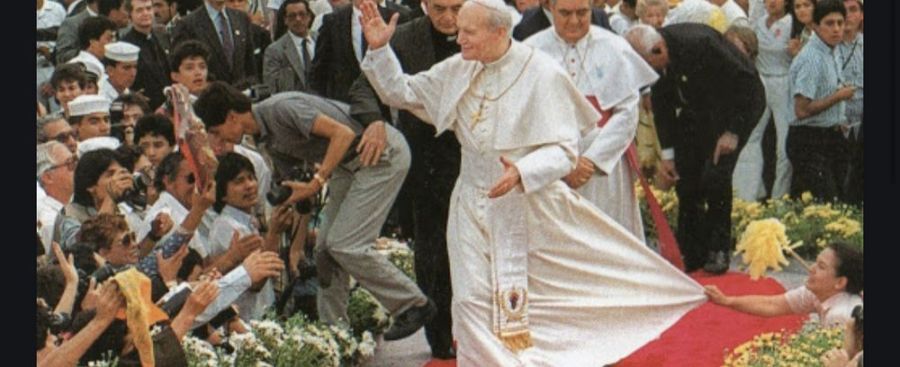
It is an event that is hard to forget, especially when one thinks of the countless ‘Canaanites’ of every age, country, race and social condition, who hold out their hands to ask for understanding and help in their time of need!
[Pope John Paul II, General Audience, 16 December 1987]
-
font size
decrease font size
 increase font size
They reach out their hands

don Giuseppe Nespeca
Giuseppe Nespeca è architetto e sacerdote. Cultore della Sacra scrittura è autore della raccolta "Due Fuochi due Vie - Religione e Fede, Vangeli e Tao"; coautore del libro "Dialogo e Solstizio".
Email This email address is being protected from spambots. You need JavaScript enabled to view it.But what moves me even more strongly to proclaim the urgency of missionary evangelization is the fact that it is the primary service which the Church can render to every individual and to all humanity [Redemptoris Missio n.2]
Ma ciò che ancor più mi spinge a proclamare l'urgenza dell'evangelizzazione missionaria è che essa costituisce il primo servizio che la chiesa può rendere a ciascun uomo e all'intera umanità [Redemptoris Missio n.2]
Freedom and love coincide! On the contrary, obeying one’s selfishness leads to rivalry and conflict (Pope Benedict)
Libertà e amore coincidono! Al contrario, obbedire al proprio egoismo conduce a rivalità e conflitti (Papa Benedetto)
Are they not all spirits charged with a ministry, sent to serve those who are to inherit salvation? (Heb 1:14)
Non sono essi tutti spiriti incaricati di un ministero, inviati per servire coloro che devono ereditare la salvezza? (Eb 1,14)
The Church with its permanent contradiction: between the ideal and reality, the more annoying contradiction, the more the ideal is affirmed sublime, evangelical, sacred, divine, and the reality is often petty, narrow, defective, sometimes even selfish (Pope Paul VI)
La Chiesa con la sua permanente contraddizione: tra l’ideale e la realtà, tanto più fastidiosa contraddizione, quanto più l’ideale è affermato sublime, evangelico, sacro, divino, e la realtà si presenta spesso meschina, angusta, difettosa, alcune volte perfino egoista (Papa Paolo VI)
At first they say “yes” to God’s will, but their piety becomes routine and God no longer matters to them [Pope Benedict]
Essi, prima, dicono “sì” alla volontà di Dio. Ma la loro religiosità diventa routine, e Dio non li inquieta più [Papa Benedetto]
And «each of us can say: "for love to me"» (Pope Francis)
E «ognuno di noi può dire: “per amore a me”» (Papa Francesco)
We too, to reach a more conscious confession of Jesus Christ must follow, like Peter, a path made of attentive, caring listening (Pope John Paul II)
Anche noi per giungere a una più consapevole confessione di Gesù Cristo dobbiamo percorrere, come Pietro, un cammino fatto di ascolto attento, premuroso (Papa Giovanni Paolo II)
It is a word that must be witnessed to and proclaimed explicitly, because without a consistent witness it proves to be less comprehensible and credible [Pope Benedict]
E’ una Parola che deve essere testimoniata e proclamata esplicitamente, perché senza una testimonianza coerente essa risulta meno comprensibile e credibile [Papa Benedetto]
The “reading and meditation of the word of God root us more deeply in Christ and guide our ministry as servants of reconciliation, justice and peace” (second Synod for Africa, Propositio 46)
La lettura e la meditazione della Parola di Dio ci radicano più profondamente in Cristo e orientano il nostro ministero di servitori della riconciliazione, della giustizia e della pace (Secondo Sinodo per l’Africa, Propositio 46)
That 'always seeing the face of the Father' is the highest manifestation of the worship of God. It can be said to constitute that 'heavenly liturgy', performed on behalf of the whole universe [John Paul II]
Quel “vedere sempre la faccia del Padre” è la manifestazione più alta dell’adorazione di Dio. Si può dire che essa costituisce quella “liturgia celeste”, compiuta a nome di tutto l’universo [Giovanni Paolo II]








duevie.art
don Giuseppe Nespeca
Tel. 333-1329741
Disclaimer
Questo blog non rappresenta una testata giornalistica in quanto viene aggiornato senza alcuna periodicità. Non può pertanto considerarsi un prodotto editoriale ai sensi della legge N°62 del 07/03/2001.
Le immagini sono tratte da internet, ma se il loro uso violasse diritti d'autore, lo si comunichi all'autore del blog che provvederà alla loro pronta rimozione.
L'autore dichiara di non essere responsabile dei commenti lasciati nei post. Eventuali commenti dei lettori, lesivi dell'immagine o dell'onorabilità di persone terze, il cui contenuto fosse ritenuto non idoneo alla pubblicazione verranno insindacabilmente rimossi.