Aug 5, 2026 Written by 

Space opening up before us

2. Forgiveness! Christ taught us to forgive. He spoke of forgiveness many times and in various ways. When Peter asked him how many times he should forgive his neighbour, "up to seven times?", Jesus replied that he should forgive "up to seventy times seven" (Mt 18:21f). This means, in practice, always: in fact, the number "seventy" for "seven" is symbolic and means, rather than a specific quantity, an incalculable, infinite quantity. Responding to the question of how we should pray, Christ uttered those magnificent words addressed to the Father: "Our Father who art in heaven"; and among the requests that make up this prayer, the last one speaks of forgiveness: "Forgive us our trespasses as we forgive those who trespass against us" (= "our debtors"). Finally, Christ himself confirmed the truth of these words on the Cross when, turning to the Father, he pleaded: "Forgive them!", "Father, forgive them, for they know not what they do" (Lk 23:34).

"Forgiveness" is a word spoken by the lips of a man who has been wronged. Indeed, it is the word of the human heart. In this word of the heart, each of us strives to overcome the barrier of enmity that can separate us from others, seeking to rebuild the inner space of understanding, contact and bond. Christ taught us with the words of the Gospel, and above all with his own example, that this space opens up not only before other people, but at the same time before God himself. The Father, who is a God of forgiveness and mercy, desires to act precisely in this space of human forgiveness. He desires to forgive those who are capable of forgiving one another, those who seek to put into practice those words: "Forgive us... as we forgive".

Forgiveness is a grace that must be considered with deep humility and gratitude. It is a mystery of the human heart that is difficult to explain.

5. Christ taught us to forgive. Forgiveness is also indispensable so that God can pose questions to the human conscience, questions to which He awaits an answer in all inner truth.

In this time, when so many innocent people are dying at the hands of other people, there seems to be a special need to approach each of those who kill, to approach them with forgiveness in our hearts and with the same question that God, Creator and Lord of human life, asked of the first man who had attempted to take the life of his brother and had taken it from him — had taken what belongs only to the Creator and Lord of life.

Christ taught us to forgive. He taught Peter to forgive 'seventy times seven times' (Mt 18:22). God himself forgives when man responds to the question addressed to his conscience and to his heart with all the inner truth of conversion.

Leaving to God himself the judgement and sentence in its definitive dimension, we do not cease to ask: "Forgive us our debts as we forgive our debtors".

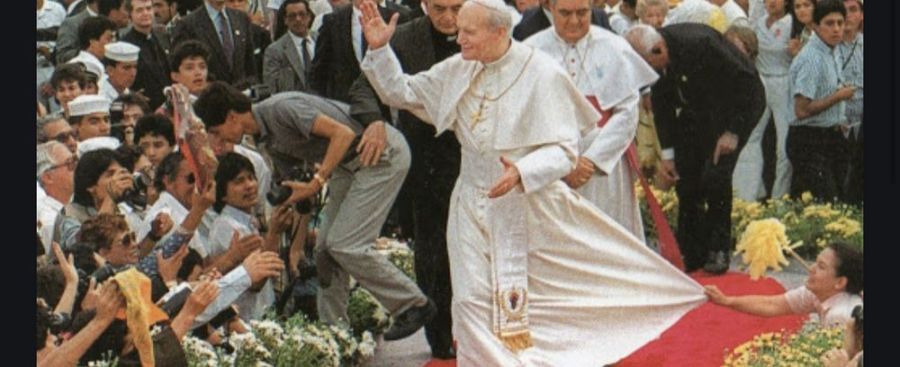
[Pope John Paul II, General Audience, 21 October 1981]

112 Last modified on Wednesday, 05 August 2026 02:00
don Giuseppe Nespeca

Giuseppe Nespeca è architetto e sacerdote. Cultore della Sacra scrittura è autore della raccolta "Due Fuochi due Vie - Religione e Fede, Vangeli e Tao"; coautore del libro "Dialogo e Solstizio".

Email This email address is being protected from spambots. You need JavaScript enabled to view it.
But what moves me even more strongly to proclaim the urgency of missionary evangelization is the fact that it is the primary service which the Church can render to every individual and to all humanity [Redemptoris Missio n.2]
Ma ciò che ancor più mi spinge a proclamare l'urgenza dell'evangelizzazione missionaria è che essa costituisce il primo servizio che la chiesa può rendere a ciascun uomo e all'intera umanità [Redemptoris Missio n.2]
Freedom and love coincide! On the contrary, obeying one’s selfishness leads to rivalry and conflict (Pope Benedict)
Libertà e amore coincidono! Al contrario, obbedire al proprio egoismo conduce a rivalità e conflitti (Papa Benedetto)
Are they not all spirits charged with a ministry, sent to serve those who are to inherit salvation? (Heb 1:14)
Non sono essi tutti spiriti incaricati di un ministero, inviati per servire coloro che devono ereditare la salvezza? (Eb 1,14)
The Church with its permanent contradiction: between the ideal and reality, the more annoying contradiction, the more the ideal is affirmed sublime, evangelical, sacred, divine, and the reality is often petty, narrow, defective, sometimes even selfish (Pope Paul VI)
La Chiesa con la sua permanente contraddizione: tra l’ideale e la realtà, tanto più fastidiosa contraddizione, quanto più l’ideale è affermato sublime, evangelico, sacro, divino, e la realtà si presenta spesso meschina, angusta, difettosa, alcune volte perfino egoista (Papa Paolo VI)
At first they say “yes” to God’s will, but their piety becomes routine and God no longer matters to them [Pope Benedict]
Essi, prima, dicono “sì” alla volontà di Dio. Ma la loro religiosità diventa routine, e Dio non li inquieta più [Papa Benedetto]
And «each of us can say: "for love to me"» (Pope Francis)
E «ognuno di noi può dire: “per amore a me”» (Papa Francesco)
We too, to reach a more conscious confession of Jesus Christ must follow, like Peter, a path made of attentive, caring listening (Pope John Paul II)
Anche noi per giungere a una più consapevole confessione di Gesù Cristo dobbiamo percorrere, come Pietro, un cammino fatto di ascolto attento, premuroso (Papa Giovanni Paolo II)
It is a word that must be witnessed to and proclaimed explicitly, because without a consistent witness it proves to be less comprehensible and credible [Pope Benedict]
E’ una Parola che deve essere testimoniata e proclamata esplicitamente, perché senza una testimonianza coerente essa risulta meno comprensibile e credibile [Papa Benedetto]
The “reading and meditation of the word of God root us more deeply in Christ and guide our ministry as servants of reconciliation, justice and peace” (second Synod for Africa, Propositio 46)
La lettura e la meditazione della Parola di Dio ci radicano più profondamente in Cristo e orientano il nostro ministero di servitori della riconciliazione, della giustizia e della pace (Secondo Sinodo per l’Africa, Propositio 46)
That 'always seeing the face of the Father' is the highest manifestation of the worship of God. It can be said to constitute that 'heavenly liturgy', performed on behalf of the whole universe [John Paul II]
Quel “vedere sempre la faccia del Padre” è la manifestazione più alta dell’adorazione di Dio. Si può dire che essa costituisce quella “liturgia celeste”, compiuta a nome di tutto l’universo [Giovanni Paolo II]

Due Fuochi due Vie - Vol. 1 Due Fuochi due Vie - Vol. 2 Due Fuochi due Vie - Vol. 3 Due Fuochi due Vie - Vol. 4 Due Fuochi due Vie - Vol. 5 Dialogo e Solstizio I fiammiferi di Maria

duevie.art

don Giuseppe Nespeca

Tel. 333-1329741


Disclaimer

Questo blog non rappresenta una testata giornalistica in quanto viene aggiornato senza alcuna periodicità. Non può pertanto considerarsi un prodotto editoriale ai sensi della legge N°62 del 07/03/2001.
Le immagini sono tratte da internet, ma se il loro uso violasse diritti d'autore, lo si comunichi all'autore del blog che provvederà alla loro pronta rimozione.
L'autore dichiara di non essere responsabile dei commenti lasciati nei post. Eventuali commenti dei lettori, lesivi dell'immagine o dell'onorabilità di persone terze, il cui contenuto fosse ritenuto non idoneo alla pubblicazione verranno insindacabilmente rimossi.






