Jun 2, 2026 Written by 

Condition of Completion

Let us first place ourselves from the point of view of the direct hearers of the Sermon on the Mount, those who have heard the words of Christ. They are sons and daughters of the chosen people - people who from God - Yahweh himself - had received the "Law", had also received the "Prophets" who had repeatedly, throughout the centuries, blamed precisely the relationship maintained with that Law, the many transgressions of it. Christ also speaks of such transgressions. But even more He speaks of such a human interpretation of the Law, in which the proper meaning of good and evil, specifically intended by the Divine Lawgiver, is erased and disappears. For the law is above all a means, an indispensable means so that "righteousness may abound" (words of Matthew 5:20, in the old translation). Christ wants that righteousness to "surpass that of the scribes and Pharisees". He did not accept the interpretation that they had given down the centuries to the authentic content of the Law, insofar as they subjected that content, i.e. the design and will of the Lawgiver, to a certain extent, to the various weaknesses and limitations of the human will, resulting precisely from the threefold concupiscence. This was a casuistic interpretation, which was superimposed on the original vision of good and evil, connected with the Law of the Decalogue. If Christ tends towards the transformation of the ethos, He does so above all to recover the fundamental clarity of interpretation: "Do not think that I have come to abolish the Law or the Prophets; I have not come to abolish but to fulfil" ( Mt 5:17 ). A condition of fulfilment is right understanding.

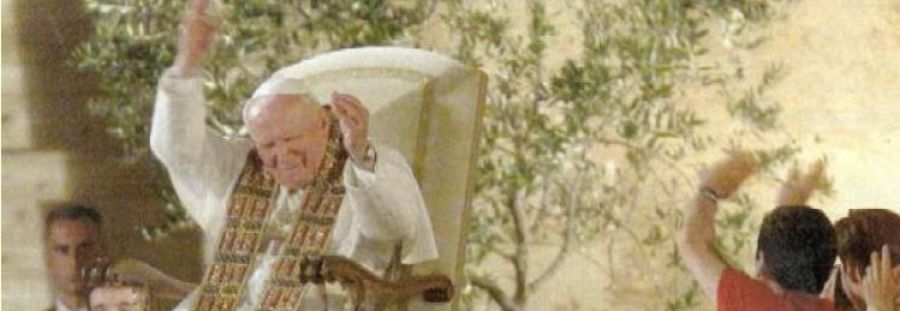
[Pope John Paul II, General Audience 13 August 1980]

9 Last modified on Tuesday, 02 June 2026 03:45
don Giuseppe Nespeca

Giuseppe Nespeca è architetto e sacerdote. Cultore della Sacra scrittura è autore della raccolta "Due Fuochi due Vie - Religione e Fede, Vangeli e Tao"; coautore del libro "Dialogo e Solstizio".

Email This email address is being protected from spambots. You need JavaScript enabled to view it.
Jesus showed us with a new clarity the unifying centre of the divine laws revealed on Sinai […]  Indeed, in his life and in his Paschal Mystery Jesus brought the entire law to completion.  Uniting himself with us through the gift of the Holy Spirit, he carries with us and in us the “yoke” of the law, which thereby becomes a “light burden” (Pope Benedict)
Gesù ci ha mostrato con una nuova chiarezza il centro unificante delle leggi divine rivelate sul Sinai […] Anzi, Gesù nella sua vita e nel suo mistero pasquale ha portato a compimento tutta la legge. Unendosi con noi mediante il dono dello Spirito Santo, porta con noi e in noi il "giogo" della legge, che così diventa un "carico leggero" (Papa Benedetto)
An ancient hermit says: “The Beatitudes are gifts of God and we must say a great ‘thank you’ to him for them and for the rewards that derive from them, namely the Kingdom of God in the century to come and consolation here; the fullness of every good and mercy on God’s part … once we have become images of Christ on earth” (Peter of Damascus) [Pope Benedict]
Afferma un antico eremita: «Le Beatitudini sono doni di Dio, e dobbiamo rendergli grandi grazie per esse e per le ricompense che ne derivano, cioè il Regno dei Cieli nel secolo futuro, la consolazione qui, la pienezza di ogni bene e misericordia da parte di Dio … una volta che si sia divenuti immagine del Cristo sulla terra» (Pietro di Damasco) [Papa Benedetto]
"How will we be able to live without him?". In these words of St Ignatius we hear echoing the affirmation of the martyrs of Abitene: "Sine dominico non possumus" [Pope Benedict]
"Come potremmo vivere senza di Lui?". Sentiamo echeggiare in queste parole di Sant’Ignazio l’affermazione dei martiri di Abitene: "Sine dominico non possumus" [Papa Benedetto]
The kingdom of Christ is manifested, as the Council teaches, in the 'kingship' of man [John Paul II]
Il regno di Cristo si manifesta, come insegna il Concilio, nella “regalità” dell’uomo [Giovanni Paolo II]
In the middle of the dense forest of rules and regulations — to the legalisms of past and present — Jesus makes an opening through which one can catch a glimpse of two faces: the face of the Father and the face of the brother. He does not give us two formulas or two precepts: there are no precepts nor formulas. He gives us two faces [Pope Francis]
In mezzo alla fitta selva di precetti e prescrizioni – ai legalismi di ieri e di oggi – Gesù opera uno squarcio che permette di scorgere due volti: il volto del Padre e quello del fratello. Non ci consegna due formule o due precetti: non sono precetti e formule; ci consegna due volti [Papa Francesco]
Whoever is inscribed in God's name participates in God's life, and lives. Therefore to believe is to be inscribed in the name of God. Thus we are alive. Whoever has a share in God's name is not dead but rather belongs to the living God. In this sense we should be able to understand the dynamism of faith, which entails enrolling our names in the name of God and in this way entering into life [Pope Benedict]
Chi è scritto nel nome di Dio partecipa alla vita di Dio, vive. E così credere è essere iscritti nel nome di Dio. E così siamo vivi. Chi appartiene al nome di Dio non è un morto, appartiene al Dio vivente. In questo senso dovremmo capire il dinamismo della fede, che è un iscrivere il nostro nome nel nome di Dio e così un entrare nella vita [Papa Benedetto]
As sometimes happens in the Gospel, faced with the trap set for him by his enemies, Jesus, with his response, rises above the contingent controversy and goes far beyond the particular and mutually divergent positions (John Paul II)

Due Fuochi due Vie - Vol. 1 Due Fuochi due Vie - Vol. 2 Due Fuochi due Vie - Vol. 3 Due Fuochi due Vie - Vol. 4 Due Fuochi due Vie - Vol. 5 Dialogo e Solstizio I fiammiferi di Maria

duevie.art

don Giuseppe Nespeca

Tel. 333-1329741


Disclaimer

Questo blog non rappresenta una testata giornalistica in quanto viene aggiornato senza alcuna periodicità. Non può pertanto considerarsi un prodotto editoriale ai sensi della legge N°62 del 07/03/2001.
Le immagini sono tratte da internet, ma se il loro uso violasse diritti d'autore, lo si comunichi all'autore del blog che provvederà alla loro pronta rimozione.
L'autore dichiara di non essere responsabile dei commenti lasciati nei post. Eventuali commenti dei lettori, lesivi dell'immagine o dell'onorabilità di persone terze, il cui contenuto fosse ritenuto non idoneo alla pubblicazione verranno insindacabilmente rimossi.






