Nov 28, 2025 Written by 

Free of charge? To be put to service

Lent, the providential time for conversion, helps us to contemplate this stupendous mystery of love. It is a return to the roots of our faith, so that by pondering the measureless gift of grace which is Redemption, we cannot fail to realize that all has been given to us by God’s loving initiative. In order to meditate upon this aspect of the mystery of salvation, I have chosen as the theme for this year’s Lenten Message the Lord’s words: “You received without paying, give without pay” (Mt 10:8). 

2. God has freely given us his Son: who has deserved or could ever deserve such a privilege? Saint Paul says: “All have sinned and have fallen short of the glory of God, but they are justified by his grace as a gift” (Rom 3:23-24). In his infinite mercy God loved us, not permitting himself to be blocked by the grievous state of separation to which man had been consigned by sin. He graciously stooped down to our weakness, and made it the cause of a new and still more wondrous outpouring of his love. The Church does not cease to proclaim this mystery of infinite goodness, exalting God’s free choice and his desire not to condemn man but to draw him back into communion with himself.

“You received without paying, give without pay”. May these words of the Gospel echo in the heart of all Christian communities on their penitential pilgrimage to Easter. May Lent, recalling the mystery of the Lord’s Death and Resurrection, lead all Christians to marvel in their heart of hearts at the greatness of such a gift. Yes! We have received without pay. Is not our entire life marked by God’s kindness? The beginning of life and its marvellous development: this is a gift. And because it is gift, life can never be regarded as a possession or as private property, even if the capabilities we now have to improve the quality of life can lead us to think that man is the “master” of life. The achievements of medicine and biotechnology can sometimes lead man to think of himself as his own creator, and to succumb to the temptation of tampering with “the tree of life” (Gn 3:24).

It is also worth repeating here that not everything that is technically possible is morally acceptable. Scientific work aimed at securing a quality of life more in keeping with human dignity is admirable, but it must never be forgotten that human life is a gift, and that it remains precious even when marked by suffering and limitations. A gift to be accepted and to be loved at all times: received without pay and to be placed without pay at the service of others.

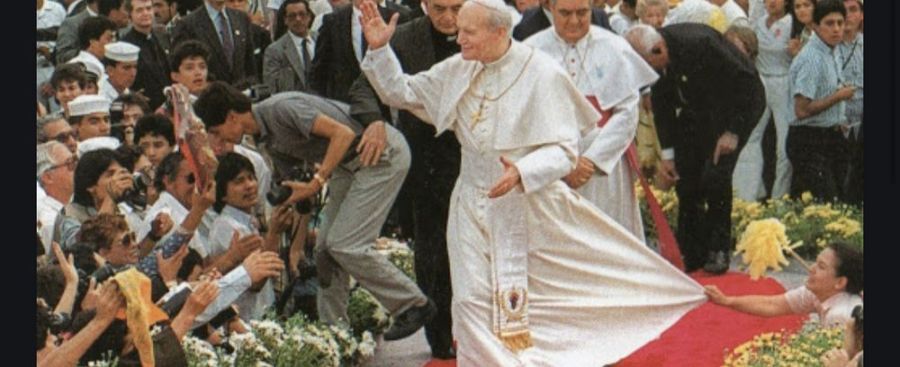
[Pope John Paul II, Message for Lent 2002]

79 Last modified on Friday, 28 November 2025 05:50
don Giuseppe Nespeca

Giuseppe Nespeca è architetto e sacerdote. Cultore della Sacra scrittura è autore della raccolta "Due Fuochi due Vie - Religione e Fede, Vangeli e Tao"; coautore del libro "Dialogo e Solstizio".

Email This email address is being protected from spambots. You need JavaScript enabled to view it.
The Kingdom of God is precisely the presence of truth and love and thus is healing in the depths of our being. One therefore understands why his preaching and the cures he works always go together: in fact, they form one message of hope and salvation (Pope Benedict)
Il Regno di Dio è proprio la presenza della verità e dell’amore e così è guarigione nella profondità del nostro essere. Si comprende, pertanto, perché la sua predicazione e le guarigioni che opera siano sempre unite: formano infatti un unico messaggio di speranza e di salvezza (Papa Benedetto)
To repent and believe in the Gospel are not two different things or in some way only juxtaposed, but express the same reality (Pope Benedict)
Convertirsi e credere al Vangelo non sono due cose diverse o in qualche modo soltanto accostate tra loro, ma esprimono la medesima realtà (Papa Benedetto)
The fire of God's creative and redeeming love burns sin and destroys it and takes possession of the soul, which becomes the home of the Most High! (Pope John Paul II)
Il fuoco dell’amore creatore e redentore di Dio brucia il peccato e lo distrugge e prende possesso dell’anima, che diventa abitazione dell’Altissimo! (Papa Giovanni Paolo II)
«The Spirit of the Lord is upon me, because he has anointed me to preach good news to the poor» (Lk 4:18). Every minister of God has to make his own these words spoken by Jesus in Nazareth [John Paul II]
«Lo Spirito del Signore è sopra di me; per questo mi ha consacrato con l'unzione e mi ha mandato per annunziare un lieto messaggio» (Lc 4, 18). Ogni ministro di Dio deve far sue nella propria vita queste parole pronunciate da Gesù di Nazareth [Giovanni Paolo II]
It is He himself who comes to meet us, who lowers Heaven to stretch out his hand to us and raise us to his heights [Pope Benedict]
È Lui stesso che ci viene incontro, abbassa il cielo per tenderci la mano e portarci alla sua altezza [Papa Benedetto]
As said st. Augustine: «The Word of God which is explained to you every day and in a certain sense "broken" is also daily Bread». Complete food: basic and “compote” food - historical and ideal, in actuality
Come diceva s. Agostino: «La Parola di Dio che ogni giorno viene a voi spiegata e in un certo senso “spezzata” è anch’essa Pane quotidiano». Alimento completo: cibo base e “companatico” - storico e ideale, in atto
What begins as a discovery of Jesus moves to a greater understanding and commitment through a prayerful process of questions and discernment (John Paul II)
Quel che inizia come una scoperta di Gesù conduce a una maggiore comprensione e dedizione attraverso un devoto processo di domande e discernimento (Giovanni Paolo II)
John's Prologue is certainly the key text, in which the truth about Christ's divine sonship finds its full expression (John Paul II)
«The Lord gave me, friar Francis, to begin to do penance like this: when I was in sins, it seemed too bitter to see lepers; and the Lord Himself brought me among them and I showed mercy with them. And moving away from them, what seemed bitter to me was changed into sweetness of soul and body. And then, I stayed a while and left the world» (FS 110)
«Il Signore dette a me, frate Francesco, d’incominciare a fare penitenza così: quando ero nei peccati, mi sembrava cosa troppo amara vedere i lebbrosi; e il Signore stesso mi condusse tra loro e usai con essi misericordia. E allontanandomi da essi, ciò che mi sembrava amaro mi fu cambiato in dolcezza d’animo e di corpo. E di poi, stetti un poco e uscii dal mondo» (FF 110)

Due Fuochi due Vie - Vol. 1 Due Fuochi due Vie - Vol. 2 Due Fuochi due Vie - Vol. 3 Due Fuochi due Vie - Vol. 4 Due Fuochi due Vie - Vol. 5 Dialogo e Solstizio I fiammiferi di Maria

duevie.art

don Giuseppe Nespeca

Tel. 333-1329741


Disclaimer

Questo blog non rappresenta una testata giornalistica in quanto viene aggiornato senza alcuna periodicità. Non può pertanto considerarsi un prodotto editoriale ai sensi della legge N°62 del 07/03/2001.
Le immagini sono tratte da internet, ma se il loro uso violasse diritti d'autore, lo si comunichi all'autore del blog che provvederà alla loro pronta rimozione.
L'autore dichiara di non essere responsabile dei commenti lasciati nei post. Eventuali commenti dei lettori, lesivi dell'immagine o dell'onorabilità di persone terze, il cui contenuto fosse ritenuto non idoneo alla pubblicazione verranno insindacabilmente rimossi.






