Aug 25, 2026 Written by 

He does not preach like a laboratory sermon

Gospel reading continues the narrative of Jesus’ day in Capernaum, on a Saturday, the Jewish weekly holy day (cf. Mk 1:21-39). This time the Evangelist Mark highlights the relationship between Jesus’ thaumaturgical work and the awakening of faith in the people he meets. Indeed, with the healing signs that he performs on all types of sick people, the Lord wants to arouse faith as a response.

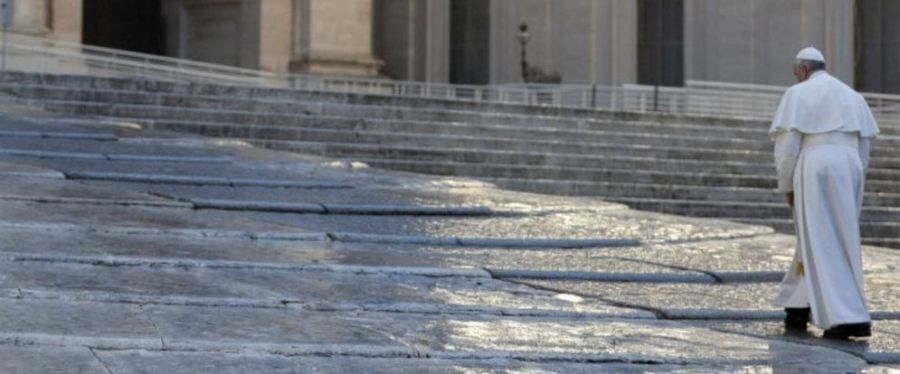
Jesus’ day in Capernaum begins with the healing of Peter’s mother-in-law and ends with the scene of a crowd of townspeople who gathered outside the house where he was staying, to bring all the sick people to him. Marked by physical suffering and by spiritual wretchedness, the crowd comprises, so to speak, “the living environment” in which Jesus’ mission, made up of healing and comforting words and actions, takes place. Jesus did not come to bring salvation in a laboratory; he does not preach from a laboratory, detached from people. He is in the midst of the crowd! In the midst of the people! Just think that most of Jesus’ public ministry took place on the streets, among the people; to preach the Gospel, to heal physical and spiritual wounds. This crowd of which the Gospel often speaks is a humanity marked by suffering. It is a humanity marked by suffering, toil and problems. It is to this poor humanity that Jesus’ powerful, liberating and renewing action is directed. That Saturday ends in this way, in the midst of the crowd until late in the evening. And what does Jesus do after that?

Before dawn the next day, he goes out of the town’s gates unseen and withdraws to a secluded place to pray. Jesus prays. In this way, he removes even himself and his mission from a “triumphalist” view which misunderstands the meaning of miracles and of his charismatic power. Miracles, in fact, are “signs” which encourage faith as a response; signs which are always accompanied by words that enlighten; and, taken together, the signs and words arouse faith and conversion through the divine power of Christ’s grace.

The conclusion of today’s passage (vv. 35-39) indicates that Jesus’ proclamation of the Kingdom of God finds its most rightful place on the streets. To the disciples who look for him in order to bring him back to the town — the disciples went to find him where he was praying and they wanted to bring him back to the town — what does Jesus answer? “Let us go on to the next towns, that I may preach there also” (v. 38). This was the journey of the Son of God and this will be the journey of his disciples. And it must be the journey of each Christian. The street, as the place for the Good News of the Gospel, places the mission of the Church under the sign of “going forth”, of journeying, under the sign of “movement”, and never of idleness.

May the Virgin Mary help us to be open to the voice of the Holy Spirit which propels the Church to increasingly “pitch her tent” among the people, in order to bring to everyone the healing word of Jesus, the physician of souls and bodies.

[Pope Francis, Angelus 4 February 2018].


Preach and Heal


Preaching and healing: this is the main activity of Jesus in his public life. By preaching He announces the Kingdom of God and by his healings He shows that it is near, that the Kingdom of God is in our midst. Having come to earth to announce and realise the salvation of the whole man and all men, Jesus shows a special predilection for those who are wounded in body and spirit: the poor, sinners, the possessed, the sick, the marginalised. He is the true Saviour: Jesus saves, Jesus heals. Christ's saving work does not end with his person and during his earthly life; it continues through the Church, the sacrament of God's love and tenderness for mankind. Caring for a sick person, welcoming him, serving him, is serving Christ: the sick person is the flesh of Christ. Therefore, each of us is called to bring the light of the Word of God and the strength of grace to those who suffer and to those who care for them. family members, doctors, nurses, so that the service to the sick is carried out more and more with humanity, with generous dedication, with evangelical love, with tenderness. (Angelus, 8 February 2015)

[https://www.vaticannews.va/it/vangelo-del-giorno-e-parola-del-giorno/2019/09/04.html]

10 Last modified on Tuesday, 25 August 2026 04:28
don Giuseppe Nespeca

Giuseppe Nespeca è architetto e sacerdote. Cultore della Sacra scrittura è autore della raccolta "Due Fuochi due Vie - Religione e Fede, Vangeli e Tao"; coautore del libro "Dialogo e Solstizio".

Email This email address is being protected from spambots. You need JavaScript enabled to view it.
And it is not enough that you belong to the Son of God, but you must be in him, as the members are in their head. All that is in you must be incorporated into him and from him receive life and guidance (Jean Eudes)
E non basta che tu appartenga al Figlio di Dio, ma devi essere in lui, come le membra sono nel loro capo. Tutto ciò che è in te deve essere incorporato in lui e da lui ricevere vita e guida (Giovanni Eudes)
Consequently, just as for Christ carrying the cross was not an option but a mission to be embraced for love, so it is for Christians too. In our world today, where the forces that divide and destroy seem to dominate, Christ does not cease to offer to all his clear invitation [Pope Benedict]
Come per Cristo, così pure per i cristiani portare la croce non è dunque facoltativo, ma è una missione da abbracciare per amore. Nel nostro mondo attuale, dove sembrano dominare le forze che dividono e distruggono, il Cristo non cessa di proporre a tutti il suo chiaro invito [Papa Benedetto]
We see this great figure, this force in the Passion, in resistance to the powerful. We wonder: what gave birth to this life, to this interiority so strong, so upright, so consistent, spent so totally for God in preparing the way for Jesus? The answer is simple: it was born from the relationship with God (Pope Benedict)
Noi vediamo questa grande figura, questa forza nella passione, nella resistenza contro i potenti. Domandiamo: da dove nasce questa vita, questa interiorità così forte, così retta, così coerente, spesa in modo così totale per Dio e preparare la strada a Gesù? La risposta è semplice: dal rapporto con Dio (Papa Benedetto)
The lamp is a symbol of the faith that illuminates our life, while the oil is a symbol of the charity that nourishes the light of faith, making it fruitful and credible (Pope Francis)
La lampada è il simbolo della fede che illumina la nostra vita, mentre l’olio è il simbolo della carità che alimenta, rende feconda e credibile la luce della fede (Papa Francesco)
Jesus wants our existence to be laborious, that we never lower our guard, so as to welcome with gratitude and wonder each new day given to us by God. Every morning is a blank page on which a Christian begins to write with good works (Pope Francis)
Gesù vuole che la nostra esistenza sia laboriosa, che non abbassiamo mai la guardia, per accogliere con gratitudine e stupore ogni nuovo giorno donatoci da Dio. Ogni mattina è una pagina bianca che il cristiano comincia a scrivere con le opere di bene (Papa Francesco)
And this is the problem: when the People put down roots in the land and are the depository of the Law, they are tempted to place their security and joy in something that is no longer the Word of God (Pope Benedict)
Ed ecco il problema: quando il popolo si stabilisce nella terra, ed è depositario della Legge, è tentato di riporre la sua sicurezza e la sua gioia in qualcosa che non è più la Parola del Signore (Papa Benedetto)
Despite the scarcity of information about him, St Bartholomew stands before us to tell us that attachment to Jesus can also be lived and witnessed to without performing sensational deeds. Jesus himself, to whom each one of us is called to dedicate his or her own life and death, is and remains extraordinary (Pope Benedict)
La figura di san Bartolomeo, pur nella scarsità delle informazioni che lo riguardano, resta comunque davanti a noi per dirci che l'adesione a Gesù può essere vissuta e testimoniata anche senza il compimento di opere sensazionali. Straordinario è e resta Gesù stesso, a cui ciascuno di noi è chiamato a consacrare la propria vita e la propria morte (Papa Benedetto)

Due Fuochi due Vie - Vol. 1 Due Fuochi due Vie - Vol. 2 Due Fuochi due Vie - Vol. 3 Due Fuochi due Vie - Vol. 4 Due Fuochi due Vie - Vol. 5 Dialogo e Solstizio I fiammiferi di Maria

duevie.art

don Giuseppe Nespeca

Tel. 333-1329741


Disclaimer

Questo blog non rappresenta una testata giornalistica in quanto viene aggiornato senza alcuna periodicità. Non può pertanto considerarsi un prodotto editoriale ai sensi della legge N°62 del 07/03/2001.
Le immagini sono tratte da internet, ma se il loro uso violasse diritti d'autore, lo si comunichi all'autore del blog che provvederà alla loro pronta rimozione.
L'autore dichiara di non essere responsabile dei commenti lasciati nei post. Eventuali commenti dei lettori, lesivi dell'immagine o dell'onorabilità di persone terze, il cui contenuto fosse ritenuto non idoneo alla pubblicazione verranno insindacabilmente rimossi.






