Aug 18, 2026 Written by 

Sick pastors: double life

When it is said of someone that they are a person with a double life, it is not to pay them a compliment. On the contrary. It is those people who irritate, cause indignation, or often even disgust with behaviour that contradicts the things that they are paying lip service to. Whether it is a politician or a neighbour makes little difference: discovering, so to speak, a 'double life', is something that always hurts. And let us not mention the disillusionment it can generate, especially in young people.

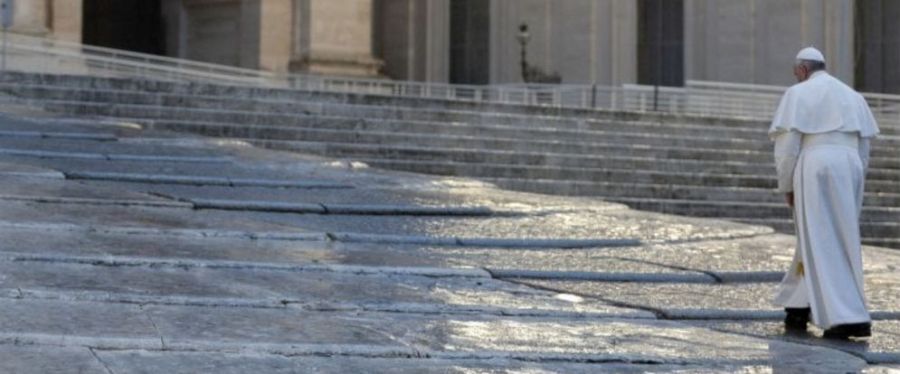
But if preaching well and braying badly is always an irritating thing, when it is a priest doing it, it is even more intolerable. Because there is something more at stake. Pope Francis said it very clearly, and as always in a very direct and effective style, a few days ago. When, in the homily of the morning Mass at Santa Marta, he stressed how "it is ugly to see pastors of double life", indeed it is a real "wound in the Church". For the Pope, they are "sick pastors, who have lost their authority and go on in this double life"; and, he added, "there are many ways of carrying on the double life: but it is double ... And Jesus is very strong with them. Not only does he tell people not to listen to them but not to do what they do, but what does he say to them? "You are whited sepulchres": beautiful in doctrine, from the outside. But inside, rottenness. This is the end of the pastor who has no closeness with God in prayer and with people in compassion'.

For it is this that makes the difference. Francis reiterates it firmly: 'What gives a pastor authority or awakens the authority that is given by the Father, is closeness: closeness to God in prayer and closeness to people. The pastor detached from the people does not reach the people with the message. Closeness, this double closeness. This is the anointing of the pastor who is moved by God's gift in prayer, and can be moved by people's sins, problems, illnesses: let the pastor be moved. The scribes ... had lost the 'ability' to be moved precisely because 'they were not close either to the people or to God'". And without this closeness, or when for whatever reason it is lost, 'the shepherd ends up in inconsistency of life'.

It seems like re-reading the words that John Paul II, in his Holy Thursday letter addressed to priests around the world in 1986, dedicated to the Holy Curate of Ars, pointing to him, on the second centenary of his birth, as an example for all priests. 'It is certainly not a matter of forgetting,' wrote Benedict XVI, again on St John Mary Vianney, in his letter of indiction for the 2009 Year for Priests, 'that the substantial effectiveness of the ministry remains independent of the holiness of the minister; but neither can we overlook the extraordinary fruitfulness generated by the encounter between the objective holiness of the ministry and the subjective holiness of the minister. The Curé d'Ars immediately began this humble and patient work of harmonisation between his life as a minister and the holiness of the ministry entrusted to him, deciding to 'live' even materially in his parish church: 'As soon as he arrived, he chose the church as his dwelling... He would enter the church before dawn and only leave it after the evening Angelus. There one had to look for him when one needed him,' reads the first biography'. Consistency, then. Not duplicity. Because God's people need everything except whitewashed sepulchres.

[Pope Francis, St. Martha; Salvatore Mazza in Avvenire 13 January 2018]

14 Last modified on Tuesday, 18 August 2026 03:33
don Giuseppe Nespeca

Giuseppe Nespeca è architetto e sacerdote. Cultore della Sacra scrittura è autore della raccolta "Due Fuochi due Vie - Religione e Fede, Vangeli e Tao"; coautore del libro "Dialogo e Solstizio".

Email This email address is being protected from spambots. You need JavaScript enabled to view it.
And this is the problem: when the People put down roots in the land and are the depository of the Law, they are tempted to place their security and joy in something that is no longer the Word of God (Pope Benedict)
Ed ecco il problema: quando il popolo si stabilisce nella terra, ed è depositario della Legge, è tentato di riporre la sua sicurezza e la sua gioia in qualcosa che non è più la Parola del Signore (Papa Benedetto)
Despite the scarcity of information about him, St Bartholomew stands before us to tell us that attachment to Jesus can also be lived and witnessed to without performing sensational deeds. Jesus himself, to whom each one of us is called to dedicate his or her own life and death, is and remains extraordinary (Pope Benedict)
La figura di san Bartolomeo, pur nella scarsità delle informazioni che lo riguardano, resta comunque davanti a noi per dirci che l'adesione a Gesù può essere vissuta e testimoniata anche senza il compimento di opere sensazionali. Straordinario è e resta Gesù stesso, a cui ciascuno di noi è chiamato a consacrare la propria vita e la propria morte (Papa Benedetto)
Faith is more than just empirical or historical facts; it is an ability to grasp the mystery of Christ’s person in all its depth [Pope Benedict]
La fede va al di là dei semplici dati empirici o storici, ed è capace di cogliere il mistero della persona di Cristo nella sua profondità [Papa Benedetto]
More than 600 precepts are mentioned in the Law of Moses. How should the great commandment be distinguished among these? (Pope Francis)
Nella Legge di Mosè sono menzionati oltre seicento precetti. Come distinguere, tra tutti questi, il grande comandamento? (Papa Francesco)
The invitation has three characteristics: freely offered, breadth and universality. Many people were invited, but something surprising happened: none of the intended guests came to take part in the feast, saying they had other things to do; indeed, some were even indifferent, impertinent, even annoyed (Pope Francis)
L’invito ha tre caratteristiche: la gratuità, la larghezza, l’universalità. Gli invitati sono tanti, ma avviene qualcosa di sorprendente: nessuno dei prescelti accetta di prendere parte alla festa, dicono che hanno altro da fare; anzi alcuni mostrano indifferenza, estraneità, perfino fastidio (Papa Francesco)
Those who are considered the "last", if they accept, become the "first", whereas the "first" can risk becoming the "last" (Pope Benedict)
Proprio quelli che sono considerati "ultimi", se lo accettano, diventano "primi", mentre i "primi" possono rischiare di finire "ultimi" (Papa Benedetto)
The dialogue of Jesus with the rich young man, related in the nineteenth chapter of Saint Matthew's Gospel, can serve as a useful guide for listening once more in a lively and direct way to his moral teaching [Veritatis Splendor n.6]
Il dialogo di Gesù con il giovane ricco, riferito nel capitolo 19 del Vangelo di san Matteo, può costituire un'utile traccia per riascoltare in modo vivo e incisivo il suo insegnamento morale [Veritatis Splendor n.6]
St Augustine rightly commented: “Christ showed himself indifferent to her, not in order to refuse her his mercy but rather to inflame her desire for it” (Sermo 77, 1: PL 38, 483) [Pope Benedict]
These words are full of the disarming power of truth that pulls down the wall of hypocrisy and opens consciences [Pope Benedict]
Queste parole sono piene della forza disarmante della verità, che abbatte il muro dell’ipocrisia e apre le coscienze [Papa Benedetto]

Due Fuochi due Vie - Vol. 1 Due Fuochi due Vie - Vol. 2 Due Fuochi due Vie - Vol. 3 Due Fuochi due Vie - Vol. 4 Due Fuochi due Vie - Vol. 5 Dialogo e Solstizio I fiammiferi di Maria

duevie.art

don Giuseppe Nespeca

Tel. 333-1329741


Disclaimer

Questo blog non rappresenta una testata giornalistica in quanto viene aggiornato senza alcuna periodicità. Non può pertanto considerarsi un prodotto editoriale ai sensi della legge N°62 del 07/03/2001.
Le immagini sono tratte da internet, ma se il loro uso violasse diritti d'autore, lo si comunichi all'autore del blog che provvederà alla loro pronta rimozione.
L'autore dichiara di non essere responsabile dei commenti lasciati nei post. Eventuali commenti dei lettori, lesivi dell'immagine o dell'onorabilità di persone terze, il cui contenuto fosse ritenuto non idoneo alla pubblicazione verranno insindacabilmente rimossi.






