Sep 26, 2026 Written by 

Foundational Stones

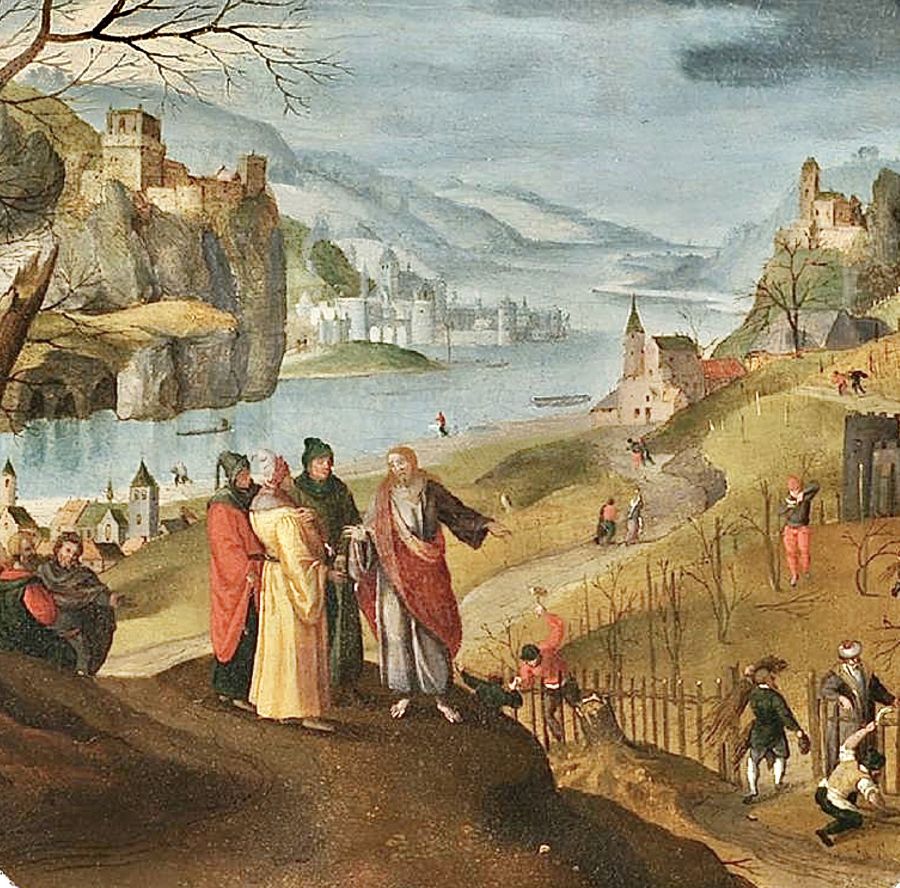
Jesus tells the parable of the murderous farmers. Only at the end do the priests and Pharisees realise that it was directed at them, and they try to arrest him, though they fear the crowd, who regarded him as a prophet.

Francis knew full well that Jesus is the Cornerstone, rejected by the builders, yet precious and as firm as granite in the sight of God.

He knew and repeated in his heart the Psalm (118) which captures all this: 

«Jesus said to them, “Have you never read in the Scriptures: ‘The stone which the builders rejected has become the cornerstone […]’» (Mt 21:42).

In the Sources, indeed, we find the Poverello’s great respect for the stones that reminded him of the Cornerstone: Christ.

Celano, in the Second Life, emphasises:

“He walked reverently upon the stones, out of respect for the One who is called the Stone. And when he had to recite the verse which says, ‘Upon the rock you have set me’, he altered the words out of greater reverence: «Beneath the feet of the Rock you have set me»” (FF 750).


Following Christ’s example and through the work of the Holy Spirit, Francis became a stone in the edifice of the Church.

The Major Legend attests to this:

“During the two years following the appearance of the stigmata, he, like a stone intended for the edifice of the heavenly Jerusalem, had been hewn by the blows of trial through his many and tormenting infirmities, and, like malleable material, had been brought to the highest perfection under the hammer of numerous tribulations” (FF 1239).

Alongside Francis, Clare too was transformed into a cornerstone for the Order of the Poor Ladies.

We read: “The first work Francis undertook […] was to rebuild a temple to the Lord. He did not set out to build a new one, but restored an ancient and dilapidated church; he did not undermine the foundations, but built upon them, thus—without realising it—leaving primacy to Christ. For no one could lay any foundation other than the one already laid: Jesus Christ.

Having therefore returned to the place where, as has been said, the church of San Damiano had once stood, with the grace of the Most High he repaired it with great diligence in a short space of time” (FF 350).

“This is the blessed and holy place where, through the work of Francis himself, the glorious Order of the «Poor Ladies» and holy virgins had its happy beginning, almost six years after his conversion.

It was there that Sister Clare, also a native of Assisi, a most precious and strong stone, became the cornerstone for all the other stones of this religious family” (FF 351).

Upon the Cornerstone of Christ—He whom the murderous vineyard-keepers persecuted and killed—stones brought to life by Him were laid (finding there their place and meaning) to build the Kingdom of God through the power of the Spirit.


27th Sunday in Ordinary Time, year A  (Mt 21:33–43)

198 Last modified on Saturday, 26 September 2026 03:39
Teresa Girolami

Teresa Girolami è laureata in Materie letterarie e Teologia. Ha pubblicato vari testi, fra cui: "Pellegrinaggio del cuore" (Ed. Piemme); "I Fiammiferi di Maria - La Madre di Dio in prosa e poesia"; "Tenerezza Scalza - Natura di donna"; co-autrice di "Dialogo e Solstizio".

Email This email address is being protected from spambots. You need JavaScript enabled to view it.
A “year” of grace: the period of Christ’s ministry, the time of the Church before his glorious return, an interval of our life (Pope Francis)
Un “anno” di grazia: il tempo del ministero di Cristo, il tempo della Chiesa prima del suo ritorno glorioso, il tempo della nostra vita (Papa Francesco)
The Church, having before her eyes the picture of the generation to which we belong, shares the uneasiness of so many of the people of our time (Dives in Misericordia n.12)
Avendo davanti agli occhi l'immagine della generazione a cui apparteniamo, la Chiesa condivide l'inquietudine di tanti uomini contemporanei (Dives in Misericordia n.12)
Addressing this state of mind, the Church testifies to her hope, based on the conviction that evil, the mysterium iniquitatis, does not have the final word in human affairs (Pope John Paul II)
Di fronte a questi stati d'animo la Chiesa desidera testimoniare la sua speranza, basata sulla convinzione che il male, il mysterium iniquitatis, non ha l'ultima parola nelle vicende umane (Papa Giovanni Paolo II)
Jesus reminds us today that the expectation of the eternal beatitude does not relieve us of the duty to render the world more just and more liveable (Pope Francis)
Gesù oggi ci ricorda che l’attesa della beatitudine eterna non ci dispensa dall’impegno di rendere più giusto e più abitabile il mondo (Papa Francesco)
Those who open to Him will be blessed, because they will have a great reward: indeed, the Lord will make himself a servant to his servants — it is a beautiful reward — in the great banquet of his Kingdom He himself will serve them [Pope Francis]
E sarà beato chi gli aprirà, perché avrà una grande ricompensa: infatti il Signore stesso si farà servo dei suoi servi - è una bella ricompensa - nel grande banchetto del suo Regno passerà Lui stesso a servirli [Papa Francesco]
The fool in the Bible, the one who does not want to learn from the experience of visible things, that nothing lasts for ever but that all things pass away, youth and physical strength, amenities and important roles. Making one's life depend on such an ephemeral reality is therefore foolishness (Pope Benedict)
L’uomo stolto nella Bibbia è colui che non vuole rendersi conto, dall’esperienza delle cose visibili, che nulla dura per sempre, ma tutto passa: la giovinezza come la forza fisica, le comodità come i ruoli di potere. Far dipendere la propria vita da realtà così passeggere è, dunque, stoltezza (Papa Benedetto)
As sometimes happens in the Gospel, faced with the trap set by his enemies, Jesus, with his response, rises above the contingent controversy and goes far beyond the particular and mutually divergent positions (Pope John Paul II)
Come talora accade nel Vangelo, di fronte al tranello mossogli dai suoi nemici, Gesù, con la sua risposta, s’innalza al di sopra della polemica contingente e va ben oltre le posizioni particolari e tra loro divergenti (Papa Giovanni Paolo II)
And blasphemy, the sin against the Holy Spirit, is the one unforgivable sin — as Jesus said — because it comes from closing the heart to God’s mercy which acts in Jesus (Pope Francis)
The great thinker Romano Guardini wrote that the Lord “is always close, being at the root of our being. Yet we must experience our relationship with God between the poles of distance and closeness. By closeness we are strengthened, by distance we are put to the test” (Pope Benedict)

Due Fuochi due Vie - Vol. 1 Due Fuochi due Vie - Vol. 2 Due Fuochi due Vie - Vol. 3 Due Fuochi due Vie - Vol. 4 Due Fuochi due Vie - Vol. 5 Dialogo e Solstizio I fiammiferi di Maria

duevie.art

don Giuseppe Nespeca

Tel. 333-1329741


Disclaimer

Questo blog non rappresenta una testata giornalistica in quanto viene aggiornato senza alcuna periodicità. Non può pertanto considerarsi un prodotto editoriale ai sensi della legge N°62 del 07/03/2001.
Le immagini sono tratte da internet, ma se il loro uso violasse diritti d'autore, lo si comunichi all'autore del blog che provvederà alla loro pronta rimozione.
L'autore dichiara di non essere responsabile dei commenti lasciati nei post. Eventuali commenti dei lettori, lesivi dell'immagine o dell'onorabilità di persone terze, il cui contenuto fosse ritenuto non idoneo alla pubblicazione verranno insindacabilmente rimossi.






