Jul 18, 2026 Written by 

On the outside, weeping; on the inside, joy!

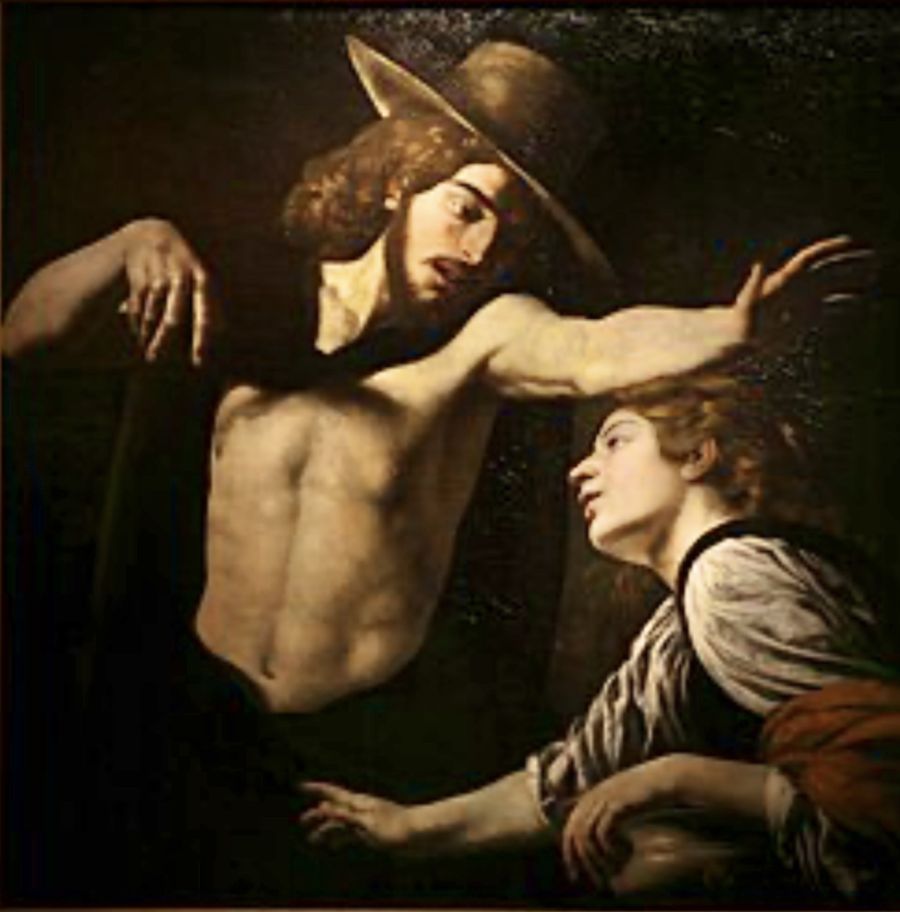
On the feast of St. Mary Magdalene, the Liturgy proposes to us the passage from John that concerns her most closely, as it challenges every soul in its search for the Master.

«Woman, why are you weeping? Whom do you seek?» (Jn 20:15).

All’esterno il pianto; all’interno la gioia! of Magdala wept for her Lord, near the tomb. Lost and grieving, she grieved not knowing where he was, until Jesus made himself present.

Clare too, in the enclosure of San Damiano, wept while praying for her Christ, uniting herself to his Passion, while awaiting the Resurrection.

In the Legend we read:

"She had now fixed her burning gaze of interior desire in the Light and, having transcended the sphere of human vicissitudes, she opened the field of her spirit wide to the rain of Grace.

[...]

Very often, prostrate in prayer with her face to the ground, she bathed the ground with tears and brushed it with kisses: so that she seems always to have her Jesus in her arms, whose feet she bathes with tears, on whom she imprints kisses" (FF 3197).

Clare sought the Lord interiorly, even for those who did not desire Him.

She was careful not to hold back Christ who ascended to the Father, living the proclamation of the Resurrection with a face of light, testifying to the present vision of Him to the brothers and sisters who approached her.

He lived the perennial earthly Exodus in view of the Promised Land, which he already savoured in small doses.

Francis, for his part, jester of the Resurrection, mourned the Passion of Love, corroborated by existential rebirth.

Again, in St Bonaventure's Major Legend:

"To those who saw him, he seemed a man from another world: one who, his mind and face always turned to heaven, strove to draw all upwards" (FF 1072).

Just as Mary of Magdala made the transition from the outside [near the tomb] to the inside of her own soul and vicissitude - to recognise the Risen Jesus.

So Francis, after living on the outside, among cheerful Assisian brigands, had encountered the «Rabbuni» within his heart. Recognising and deciphering the Master of his life, in prayer before the Crucifix at saint Damian.

There he found God, he found himself again; in the midst of weeping and perfect joy.

Jesus also asked him the question: «Why are you weeping? Whom do you seek?» (Jn 20:15).

The Damianite Crucified became the place of his resurrection, where the weeping of a missed life, spent in solace, gave way to the Calling by name, in view of personal and community regeneration.

At saint Damian, when a divine Voice came to him from the Crucifix inviting him to change his life, the Poor Man uttered this prayer

«May conquer, I pray thee, O Lord,

the burning and sweet power of your love

my mind from all things that are under heaven,

that I may die for love of thy love,

as thou hast deigned to die

for love of my love» (FF 277).


St Mary Magdalene  (Jn 20:1-2.11-18)

97 Last modified on Saturday, 18 July 2026 00:34
Teresa Girolami

Teresa Girolami è laureata in Materie letterarie e Teologia. Ha pubblicato vari testi, fra cui: "Pellegrinaggio del cuore" (Ed. Piemme); "I Fiammiferi di Maria - La Madre di Dio in prosa e poesia"; "Tenerezza Scalza - Natura di donna"; co-autrice di "Dialogo e Solstizio".

Email This email address is being protected from spambots. You need JavaScript enabled to view it.
Jesus invites us to discern the words and deeds which bear witness to the imminent coming of the Father’s kingdom. Indeed, he indicates and concentrates all the signs in the enigmatic “sign of Jonah”. By doing so, he overturns the worldly logic aimed at seeking signs that would confirm the human desire for self-affirmation and power (Pope John Paul II)
Gesù invita al discernimento in rapporto alle parole ed opere, che testimoniano l'imminente avvento del Regno del Padre. Anzi, Egli indirizza e concentra tutti i segni nell'enigmatico "segno di Giona". E con ciò rovescia la logica mondana tesa a cercare segni che confermino il desiderio di autoaffermazione e di potenza dell'uomo (Papa Giovanni Paolo II)
In reality, an abstract, distant god is more comfortable, one that doesn’t get himself involved in situations and who accepts a faith that is far from life, from problems, from society. Or we would even like to believe in a ‘special effects’ god (Pope Francis)
In realtà, è più comodo un dio astratto, distante, che non si immischia nelle situazioni e che accetta una fede lontana dalla vita, dai problemi, dalla società. Oppure ci piace credere a un dio “dagli effetti speciali” (Papa Francesco)
It is as though you were given a parcel with a gift inside and, rather than going to open the gift, you look only at the paper it is wrapped in: only appearances, the form, and not the core of the grace, of the gift that is given! (Pope Francis)
È come se a te regalassero un pacchetto con dentro un dono e tu, invece di andare a cercare il dono, guardi soltanto la carta nel quale è incartato: soltanto le apparenze, la forma, e non il nocciolo della grazia, del dono che viene dato! (Papa Francesco)
The Lord has our good at heart, that is, that every person should have life, and that especially the "least" of his children may have access to the banquet he has prepared for all (Pope Benedict)
Al Signore sta a cuore il nostro bene, cioè che ogni uomo abbia la vita, e che specialmente i suoi figli più "piccoli" possano accedere al banchetto che lui ha preparato per tutti (Papa Benedetto)
This Parable of the Sower is somewhat the ‘mother’ of all parables […] Such is the heart of God! Each one of us is ground on which the seed of the Word falls; no one is excluded! [Pope Francis]
Questa del seminatore è un po’ la “madre” di tutte le parabole […] Così è il cuore di Dio! Ognuno di noi è un terreno su cui cade il seme della Parola, nessuno è escluso [Papa Francesco]
Are we not perhaps all afraid in some way? If we let Christ enter fully into our lives, if we open ourselves totally to him, are we not afraid that He might take something away from us? Are we not perhaps afraid to give up something significant, something unique, something that makes life so beautiful? Do we not then risk ending up diminished and deprived of our freedom? (Pope Benedict)
Non abbiamo forse tutti in qualche modo paura - se lasciamo entrare Cristo totalmente dentro di noi, se ci apriamo totalmente a lui – paura che Egli possa portar via qualcosa della nostra vita? Non abbiamo forse paura di rinunciare a qualcosa di grande, di unico, che rende la vita così bella? Non rischiamo di trovarci poi nell’angustia e privati della libertà? (Papa Benedetto)
«Is there an attitude for those who want to follow Jesus» so that «they do not end badly, that they do not end up eaten alive - as my mother used to say: "Eat raw" - by others»? (Pope Francis)

Due Fuochi due Vie - Vol. 1 Due Fuochi due Vie - Vol. 2 Due Fuochi due Vie - Vol. 3 Due Fuochi due Vie - Vol. 4 Due Fuochi due Vie - Vol. 5 Dialogo e Solstizio I fiammiferi di Maria

duevie.art

don Giuseppe Nespeca

Tel. 333-1329741


Disclaimer

Questo blog non rappresenta una testata giornalistica in quanto viene aggiornato senza alcuna periodicità. Non può pertanto considerarsi un prodotto editoriale ai sensi della legge N°62 del 07/03/2001.
Le immagini sono tratte da internet, ma se il loro uso violasse diritti d'autore, lo si comunichi all'autore del blog che provvederà alla loro pronta rimozione.
L'autore dichiara di non essere responsabile dei commenti lasciati nei post. Eventuali commenti dei lettori, lesivi dell'immagine o dell'onorabilità di persone terze, il cui contenuto fosse ritenuto non idoneo alla pubblicazione verranno insindacabilmente rimossi.






