Jun 14, 2026 Written by 

Amend, do not lose

Francis, the Poor Man of Assisi, believed deeply in the Merciful Love and Patience of Christ. He could not bear to judge people without appeal.

He was always righteous and merciful towards others, though much less so towards himself.

There are many passages about this in the Sources. We read:

«Oh, how worthy of compassion is our foolishness!

Not only do we not lift up or support the weak, but sometimes we push them to fall.

We consider it of no importance to take a sheep from the Supreme Shepherd, for whom he cried out with tears on the Cross.

But you, holy Father, preferred to amend the erring and not lose them [...]» (FF 763).

The friars themselves had been taught to restrain their tongues:

"They were relentless judges of themselves, careful not to harm one another in any way.

If a brother happened to utter a word that could hurt someone, his remorse would not allow him to rest until he confessed his mistake" (FF 1448-1449).

Furthermore, Francis "insisted that the brothers should not judge anyone, and should not look with contempt on those who live in luxury and dress with exaggerated refinement and pomp.

God is our Lord and theirs, and he has the power to call them to himself and make them righteous" (FF 1469).

Guardian of the marginalised, Francis the Minim, poured out on everyone the gratuitousness he had received from Christ.

A man of indomitable faith, he embraced even the marginalised, going far beyond any judgement or stereotypical mentality.

In the Regula Bullata, addressing his friars, he said:

«I admonish them [...] and exhort them not to despise or judge men who are clothed in soft and colourful garments and use delicate food and drink, but rather let each one judge and despise himself» (FF 81).

And even more so in his Admonitions, he urged them to beware of judging priests.

«And woe to those who despise them.

Even if they are sinners, no one should judge them, for the Lord has expressly reserved to himself the right to judge them.

Indeed, the greater the ministry they perform in the most holy body and blood of our Lord Jesus Christ, which they alone receive and administer to others, the greater the sin of those who sin against them, than if they sinned against all other men in this world» (FF176).


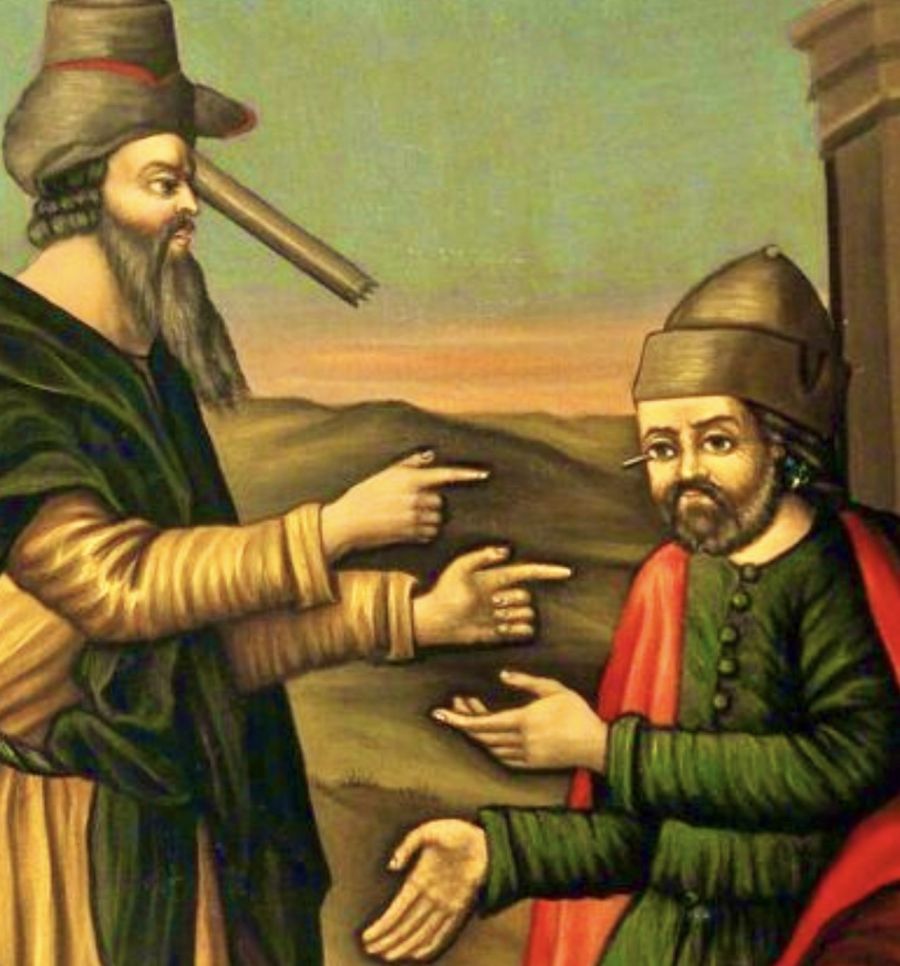
«Do not judge, so that you will not be judged, for with the judgement you use, you will be judged, and with the measure you use, it will be measured to you» (Mt 7:1-2)


Monday of the 12th wk. in Ordinary Time  (Mt 7:1-5)

177 Last modified on Sunday, 14 June 2026 03:26
Teresa Girolami

Teresa Girolami è laureata in Materie letterarie e Teologia. Ha pubblicato vari testi, fra cui: "Pellegrinaggio del cuore" (Ed. Piemme); "I Fiammiferi di Maria - La Madre di Dio in prosa e poesia"; "Tenerezza Scalza - Natura di donna"; co-autrice di "Dialogo e Solstizio".

Email This email address is being protected from spambots. You need JavaScript enabled to view it.
This Parable of the Sower is somewhat the ‘mother’ of all parables […] Such is the heart of God! Each one of us is ground on which the seed of the Word falls; no one is excluded! [Pope Francis]
Questa del seminatore è un po’ la “madre” di tutte le parabole […] Così è il cuore di Dio! Ognuno di noi è un terreno su cui cade il seme della Parola, nessuno è escluso [Papa Francesco]
Are we not perhaps all afraid in some way? If we let Christ enter fully into our lives, if we open ourselves totally to him, are we not afraid that He might take something away from us? Are we not perhaps afraid to give up something significant, something unique, something that makes life so beautiful? Do we not then risk ending up diminished and deprived of our freedom? (Pope Benedict)
Non abbiamo forse tutti in qualche modo paura - se lasciamo entrare Cristo totalmente dentro di noi, se ci apriamo totalmente a lui – paura che Egli possa portar via qualcosa della nostra vita? Non abbiamo forse paura di rinunciare a qualcosa di grande, di unico, che rende la vita così bella? Non rischiamo di trovarci poi nell’angustia e privati della libertà? (Papa Benedetto)
«Is there an attitude for those who want to follow Jesus» so that «they do not end badly, that they do not end up eaten alive - as my mother used to say: "Eat raw" - by others»? (Pope Francis)
«Esiste un atteggiamento per quelli che vogliono seguire Gesù» in modo che «non finiscano male, che non finiscano mangiati vivi — come diceva mia mamma: “Mangiati crudi” — dagli altri»? (Papa Francesco)
For Christians, volunteer work is not merely an expression of good will. It is based on a personal experience of Christ (Pope Benedict)
Per i cristiani, il volontariato non è soltanto espressione di buona volontà. È basato sull’esperienza personale di Cristo (Papa Benedetto)
Christ reveals his identity of Messiah, Israel's bridegroom, who came for the betrothal with his people. Those who recognize and welcome him are celebrating. However, he will have to be rejected and killed precisely by his own; at that moment, during his Passion and death, the hour of mourning and fasting will come (Pope Benedict)
Cristo rivela la sua identità di Messia, Sposo d'Israele, venuto per le nozze con il suo popolo. Quelli che lo riconoscono e lo accolgono con fede sono in festa. Egli però dovrà essere rifiutato e ucciso proprio dai suoi: in quel momento, durante la sua passione e la sua morte, verrà l'ora del lutto e del digiuno (Papa Benedetto)
For the prodigious and instantaneous healing of the paralytic, the apostle St. Matthew is more sober than the other synoptics, St. Mark and St. Luke. These add broader details, including that of the opening of the roof in the environment where Jesus was, to lower the sick man with his lettuce, given the huge crowd that crowded at the entrance. Evident is the hope of the pitiful companions: they almost want to force Jesus to take care of the unexpected guest and to begin a dialogue with him (Pope Paul VI)
Per la prodigiosa ed istantanea guarigione del paralitico, l’apostolo San Matteo è più sobrio degli altri sinottici, San Marco e San Luca. Questi aggiungono più ampi particolari, tra cui quello dell’avvenuta apertura del tetto nell’ambiente ove si trovava Gesù, per calarvi l’infermo col suo lettuccio, data l’enorme folla che faceva ressa all’entrata. Evidente è la speranza dei pietosi accompagnatori: essi vogliono quasi obbligare Gesù ad occuparsi dell’inatteso ospite e ad iniziare un dialogo con lui (Papa Paolo VI)

Due Fuochi due Vie - Vol. 1 Due Fuochi due Vie - Vol. 2 Due Fuochi due Vie - Vol. 3 Due Fuochi due Vie - Vol. 4 Due Fuochi due Vie - Vol. 5 Dialogo e Solstizio I fiammiferi di Maria

duevie.art

don Giuseppe Nespeca

Tel. 333-1329741


Disclaimer

Questo blog non rappresenta una testata giornalistica in quanto viene aggiornato senza alcuna periodicità. Non può pertanto considerarsi un prodotto editoriale ai sensi della legge N°62 del 07/03/2001.
Le immagini sono tratte da internet, ma se il loro uso violasse diritti d'autore, lo si comunichi all'autore del blog che provvederà alla loro pronta rimozione.
L'autore dichiara di non essere responsabile dei commenti lasciati nei post. Eventuali commenti dei lettori, lesivi dell'immagine o dell'onorabilità di persone terze, il cui contenuto fosse ritenuto non idoneo alla pubblicazione verranno insindacabilmente rimossi.






