27th Sunday in Ordinary Time (year A)
(Isaiah 5:1–7)
1I will sing for my beloved a love song about his vineyard. My beloved had a vineyard on a fertile hill.
2He cleared it of stones and dug it up, then planted it with choice vines; he built a watchtower in the middle of it and also dug a winepress. He expected it to yield grapes, but it yielded only sour grapes.
3Now, inhabitants of Jerusalem and men of Judah, be you the judges between me and my vineyard.
4What more could I have done for my vineyard that I have not done? Why, whilst I was expecting it to yield grapes, did it yield sour grapes?
5Now I will tell you what I am going to do to my vineyard: I will remove its hedge, and it will be turned into pasture; I will tear down its wall, and it will be trampled underfoot.
6I will make it a wasteland; it will not be pruned or hoed, and brambles and thorns will grow there; and I will command the clouds not to send rain upon it.
7Now the vineyard of the Lord of hosts is the house of Israel; the people of Judah are the plants he cherished. He expected justice, but behold, bloodshed; he expected righteousness, but behold, cries of the oppressed.
----------------------- ---------------------
This is a famous passage from Isaiah. ‘My beloved’ refers to God. The vineyard represents Israel. Jesus himself used this simile and enshrined it in the parable in Matthew 21:33–43, which echoes precisely this passage from Isaiah. God examines Himself, judges Himself, and asks: how great was my love for the vineyard? Did I do everything that needed to be done? Did I overlook anything? If the answer is affirmative and comprehensive, He may proceed to render a just judgement; otherwise, He must postpone it. Only after having examined the full depth of His love can He deliver His just judgement. Where there is no fullness of love, there can never be a just judgement. No one can accuse God of having been remiss.
‘My Beloved’ possessed a vineyard on a fertile hill. God, the Beloved of Israel, had planted his vineyard well. The location was perfect. The hill was fertile. God had not chosen the wrong place for the vineyard. Choosing the wrong spot means condemning the vineyard to bear no fruit. God planted his vineyard in the ideal spot.
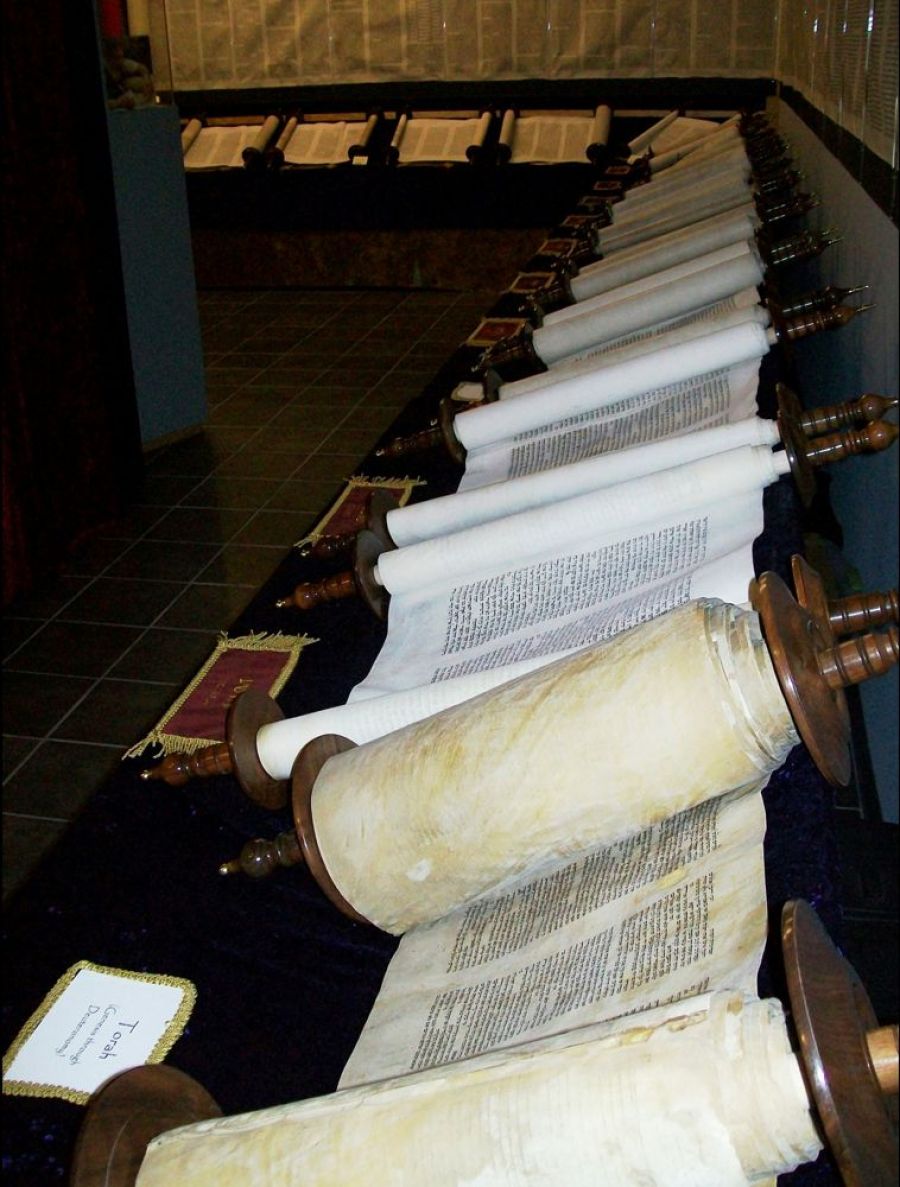
In verse 2, the Lord assesses his own expertise in cultivation. The spot is perfect; it is fertile. The soil shows great promise. He had tilled it and cleared it of stones—that is, he had prepared it by giving it the Torah. ‘Cleared of stones’. … these stones symbolise the various peoples who inhabited the land of Canaan before Israel. The Lord had planted fine vines there; He had not merely taken just any vines. In the midst of it, He had built a tower and also dug a winepress. The tower standing in the middle of the vineyard is evidently the temple that stood in Jerusalem, at the heart of the country. Everything is perfect. Now all that remains is to wait to reap the harvest. He waited, but instead of producing grapes, it produced unripe berries. What a disappointment! What bitterness!
In verse 3, the Lord asks the inhabitants of Jerusalem and the men of Judah to act as arbiters between Him and the vineyard. He asks His people to help Him in the search for truth. The Lord wants his people to speak their minds about him too. No one should be able to accuse him of being an unjust judge. God calls upon the very guilty parties themselves to act as judges and arbiters.
The Lord asks for a judgement on his work (v. 4). God has done everything he could for the salvation of sinners. What more could I have done for my vineyard that I have not already done? Can anyone tell me anything? This examination of conscience ought to be undertaken by every pope, bishop, priest and disciple of Jesus. Only when we have exhausted every reserve of our love might we say that we are innocent before those who are lost. God has done everything. Why then, whilst He was waiting for it to produce grapes, did it yield unripe berries? Now it is the vineyard that must answer. God has done everything. The vineyard has produced nothing. There is no point in tending it any longer. It would be a waste of time. If there is nothing else the Lord can do, what hope remains?
Here, then, is the Lord’s decision (v. 5): he announces the coming punishments he will send upon them. Without a hedge, there will be no protection; wild animals will enter freely and devour the vines. In other words, God will withdraw his protection from the Israelites, and once he no longer defends their land, their enemies will enter and plunder everything. He will tear down its boundary wall, and it will be trampled underfoot. Anyone can enter it. The vineyard is without any protection. Anyone can trample it, and whatever is not trampled runs wild. If the Lord does not tend his vineyard, there is no life in it. God withdraws his grace from those who have made themselves unworthy of it, so that, having refused to acknowledge his goodness, they may experience the severity of his justice.
Israel, a privileged people, has shown itself so ungrateful that God, now weary, decides to abandon it and brings about its ruin: ‘I will command the clouds not to send you rain.’ Without rain, the vineyard is doomed. The Lord has poured out all his love upon it. He has nothing else to give. In the Old Testament, he gave everything. In the New Testament, he gives his Only-Begotten Son on the Cross. Has the Lord finished giving? No. Now, in Christ, he wishes to give every other child of his. As long as there is a single Christian on earth, God will wish to make an act of love for his vineyard.
In verse 7, the Lord moves away from the allegory and the symbol and enters into reality. He reveals who his vineyard is. His vineyard is the house of Israel. This is the vineyard that God had planted. From his people, God expected righteousness, yet here there is bloodshed. He expected righteousness, but instead there were cries from the oppressed. Instead of his children loving one another as true brothers, they had turned against one another. Since the people had rejected the Lord, they had rejected themselves, and all those who are unjustly oppressed cry out.
‘He expected justice, but instead there was bloodshed; he expected righteousness, but instead there were cries from the oppressed’.
‘Justice’ in Hebrew is mišpāṭ, ‘bloodshed’ is miśpāḥ; the two words look and sound the same. Similarly, ‘righteousness’ is ṣeḏāqāh, and ‘cries of the oppressed’ is ṣe‘āqāh. Outwardly, things seemed to be holding together, but the people were violating the Lord’s law.
Argentino Quintavalle, author of the books
- Revelation – an exegetical commentary
- The Apostle Paul and the Judaizers – Law or Gospel?
Jesus Christ, true God and true Man, in the mystery of the Trinity
Jesus’ prophetic discourse (Matthew 24–25)
All Generations Will Call Me Blessed
Catholics and Protestants Compared – In Defence of the Faith
The Church and Israel According to St Paul – Romans 9–11
(Available on Amazon)