(Mt 5:1–12a)
1 When Jesus saw the crowds, he went up the mountain; he sat down, and his disciples came to him.
2 He began to speak and teach them, saying:
----------------------------------- ---------
The evangelist is aware that he is writing something extraordinarily important and even pays close attention to the commas. The text opens with a verb – Idōn – which is not a generic ‘seeing’, nor a mere observation, but indicates a kind of selection that Jesus is making. What does Jesus see? Jesus sees ‘the crowds’. Jesus is often accompanied by anonymous crowds, who form the backdrop to his travels. These crowds referred to here represent, in a way, the whole world coming to hear the Gospel. They are anonymous followers who take an interest in Jesus and his message, yet without stepping out of their anonymity through a specific public commitment to follow him. In a sense, they represent the crowds of future believers. This is why Jesus looks at them intently, embracing them with his gaze. That idōn, therefore, is a gaze that binds Jesus deeply to the crowds and draws him towards them.
After embracing the crowds with his gaze, Jesus performs three significant actions: he goes up the mountain, sits down, and begins to speak. It should be noted straight away that the discourse takes place ‘on’ the mountain, not on ‘a’ mountain. It is ‘the’ mountain. In the Gospel, the mountain is never a geographical reference; it is not about geography, but about theology: the mountain is the place close to God. Indeed, the mountain has no name, and by omitting it, the evangelist wishes to indicate that it does not refer to a particular place, but to a theological place, and Jesus sits upon it. For us, what difference does it make to his message whether Jesus is sitting or standing? In reality, this too is a theological detail; the mountain is God’s place, and Jesus sits down, taking his place. It is an allusion to the Messiah’s authority in the divine sphere (represented by the mountain). It is a Semitic way in which the evangelist tells us: note that Jesus is not like Moses. Moses ascends the mountain and receives the message from God; Jesus, ascending the mountain which is his own place, takes possession of it and proclaims the message himself.
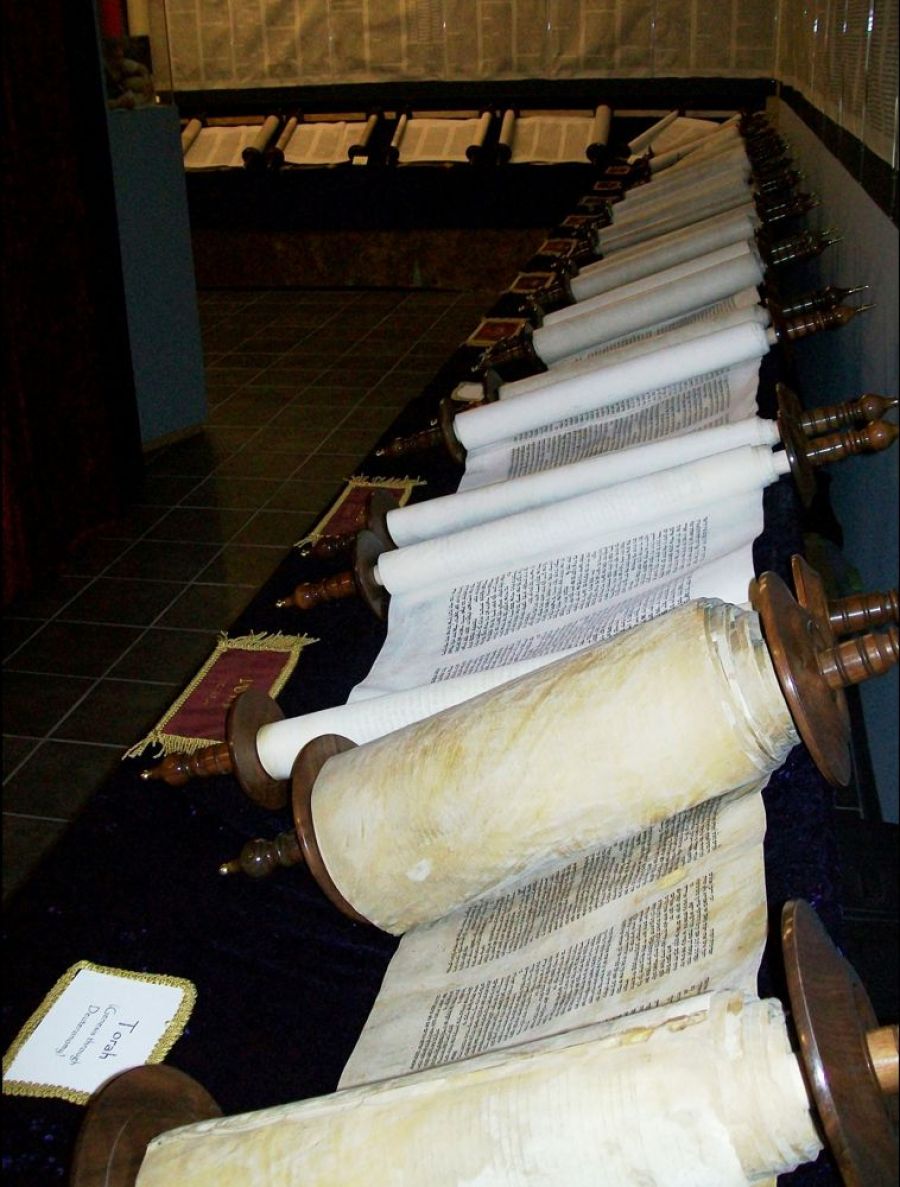
Indeed, the scene brings to mind two significant events: on the one hand, it recalls the figure of Moses, who, having ascended Mount Sinai, receives the Word of God and brings it to the people gathered at the foot of the mountain; on the other, Jesus’ ascent of the mountain and his sitting upon it, opening his mouth to speak, reminds us of God descending upon Mount Sinai and giving his Torah, his teaching, to the people—as if to say that in Jesus we see not only the new Moses depicted, but also the confirmation that he has been superseded, for in Jesus it is God himself who speaks directly to his people, with no further need for intermediaries.
There is the crowd of those who followed Jesus, but the disciples are distinguished from the crowds. Therefore, his teaching is universal, valid for all believers, but to understand his message one must follow in his footsteps, live alongside him, and become his disciples. ‘His disciples came to him.’ The disciples ‘come to him’ and the disciples are ‘his’. True disciples, therefore, are those who make the choice to draw near to Jesus and to share in his life and mission, so that they become ‘his’, in the sense that they belong to him and are one with him. The disciples, therefore, are distinguished from the crowds, who seem to remain at the foot of the mountain, shrouded in anonymity, and it is precisely that intimate relationship with Jesus which binds them to him and identifies them as his own that sets them apart. “He began to speak and teach them, saying”. Jesus does not begin as the prophets did: “Thus says the Lord…”. Jesus instructs. Jesus speaks. A new Law flows from his mouth, but in reality it is not so much a new Law as a commitment to life. Jesus did not come to make the yoke of the Mosaic prescriptions heavier, but to offer a model for living.
The verses that follow constitute what tradition calls the Beatitudes; they define the believer’s new identity. It is a wonder within a wonder. They are rarely taught. In the Protestant world, they are regarded as impossible to observe, and one must simply become aware of one’s state of wretchedness and powerlessness and surrender to God’s mercy. In the Catholic world, Christians are educated more in the observance of the Ten Commandments than in the practice of Jesus’ Beatitudes. The Beatitudes ought to be learnt by heart.
The Beatitudes have probably not been successful in Christian teaching because those situations which people regard as misfortunes—which they pray never to encounter in life—are proclaimed ‘blessed’ by Jesus. When the poor win a scratchcard, farewell poverty and hello blessedness. On the other hand, no rich person becomes poor in order to become blessed. I emphasise this because one accusation levelled at religions, particularly Christianity, has been that they are the opium of the people. The Beatitudes are not the opium of the people. To use a different image, they are adrenaline. Jesus begins the Gospel of the Kingdom with the word ‘blessed’; Jesus’ invitation is not an imperative as in the Commandments: ‘do this, do not do that’. The Commandments are an imposition; Jesus’ invitation is not an imposition, but a proposal for a life of fulfilment. He uses the term ‘blessed’, which denotes everything that contributes to making a person happy; ‘blessed’ can very well be translated as ‘happy’. Jesus begins to set out the Gospel of the Kingdom with an invitation to full happiness.
The theme of blessedness is not unknown to the Old Testament, which repeats the expression ‘’ashré’—blessed, happy—45 times, 25 of which are found in the Psalms, and predominantly in the Wisdom Literature. In the New Testament, we have the term ‘makàrios’—blessed, happy—which occurs about fifty times. However, whilst in the Old Testament blessedness arises from conforming one’s life to the Torah, in the New Testament it is Jesus who defines the criteria for blessedness. Jesus himself becomes the sole standard against which the believer, from this moment onwards, is called to measure himself and to conform.
Argentino Quintavalle, author of the books
- Revelation – an exegetical commentary
- The Apostle Paul and the Judaizers – Law or Gospel?
Jesus Christ, true God and true Man, in the mystery of the Trinity
Jesus’ prophetic discourse (Matthew 24–25)
All Generations Will Call Me Blessed
Catholics and Protestants Compared – In Defence of the Faith
The Church and Israel According to St Paul – Romans 9–11
(Available on Amazon)