23rd Sunday in Ordinary Time (year A)
(Mt 18:15–20)
Matthew 18:15 If your brother sins, go and show him his fault, just between the two of you; if he listens to you, you have won your brother over;
Matthew 18:16 but if he will not listen to you, take one or two others along with you, so that every matter may be established by the testimony of two or three witnesses.
Matthew 18:17 If he refuses to listen even to them, tell it to the church; and if he refuses to listen even to the church, let him be to you as a Gentile and a tax collector.
Matthew 18:18 Truly I tell you, whatever you bind on earth will be bound in heaven, and whatever you loose on earth will be loosed in heaven.
Matthew 18:19 Again, truly I tell you, if two of you on earth agree to ask for anything, my Father in heaven will grant it to you.
Matthew 18:20 For where two or three are gathered together in my name, there am I in the midst of them.’
‘Truly I tell you: whatever you bind on earth shall be bound in heaven, and whatever you loose on earth shall be loosed in heaven.’ This verse must be read and understood in context; that is to say, it depends entirely on verses 15–17 and is the conclusion drawn from them. In other words, this verse answers the question: what happens if one forgives or does not forgive, if one condemns or absolves one’s brother? And further: does the action itself concern only interpersonal relationships, or does it also have a spiritual dimension, a resonance in the kingdom of heaven, involving God himself?
This verse is very similar to that in the Lord’s Prayer (Mt 6:12), which speaks of God absolving one’s own sins to the extent that one forgives the sins of others; or, similarly, the way one judges others also has implications for oneself, so that one will be judged by the same standard. These are expressions which indicate that one’s behaviour towards others – whether one judges them or not, whether one forgives them or not – is not insignificant, but finds its echo and its counterpart in heaven. In this way, a close link is established between earth and heaven, between one’s own behaviour and God’s behaviour towards us.
‘Truly I tell you again: if two of you on earth agree to ask for anything, my Father in heaven will grant it to you.’ This is the prayer of the community, a prayer founded on communion: ‘they will agree’. The verb used by Matthew is beautiful: it is ‘symphōnēsōsin’, which literally means to form an agreement, a symphony, or to be of the same mind. The verb is composed of the preposition ‘syn’ + ‘phōnéō’; the preposition means ‘together, with’, whilst the verb means ‘to speak, to say, to raise one’s voice’. The verb, thus composed, therefore indicates being in agreement and speaking with one voice. Here too we see the parallel between earth and heaven, and how behaviour here below finds its echo above. Indeed, the harmony, unanimity and communion amongst believers as they turn, here on earth, towards the Father in heaven, are immediately accepted, for in this instance there is perfect harmony between God and the believers, between heaven and earth. Once again, it is emphasised that the behaviour of the believer in their daily life has its resonance in heaven.
This verse sets out the theological rationale that must inspire communal prayer. For prayer to be effective before the Father, it is not enough for it to be communal—that is, offered by several people, as though God were daunted by the number of believers; rather, it is essential that amongst these believers, regardless of their number (two or three believers are sufficient), there should reign harmony, unanimity and communion. Only in this way does love here on earth find its echo in that of heaven.
‘For where two or three are gathered in my name, there am I in their midst.’ This is the Christological foundation upon which communal prayer must be built. Whilst verse 19 emphasised the need for harmony and communion amongst the brothers and sisters, here the characteristic that this communion must possess is specified: it is not the result of personal goodwill or human effort, but is rooted in Christ and finds its justification in him. It is being in Christ that makes the members of a community one; only by being in communion with him can all be in communion with one another.
The expression Matthew uses to say ‘gathered in my name’ (sinegménoi eis tò emòn ónoma = gathered together towards my name) is significant. First of all, the verb ‘sinegménoi’, which, as well as meaning ‘to gather’, also means ‘to bring together’, ‘to convene’, ‘to unite’, ‘to join’, and ‘to lead towards something or someone’. But it also speaks of working together, of acting in communion, of moving together. The verb, in fact, is a compound of syn+agō. We are therefore faced with a verb that speaks of a common and unanimous movement, not in the name of Jesus, but ‘towards’ his name (eis), which suggests that living in his name – or, rather, turned towards him – is not a matter taken for granted, but involves a continual conversion, a constant reorientation of one’s life towards Jesus.
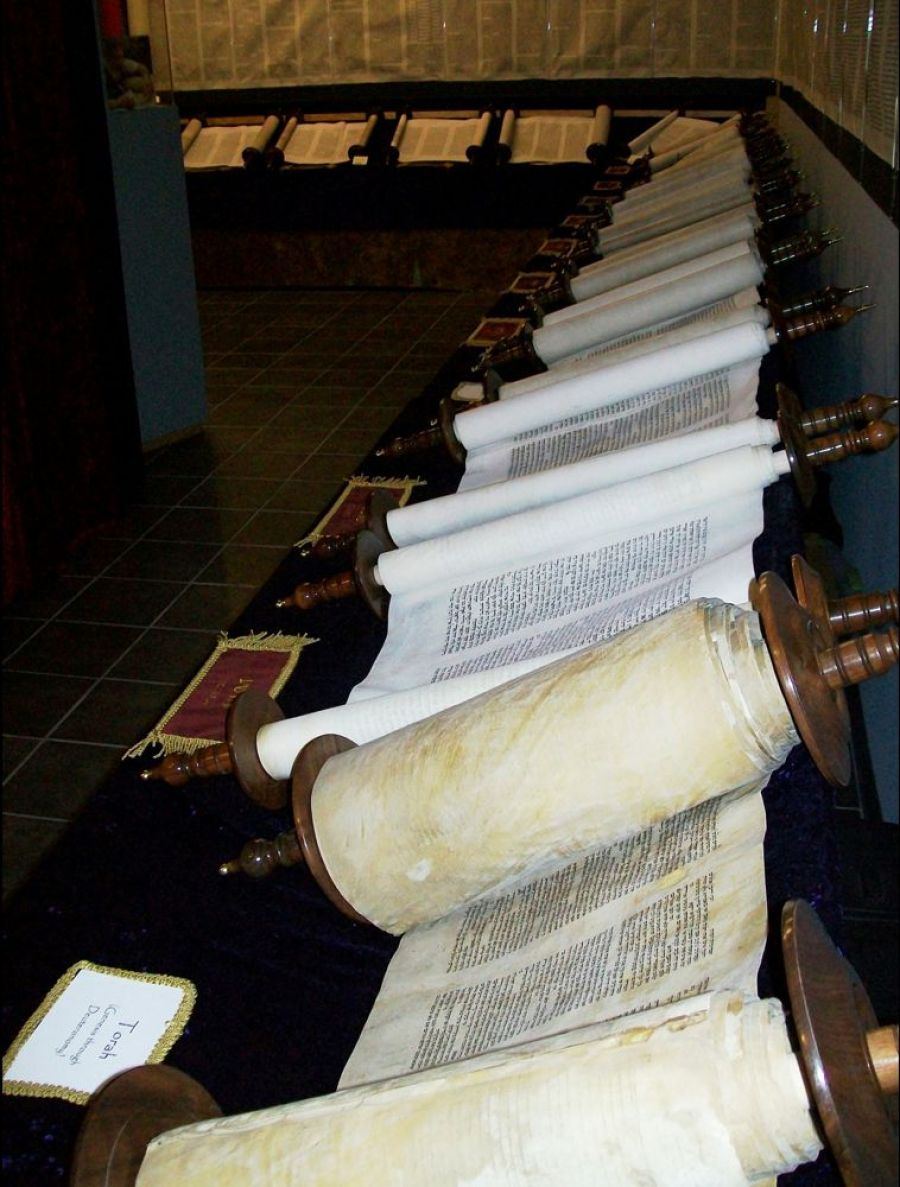
Jesus made a fundamental change: not two or three who gather to study the Torah, as the rabbis say, but two or three who gather in the name of Jesus and can experience the Lord’s presence. At the heart of the community is not the Torah, but Jesus.
Verse 20 concludes with a reassuring statement: ‘there I am in their midst’, which echoes a theme dear to Matthew: the presence of God realised in Jesus. It is no coincidence that Matthew’s Jesus, right from the start of the Gospel, is called Emmanuel, ‘God with us’ (Mt 1:23), and sees in Jesus the permanent dwelling place of God amongst humankind, a presence that accompanies his Church along the path of history. Jesus does not speak in the future tense – ‘if two or three agree, I will be’, as if He were yet to come – but says ‘I am’, a reality already present; He does not speak of a promise, but of something that can already be experienced. Since we are part of this symphony, this harmony in practising the same love, the Lord makes Himself present and is in our midst. If our prayers are not answered, it means that we are not playing the divine music; we are not a symphony.
Argentino Quintavalle, author of the books
- Revelation – an exegetical commentary
- The Apostle Paul and the Judaizers – Law or Gospel?
Jesus Christ, True God and True Man, in the Mystery of the Trinity
The Prophetic Discourse of Jesus (Matthew 24–25)
All Generations Will Call Me Blessed
Catholics and Protestants Compared – In Defence of the Faith
The Church and Israel According to St Paul – Romans 9–11
(Available on Amazon)