(Mt 9:36 – 10:8)
Matthew 10:1 He called his twelve disciples to him and gave them authority over impure spirits to drive them out and to cure every disease and every illness.
Matthew 10:2 The names of the twelve apostles are: first, Simon, called Peter, and his brother Andrew; James, son of Zebedee, and his brother John;
Matthew 10:3 Philip and Bartholomew; Thomas and Matthew the tax collector; James, son of Alphaeus, and Thaddeus;
Matthew 10:4 Simon the Canaanite and Judas Iscariot, the one who later betrayed him.
Verse 1 opens with the verb ‘to call’ in the aorist participle (proskalesàmenos), which indicates a specific action in time, from which the call arose. Every salvific act always begins with a call, which originates from God himself, and every call is closely linked to a mission. The mission, therefore, is the meeting point between the divine will and man’s willingness to become a bearer of salvation, on behalf of and in the name of God.
The divine call also possesses a transforming power; it bestows a new identity upon the one called. It is significant that in the Genesis account of creation, God, after creating, calls his creature by name. The creative act, in fact, calls things into being, but it is only by defining them by name that they are given substance and identity. In the Bible, the name expresses the very being of the person and indicates their essence. To know the name is, in a sense, to know the person, to enter into their intimacy; whilst to bestow a name is to exercise one’s power over them. This is why God, after creating the animals, presented them to man so that he might bestow a name upon them, thereby establishing a hierarchical order amongst things.
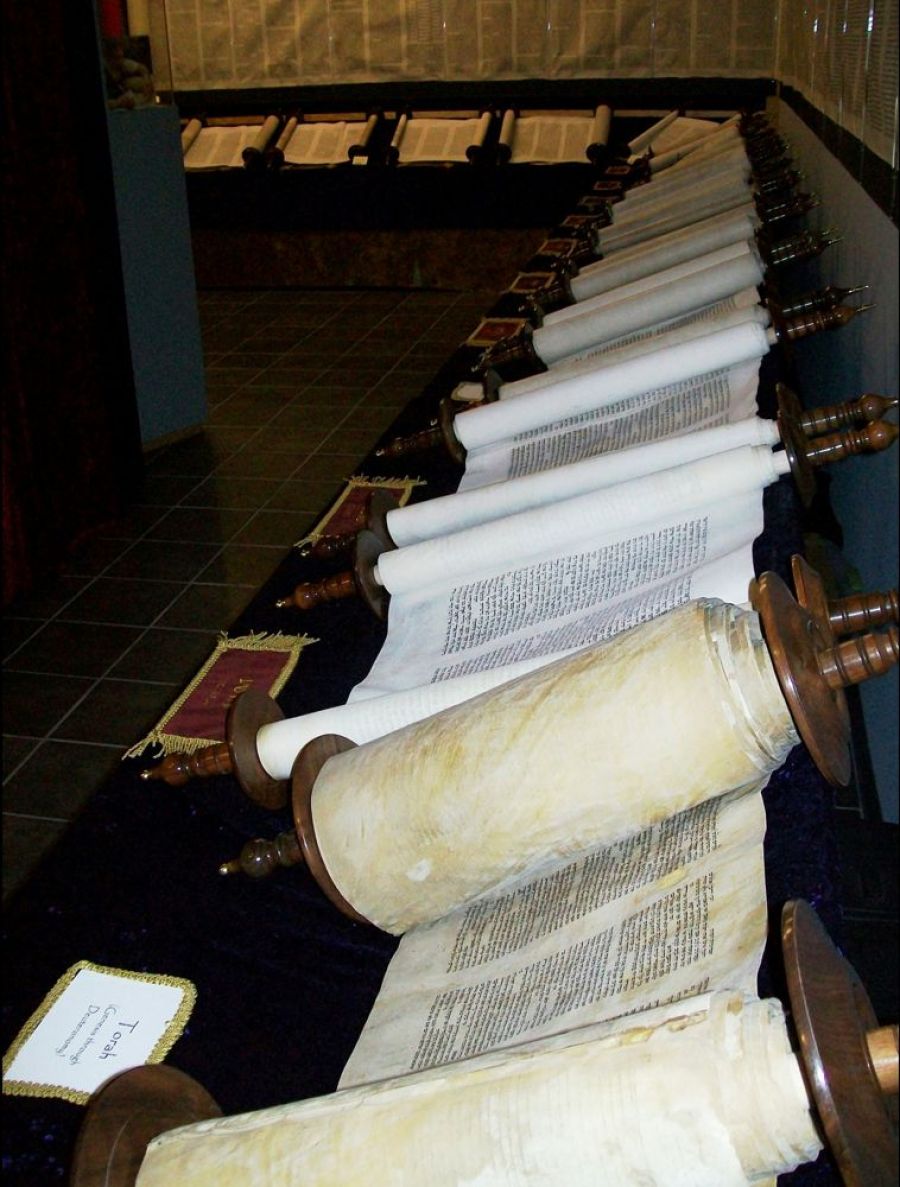
Similarly, the people of Israel at the foot of Sinai are defined by Yahweh as his own, a people of priests and a holy nation. Their liberation from Egypt was not, therefore, sufficient to make them God’s people; it was necessary for God to define their essence (through the Torah and the Covenant), so that the people might stand before God and the nations with a distinct identity and, thus, as a valid representative of God amongst men. The call, therefore, also pertains to the establishment of a new reality. Ultimately, it signifies belonging to the One who calls.
Being called by God leads man to become God’s very own possession. The verb ‘to call’ in Greek is ‘kaléō’, but here Matthew, to express the calling of the Twelve, uses a particularly significant verb: ‘proskaléō’; it is composed of the preposition “pros” + “kaleō”, and literally means “to call towards oneself”, “to draw to oneself”. It is not, therefore, a call to attract the attention of the one called, but indicates a summons, which in turn implies an existential reorientation, making the one called, in effect, God’s own. It is no coincidence that the disciples called are described with the possessive adjective “his”, to indicate how this call becomes a sort of appropriation of the one called by God, a consecratory election on his part. Similarly, this was also the case at the foot of Sinai, where God defines his people as “his own” and, consequently, also as a kingdom of priests and a holy nation (Ex 19:4–6).
A second term that characterises the disciples is the number “twelve”. The number is clearly symbolic and alludes to the twelve tribes of Israel, indicating in those called the new messianic community, destined to give birth to a new people, the new Israel, generated no longer according to the flesh, but in faith. The apostles represent the holy remnant of Israel, the spiritual fathers of the renewed people of God. It is, therefore, a new creation, signifying the replacement of the old Israel according to the flesh, which rejected Jesus’ message, with the new one generated by the Spirit, where all the divine promises may be fulfilled.
The calling is perfected through the necessary conferral of the power that comes from Jesus: “he gave them power”. Jesus grants the apostles supernatural powers, entirely similar to those He Himself possessed. Essentially, there are two such powers: that of casting out unclean spirits and that of performing every kind of healing. Jesus places unclean spirits and every physical affliction that sin has brought upon humanity under the power conferred upon the disciples. Nothing can resist them. Everything is subject to them. With these powers, what Jesus can do, the Twelve can also do. To grant authority or power means that a sort of identification is formed between the one who confers authority and the one who receives it. Jesus, therefore, extends himself into the disciples, becoming, himself, active within them through his power.
The mission of the disciples, therefore, is the continuation of Jesus’ own mission. Consequently, the disciples’ work is the very work of Christ. The authority given to the disciples, however, is not absolute, but is directed towards the realisation of a salvific plan, which manifests itself in casting out unclean spirits and healing every sort of disease and infirmity. In other words, the disciples’ work is aimed at establishing the Kingdom of God amongst men, which finds its exact opposite in man’s submission to the power of unclean spirits, which generate sickness and infirmity in man.
It should be noted that the disciples’ primary task is not to go about teaching doctrine to people. The specific task of the disciple will be to impart life to others by casting out demons.
Argentino Quintavalle, author of the books
- Revelation – an exegetical commentary
- The Apostle Paul and the Judaizers – Law or Gospel?
Jesus Christ, True God and True Man in the Trinitarian Mystery
The Prophetic Discourse of Jesus (Matthew 24–25)
All Generations Will Call Me Blessed
Catholics and Protestants Compared – In Defence of the Faith
The Church and Israel According to St Paul – Romans 9–11
(Available on Amazon)