
16th Sunday in Ordinary Time (year A) [19 July 2026]
First Reading from the Book of Wisdom (12:3, 16–19)
The Book of Wisdom, written in Greek by a Jew from Alexandria shortly before the coming of Christ, is addressed to people steeped in Greek culture, which exalted intelligence and philosophy as the highest paths to knowledge. The author, however, reminds us that true wisdom belongs to God and that his mysteries are not attained through human knowledge, but are received as a gift and with humility. This is the same truth that Jesus expresses when he points out that the Father reveals his secrets to the little ones rather than to the wise of this world (Mt 11:25, Lk 10:21). The central theme of the text is the relationship between omnipotence and mercy. On the one hand, God is the absolute Lord of the universe: there is no other God; he rules over all things and possesses infinite power. On the other hand, this power is not manifested through violence, but through gentleness and goodness: God cares for all things, judges with leniency, governs with tenderness and, after sin, always offers the possibility of conversion. The author puts forward a surprising idea: God is merciful precisely because he is almighty. Human beings, often insecure about their own authority, feel the need to flaunt their power; God, on the other hand, who possesses all power, has nothing to prove. This is why his power is expressed in patience, forgiveness and tenderness. This image of God is the fruit of a long journey of revelation. Through the prophets, Israel learnt that God is not a tyrannical ruler, but a loving Father. Like Elijah on Mount Horeb, believers discover that God does not reveal himself in the storm or the earthquake, but in the gentle breeze. His strength is unobtrusive yet invincible, for it is the strength of love. This discovery also has implications for humankind. If we are created in God’s image, we are called to imitate his way of acting. Therefore, the righteous do not seek domination or violence, but humanity, compassion and service. Jesus takes up this same teaching when he instructs his disciples that the logic of power must not prevail amongst them, but rather that of the service of love (Mk 9:35; Mt 20:26–27; Mt 23:11; Lk 22:26). In short, God’s greatness does not lie in dominating by force, but in saving through mercy; and his omnipotence is manifested in forbearance, forgiveness and the ability to always offer humankind a new chance. Those who wish to resemble God must make goodness—and not power—the measure of their lives.
Responsorial Psalm (85/86)
In this psalm, the image of a tender and merciful God emerges, one who reveals his power through mercy. If we read the psalm in the light of the first reading, taken from the Book of Wisdom, we realise that the author marvels at both God’s greatness and his tenderness. One explains the other, for if God is forgiving towards humankind, it is precisely because He is almighty. And this dual emphasis – forgiveness and greatness – recurs in the stanzas of the psalm: the 1st and 3rd stanzas focus on forgiveness; the second stanza is about greatness. First stanza: ‘You who are good and forgiving, you are full of mercy towards those who call upon you.’ Third stanza: ‘You, Lord, are a merciful and compassionate God, slow to anger, abounding in love and faithfulness. Turn to me and have mercy.’ 2nd stanza: “Great are You and You work wonders; You alone are God”. In the third stanza, “a merciful and compassionate God” leads us to God’s great revelation to Moses on Mount Sinai (Ex 34:6). It comes at the worst possible moment, immediately after the episode of the golden calf, when Moses, in his anger, had broken the tablets of the Law. The Covenant had been desecrated by the people, who had made themselves an idol. God does not renounce the Covenant: he tells Moses to carve two new stone tablets, upon which he will inscribe the same words. This is a sign of mercy. And it is precisely here that he says: “God, merciful and gracious, slow to anger…”. It is interesting to note Moses’ reaction here (cf. Ex 34:8–9). The author of the psalm reacts just as Moses did: he recalls God’s mercy and ‘takes Him at His word’, imploring Him: ‘You, Lord, God of tenderness and compassion… Turn your gaze upon me and have mercy on me’. In all our prayers, we too recall his merciful plan for humanity and implore him to hasten its fulfilment (cf. Rom 8:26–27). The parallel with the Book of Exodus continues because, following the revelation and Moses’ response, God establishes a covenant (cf. Ex 34:10). But the psalm adds something new compared with the Book of Exodus, as it was written much later. During the Babylonian exile, Israel became aware of the universal nature of God’s plan—namely, that all nations are called to know him. But how can they come to know him? By discovering God’s work on behalf of his people. The Jewish people do not presume to convert others, but they understand that God’s work on their behalf becomes a means of conversion for other nations: if they open their eyes, they recognise the God of Israel as their Saviour and turn to him.
Second Reading from the Letter of Saint Paul the Apostle to the Romans (8:26–27)
Saint Paul has already said that the life of the baptised is under the influence of the Spirit. He emphasises once again the role of the Holy Spirit (in this chapter he mentions him 18 times). He highlights that the life of the baptised unfolds entirely under his influence, if we allow ourselves to be guided by him. The Spirit dwells within us, and God’s great plan is like the process of childbirth. The labour pains are the prelude to great joy. “I consider that the sufferings of the present time are not worth comparing with the glory that is to be revealed… We know that the whole creation groans and suffers the pains of childbirth.” And it is the Spirit who guides our prayer, as we read in this very brief text which nevertheless contains an important contrast: on the one hand, in the last verse: ‘it is in accordance with God’s will that the Spirit intercedes for the saints’; on the other: ‘he comes to the aid of our weakness, for we do not know how to pray as we ought’. It teaches us that we pray by entering into God’s will, looking at the world and at ourselves through God’s eyes; rejoicing in the signs—however small—of the Kingdom’s advance, which are brotherhood, sharing, solidarity and respect. We must never lose heart in the face of humanity’s slow progress, for the Spirit blows ceaselessly even if it is not always visible. The reference to the Lord’s Prayer is immediate: ‘Hallowed be thy name, thy kingdom come, thy will be done on earth as it is in heaven’—three expressions that draw us into God’s plans. We need the help of the Holy Spirit to enlighten our prayer, just as Jesus promised: “I will pray to the Father, and he will give you another Paraclete to be with you for ever” (Jn 14:16). He knows the secrets of God’s plan, as Paul so aptly puts it: “The Spirit searches everything, even the depths of God… We have not received the spirit of the world, but the Spirit who comes from God, so that we may know what God has bestowed upon us’ (1 Cor 2:10–12). And the model is Jesus, always guided by the Spirit: his whole life is marked by the fulfilment of the Father’s mission, right up to Gethsemane, when he proclaims, ‘Father, not my will, but yours be done’ (Mark 14:36). And the author of the Letter to the Hebrews sums up his life thus: “Upon entering the world, Christ says… ‘Behold, I have come to do your will, O God’” (Hebrews 10:5, 9).
From the Gospel according to Matthew (13:24–43)
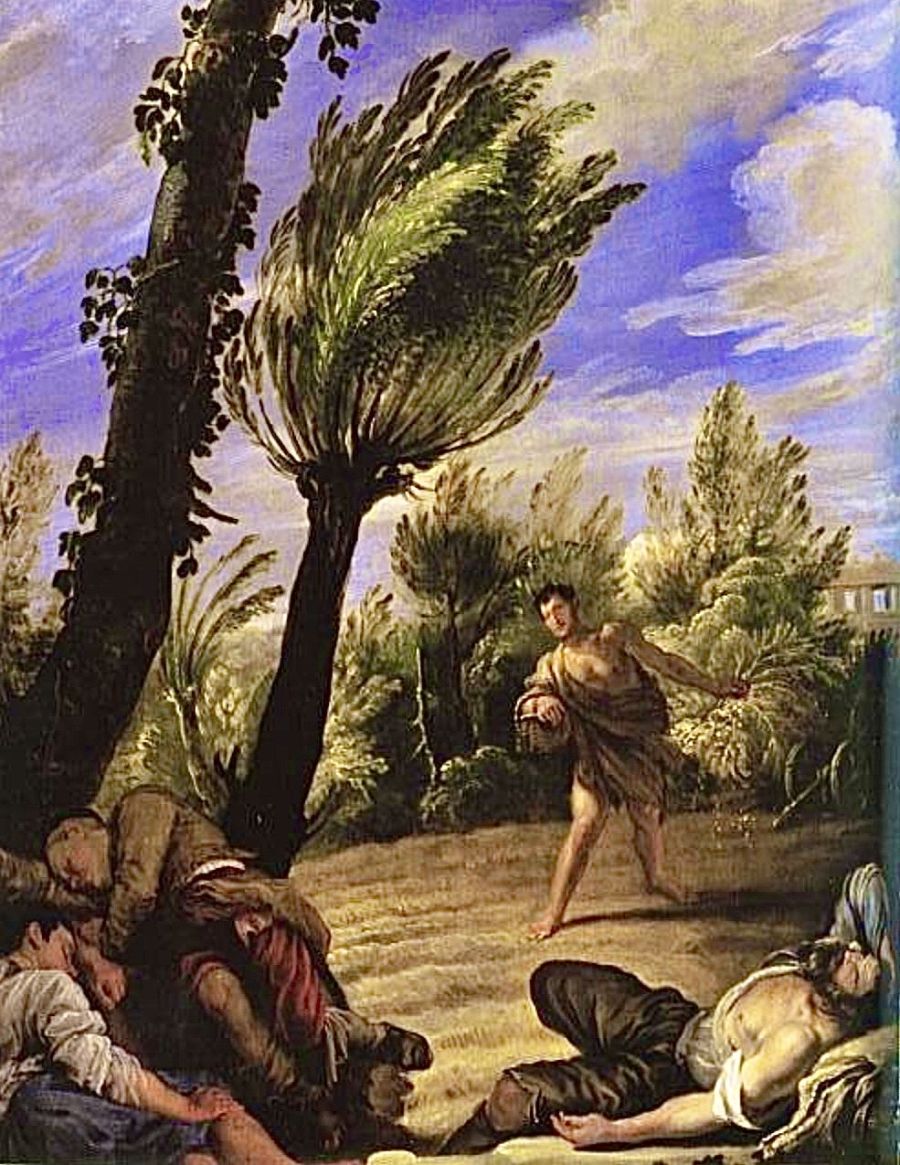
The parable of the weeds is not primarily intended to explain the origin of evil, although it reaffirms a fundamental principle: God is not the author of evil. As in the account in Genesis, everything God has created is good; the owner of the field sows only good wheat, whilst the weeds are the work of an enemy. In the context of the Gospel of Matthew, however, this parable is linked to that of the sower. Having shown that the proclamation of the Kingdom does not always bear the hoped-for fruit, Jesus addresses a new question: why not immediately remove what stands in the way of good? The servants suggest pulling up the weeds, but the owner forbids this so as not to uproot the wheat as well. Only at harvest time will the separation take place.
The message is clear: it is not for human beings to pass final judgement or to eliminate evil in others; this task belongs to God. Jesus therefore invites us to live with the simultaneous presence of good and evil in the world and within communities, avoiding elitist or fanatical attitudes. Matthew was probably addressing a community tempted to draw a rigid distinction between the ‘good’ and the ‘bad’. At the end of time, God will make the final judgement. The Bible often presents judgement as a separation between the righteous and the wicked, but the reality is deeper: the line separating good from evil runs through the heart of every person. No one is merely righteous or merely holy, but we all carry within us both the good wheat and the weeds. God will not destroy the good along with the evil: he will save that which, in each of us, is capable of bearing fruit. After the parable of the weeds, Jesus tells the parables of the mustard seed and the yeast. Whilst the previous parables highlighted the obstacles to the Kingdom, these reveal its inner strength. What is small and hidden inevitably grows to full realisation: the seed becomes a great tree and the yeast causes the whole dough to rise. Herein lies the central teaching that Jesus sets out in three fundamental attitudes: trust, because the Kingdom of God grows even when we cannot see it; patience, because the harvest will come at the time appointed by God; and humility, because no one can consider themselves entirely righteous or authorised to judge others. God’s patience stems from his desire not to lose even a single good ear of corn amongst the weeds. But above all, it reveals that God never ceases to hope for humanity’s conversion and for the transformation of the ‘tares’ in our hearts into good grain. This is the true meaning of his merciful patience.
+Giovanni D’Ercole
