
Feast of the Holy Family of Jesus, Mary, and Joseph (Year A) [28 December 2025]
May God bless us and may the Virgin protect us! Here is a commentary on this Sunday's readings with a wish for every family that they may see themselves reflected in the real daily life of Nazareth, which the Bible shows us to have been truly tested by many difficulties and problems, just like any other family.
*First Reading from the Book of Sirach (3:2-6, 12-14)
Ben Sira insists on the respect due to parents because, in the 2nd century BC (around 180), family authority was weakening. In Jerusalem, under Greek rule, despite religious freedom, new mentalities were slowly spreading: contact with the pagan world threatened to change the way Jews thought and lived. For this reason, Ben Sira, teacher of Wisdom, defends the foundations of faith starting from the family, the primary place of transmission of faith, values and religious practices. The text is therefore a strong appeal in favour of the family and is also a profound meditation on the fourth commandment: 'Honour your father and your mother', formulated in Exodus as a promise of long life and in Deuteronomy also of happiness. About fifty years later, Ben Sira's grandson, translating the work into Greek, adds a decisive motivation: parents are instruments of God because they give life; for this reason, they deserve honour, remembrance and gratitude. This commandment also responds to human common sense: a balanced society is born of solid families, while their breakdown generates serious psychological and social consequences. However, at the deepest level, family harmony belongs to God's own plan. Some of Ben Sira's expressions seem to suggest a 'calculation' ('whoever honours his father obtains forgiveness of sins...'), but in reality it is not a mechanical reward: God's Law is always a path to grace and happiness. As Deuteronomy teaches, the commandments are given for the good and freedom of man. When Ben Sira states that honouring one's parents obtains forgiveness, we see a progress in revelation: true reconciliation with God comes through reconciliation with one's neighbour, in harmony with the prophets ("I desire mercy, not sacrifice"). Being respectful children to our parents means being faithful children to God as well. It is no coincidence that, among the Ten Commandments, only two are formulated in positive terms: the Sabbath and honouring our parents. They find their fulfilment in the great commandment of love of neighbour, which begins precisely with our parents, our first 'neighbours'. This is why Ben Sira's text is particularly appropriate during the festive season, when family ties are strengthened or rediscovered.
*Most important elements: +Historical context: 2nd century BC, Hellenistic influence. +Family as the primary place of transmission of faith. +Defence of the fourth commandment. +Parents as instruments of God in the gift of life. +God's law as the way to happiness, not calculation. +Reconciliation with God through one's neighbour. +Honouring one's parents as the first act of love for one's neighbour.
*Responsorial Psalm (127/128)
This psalm is called the 'Song of Ascents' because it was intended to be sung during the pilgrimage to Jerusalem, probably in the final moments, climbing the steps of the Temple. The text seems to be structured like a liturgical celebration: at the entrance to the Temple, the priests welcome the pilgrims and offer a final catechesis, proclaiming the blessedness of the man who fears the Lord and walks in his ways. The blessing concerns work, family, fertility and domestic peace: the fruit of one's hands, one's wife as a fruitful vine, one's children as olive shoots around the table. The assembly of pilgrims responds by confirming that those who fear the Lord are blessed. This is followed by the solemn formula of priestly blessing: from Mount Zion, the Lord grants his blessing, allowing us to contemplate the good of Jerusalem and the continuity of generations throughout our lives. The emphasis on work, prosperity and happiness may seem too 'earthly', but the Bible strongly affirms that God created man for happiness. The human desire for success and family harmony coincides with God's plan; this is why Scripture often speaks of 'happiness' and 'blessing', without irony, even in the face of the sufferings of history. The biblical term 'happy' does not indicate an automatic guarantee of success, but the true good, which is closeness to God. It is both recognition and encouragement. André Chouraqui translates 'happy, blessed' as 'on the way', to say: you are on the right path, continue. Israel quickly understood that God accompanies his people in their desire for happiness and opens up a path of hope before them (cf. Jer 29:11). The entire Bible affirms God's merciful plan for humanity, as St Paul reminds us in his letter to the Ephesians. Biblical happiness therefore has two dimensions: it is first and foremost God's plan, but it is also a choice made by human beings. The path is clear and straight: fidelity to the Law, which is summed up in love of God and humanity. Jesus walked this path to the end and invites his disciples to follow him, promising true blessedness to those who put his word into practice. What remains is the seemingly paradoxical expression: "Blessed are those who fear the Lord." This is not about fear, but reverent awe. Chouraqui renders it as: 'on the way, you who would tremble before God'. It is the emotion of those who feel small before a great love. Having discovered that God is love, Israel no longer fears as a slave, but as a child before the strength and tenderness of the father. It is no coincidence that Scripture uses the same verb for the respect due to God and to parents (Lev 19:3). Faith is therefore the certainty that God wants what is good for man; for this reason, "fearing the Lord" is equivalent to "walking in his ways". When Jerusalem lives this fidelity, it will fulfil its vocation as a city of peace; the psalm anticipates this by proclaiming: "May you see the good of Jerusalem all the days of your life".
*Most important elements: +The psalm, as a Song of Ascents and pilgrimage song, has a liturgical structure: priests, assembly, blessing. +Blessing on work, family and fertility. +God creates man for happiness and "blessed" are those who are close to God, and Chouraqui translates "blessed" = on the way. +God's benevolent plan for humanity, which sees happiness as a gift from God and a choice of man. +Jesus as the fulfilment of the journey of love. +'Fear of God' as a filial attitude, not fear. +Jerusalem called to be a city of peace.
*Second Reading from St Paul's Letter to the Colossians (3:12-21)
Today's liturgy invites us to contemplate the Holy Family: Joseph, Mary and Jesus. It is a simple family, and it is called "holy" because God himself is at its centre. However, it is not an idealised or unreal family: the Gospels clearly show that it went through real trials and difficulties. Joseph is troubled by Mary's mysterious pregnancy, Jesus is born in poor conditions, the family experiences exile in Egypt and later the anguish of Jesus being lost and found in the Temple, without fully understanding the meaning of it all. Precisely for this reason, the Holy Family appears as a real family, marked by struggles and questions similar to those of any other family. This reality reassures us and gives meaning to St Paul's recommendations in his letter to the Colossians, where he calls for patience and forgiveness, virtues that are necessary in daily life. Colossae, a city in present-day Turkey, was not visited directly by Paul: the Christian community was founded thanks to Epaphras, his disciple. Paul writes from prison, concerned about certain deviations that threaten the purity of the Christian faith. The tone of the letter alternates between contemplative enthusiasm for God's plan and very strong warnings against misleading doctrines. At the centre of his message is always Jesus Christ, the heart of history and of the world. Paul invites Christians to model their lives on Him: to clothe themselves with tenderness, goodness, peace and gratitude, doing everything in the name of the Lord Jesus. The baptised, in fact, form the Body of Christ. Taking up and deepening an image already used with the Corinthians, Paul affirms that Christ is the head and believers are the members, called to support one another in building up the edifice of the Church. The text also addresses family relationships, with expressions that may be difficult, such as the invitation to wives to submit. In the biblical context, however, this submission is not equivalent to servitude, but is part of a vision based on love and responsibility. Paul, after referring to language common at the time, addresses an even stronger requirement to husbands: to love their wives with respect and without harshness. Christian obedience arises from trust in God's love and is expressed in relationships marked by tenderness, respect and mutual giving.
*Important elements: +The Holy Family as a real family, not idealised, with the concrete trials experienced by Joseph, Mary and Jesus, and an invitation to patience and forgiveness in family life. +Context of the letter to the Colossians and the role of Epaphras with Paul's concern for the fidelity of the Christian faith. +Centrality of Jesus Christ in the lives of believers as the Body of Christ, called to support one another. +Family relationships based on love and respect where biblical submission is understood as trust and gift, not slavery. +Christian obedience rooted in the certainty that God is Love.
*From the Gospel according to Matthew (2:13-15, 19-239
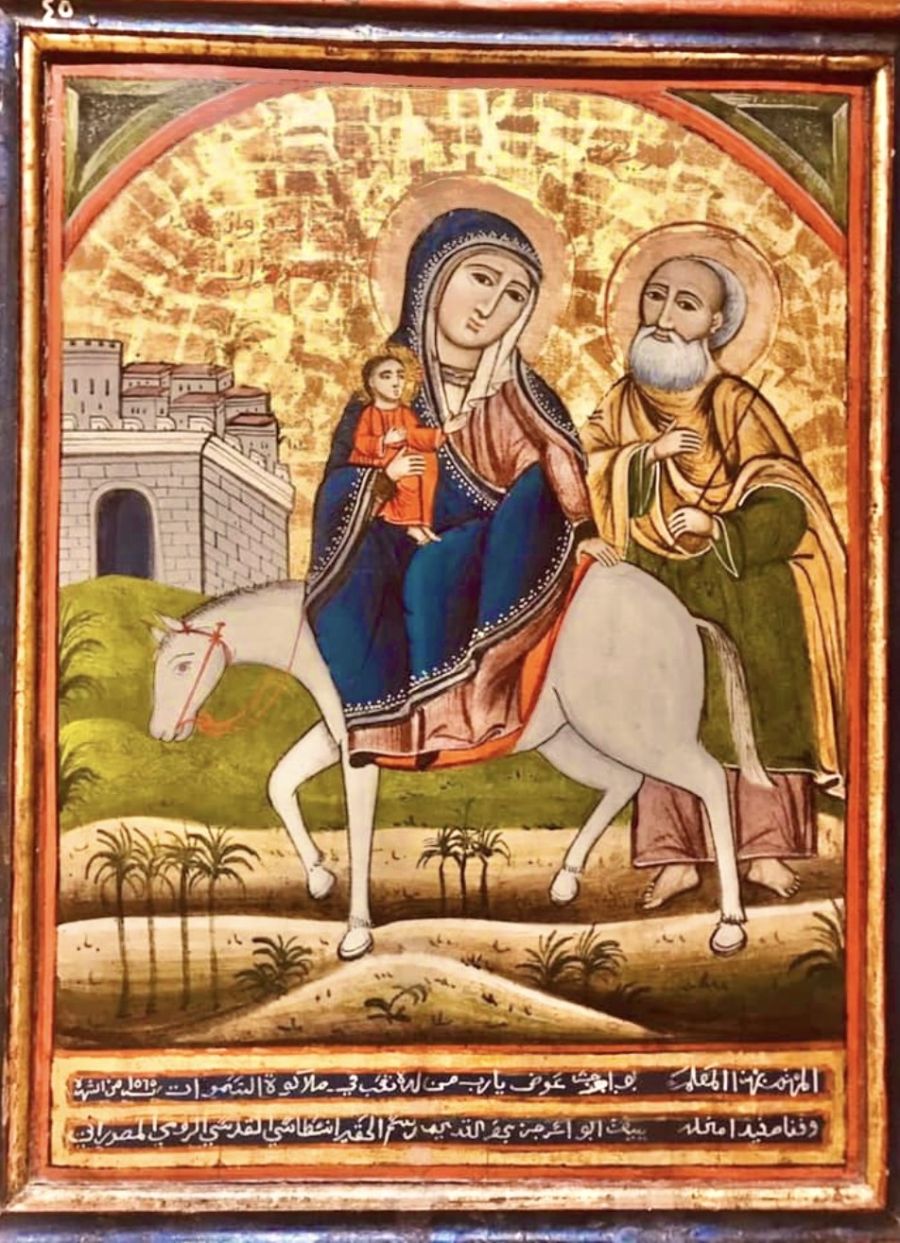
The episode of the Holy Family's flight to Egypt deliberately recalls another great biblical story: that of Moses and the people of Israel, twelve centuries earlier, enslaved in Egypt. Just as the pharaoh ordered the killing of male newborns and Moses was saved to become the liberator of his people, so Jesus escapes Herod's massacre and becomes the saviour of humanity. Matthew invites us to recognise in Jesus the new Moses, the fulfilment of the promise of Deuteronomy 18:18: a prophet raised up by God like Moses himself. A second sign of the fulfilment of the Scriptures is the quotation from Hosea 11:1: "Out of Egypt I called my son." Originally referring to the people of Israel, Matthew applies it to Jesus, presenting him as the New Israel, the one who fully realises the Covenant. The title Son of God, already attributed to kings and the Messiah, acquires its full meaning in Jesus: in the light of the resurrection and the gift of the Spirit, believers recognise that Jesus is truly the Son of God, God from God, as the Christian faith confesses. A third sign is the statement: "He will be called a Nazarene". Although the Old Testament does not mention Nazareth, Matthew plays on linguistic and symbolic resonances: netser (messianic 'shoot' of the line of David), nazir (consecrated to God), and natsar ('to guard'). Nazareth thus becomes the sign of God's choice of the humble and insignificant. Furthermore, when Christians are despised as 'Nazarenes', Matthew encourages them by reminding them that Jesus also bore that title: what appears despicable to men is precious in the eyes of God. In the story, Matthew constructs two parallel scenes: the flight into Egypt and the return from Egypt. In both there is a historical context, the appearance of the angel to Joseph in a dream, immediate obedience and the conclusion: thus was fulfilled "what had been said through the prophets". The parallelism relates the titles Son of God and Nazarene, showing an unexpected Messiah: glorious and humble at the same time. This is why the text is proclaimed on the feast of the Holy Family: Jesus is the Son of God, but he grows up in a simple family and in an insignificant village. It is the great Christian paradox: divine history is fulfilled in the most ordinary everyday life of human families. Ancient commentators such as Pseudo-Dionysius and Pseudo-Chrysostom reflect on the flight into Egypt, not only as a historical fact but as a manifestation of the plan of salvation: Christ, though he is God, submits himself to the law of the flesh and to divine guidance, demonstrating the true humanity and obedience of the Messiah. St Jerome, on the other hand, emphasises that not only Herod, but also the high priests and scribes sought the Lord's death from the very first moments of his coming into the world, showing the spiritual hostility that Jesus would encounter throughout his mission. Another interpretation by some ancient Fathers sees in the stay in Egypt a salvific dimension not only for Jesus himself, but symbolically for the world: He goes to that land historically associated with oppression and paganism not to stay, but to bring light and salvation, confirming that the coming of Christ is for everyone, even for peoples far from God. Thus, for the ancient commentators, the story is not mere narration: it is a theological revelation of the mystery of Christ, who enters human history as free obedience for our salvation and the fulfilment of prophetic promises.
*St. Irenaeus of Lyons (Against Heresies) writes: "Jesus is the recapitulation of all history: what was lost in Adam is found again in Christ." This is often applied by the Fathers to the flight into Egypt: Christ retraces the history of Israel to bring it to fulfilment.
*Important elements: +Parallelism between Jesus and Moses, Jesus as the new Moses and the new Israel. +Fulfillment of the Scriptures according to Matthew: 'Out of Egypt I called my son' (Hos 11:1). +Title of Son of God in the full Christological sense. +Symbolic meaning of Nazareth / Nazarene. +Divine choice of the humble and despised, and unexpected Messiah: divine glory and concrete humility. +Parallel narrative structure: flight and return from Egypt. +Holy Family: the divine experienced in everyday life
+Giovanni D'Ercole
