
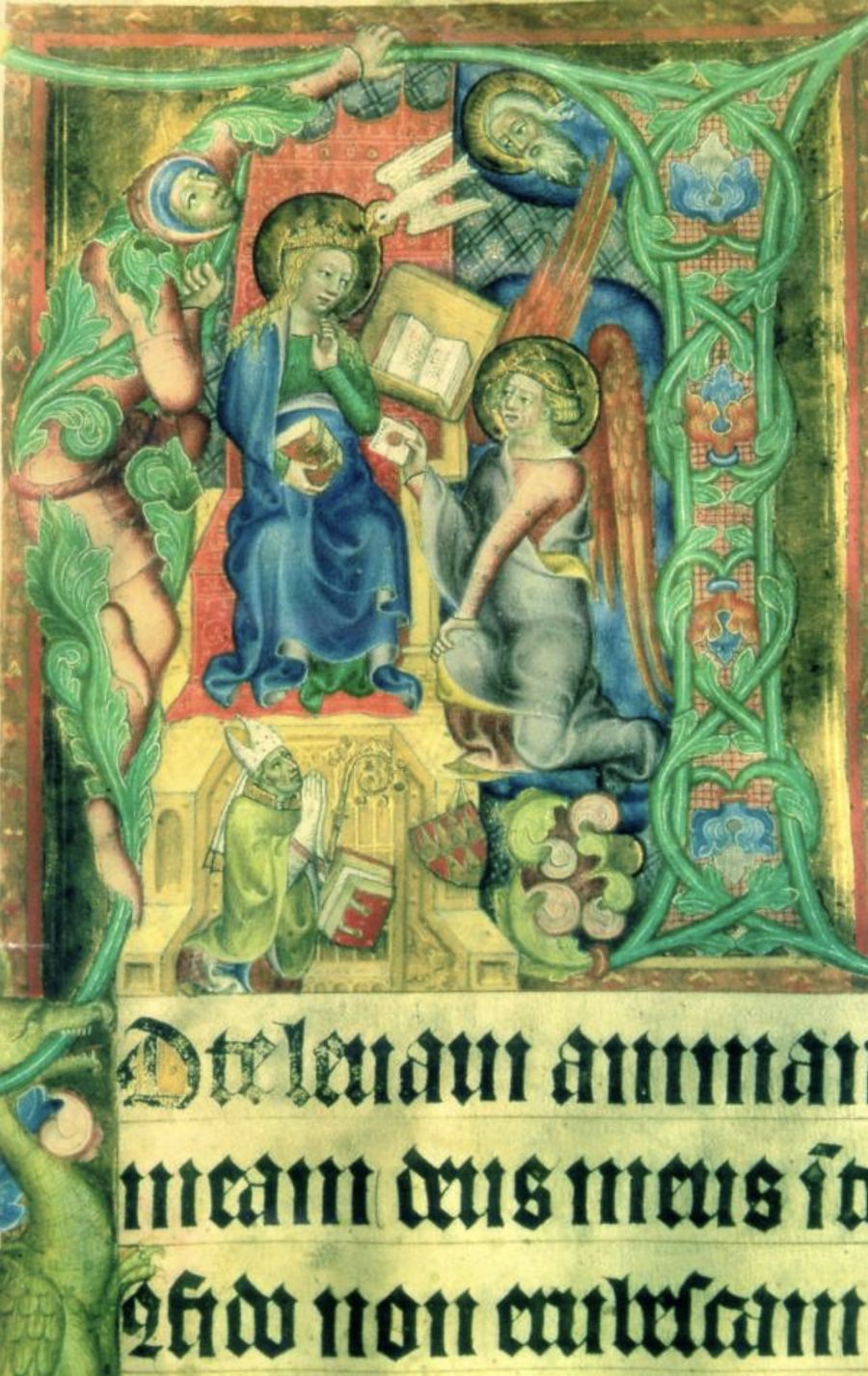
The reinterpretation of liturgical colour purple
(Mk 13:33-37)
«Ad-ventus» in the pagan world indicated the coming of a deity, or even the visit of a ruler to a city.
We ask ourselves: if Christ has already 'come' - and is Present - why prepare for a further Coming?
Christmas is not the birthday of Jesus, nor Advent the time to set up a little party with cake and candles.
On December 25, the Romans were prepared for the Feast of the Undefeated Sun; the date of the winter solstice, celebrating the approach of spring - a feast of great joy because the light of the sun was once again prevailing over the darkness.
But the Light of the Lord is a Light that does not enter the horizon of normal expectations, adapting itself to our external dreams - those that live by expected, whatever, or perfectionist, or fashionable goals [which then become a torment].
In the arc of life, the encounter with such a wise Ray is in the difficulties that force us to shift our gaze, in the failure that compels us to regenerate creativity, in the bewilderment that makes us contact new ways of being, and germinate our own 'new person': it wants to be Born.
It is not easy to find ourselves at the Rendezvous.
God comes not in the triumph but in humiliations, so that they force us to tap into the primordial energies of our personal core of Mystery.
The Lord becomes Present in the anxiety that opens horizons; and in the abandonments, so that they too lead us to the life that develops another destiny.
He bursts through the humiliations, which bring back the Waiting. Thus, preparatory and dissimilar Energies are arranging "other" goals, and joys we do not know.
Defeated on a scaffold (at Easter) or helpless and poor among the poor in a cradle (in the wonder of Christmas), He distances us from religious surrogates.
The Greeks imagined Zeus imperturbable on Olympus, blissful above human miseries: «He who was, who is and who will be».
The Father is different: «He who is, who was, and who Comes» (Rev 1:8). It is not the God who returns after having departed, but He who never ceases to come.
He enters, he compromises himself in the history of the world, and by asking for our cooperation he renews the whole of creation.
Attention to the verb. The Lord does not return but Comes.
He is always with us to take us out of the box, and to bring the new world he has begun within each one.
So he asks for our cooperation, so that all forms of bullying, trivialisation of results, and ideology of domination are exposed.
After proclaiming the destruction of the eternal city and its great builds - all conspicuousness - the Master recommends to stay awake (vv.33-37): the occasion comes abruptly, the reversal of the situation will be a sudden upheaval.
In short, life and love come to us every day, to be welcomed and interpreted in new forms, with a different will.
These are opportunities to be grasped immediately, with a sharp eye and head held high - because each of us is also empowered for an action of divine character.
What was the task of the «doorkeeper» - opening the door, serving, keeping safe, keeping the House [i.e. the new Church] joyful, and the coming and staying in asset - is extended to all (v.37).
For a continuous and growing Incarnation, which calls everyone to the turning point - without distinction between 'perfect' and not.
In short, on the basis of the Word of God, even the liturgical colour purple should perhaps take on a [lively and scratchy] reinterpretation - much deeper than the usual one.
[1st Sunday in Advent (year B), November 29, 2026]
