
26th Sunday in Ordinary Time (year A) [27 September 2026]
First Reading from the Book of the Prophet Ezekiel (18:25–28)
To understand Ezekiel’s prophecy, we must recall the dramatic context in which he speaks. In 597 BC, many inhabitants of Jerusalem were deported to Babylon by Nebuchadnezzar’s army. Jerusalem had been devastated, the Temple desecrated, and the population decimated. The exiles found themselves far from the Promised Land and from everything that had given meaning to their lives. Faced with such a tragedy, the question arose spontaneously: ‘What have we done to God to deserve all this?’. At that time, it was widely believed that there was a direct correlation between a person’s behaviour and what happened to them: the righteous are rewarded and the sinner punished. For this reason, the exiles repeated a proverb: ‘The fathers have eaten sour grapes, and the children’s teeth are set on edge’ (Ezekiel 18:2). In other words: we are paying for the sins of our fathers and of previous generations.
Ezekiel breaks with this mindset. God says through the prophet: ‘You shall no longer repeat this proverb in Israel.’ No one is condemned to live under the burden of others’ sins. Every person is called to answer for their own choices. And here a great new truth emerges: the past does not definitively determine the future. If the wicked turn away from their ways, practise righteousness and justice, repent and return to God, they may live. ‘If the wicked turn away from all the sins they have committed, […] they shall live’ (cf. Ezekiel 18:21). It is an extraordinarily relevant message: no one is a prisoner of their own past, but it is always possible to start afresh, and this frees people from the belief that they are condemned to pay for the sins of others and restores to them the possibility of hope. No past is so burdensome as to prevent a fresh start. Even in times of trial, God opens up a new path before us. Hope springs precisely from the certainty that God’s mercy always leaves open the possibility of a fresh start. Conversion, from a biblical perspective, is precisely a change of direction, a ‘returning’ to God. Ezekiel also reminds us that true conversion does not consist merely of words or religious practices: it is manifested concretely in the practice of law and justice, that is, in the way we treat others.
Responsorial Psalm (24/25)
The words ‘way’, ‘road’, ‘path’ and the verb ‘guide me’ recur several times in the Psalm: ‘Lord, make me know your ways; teach me your paths. Guide me in your truth and instruct me, for you are the God of my salvation… The Lord shows sinners the way; he guides the poor in righteousness and teaches the humble his way’. The theme of the journey is characteristic of penitential psalms. God’s Law—that is, his commandments—is like a sort of ‘highway code’. The speaker is a sinner who recognises that he has gone astray, that he has taken the wrong path, and asks God to bring him back onto the right path. It is no coincidence that, in the Bible, to ‘convert’ literally means ‘to turn back’, ‘to turn round’. And it is never too late to turn back. In the first reading, Ezekiel reminded us that a future is always possible: no one is definitively condemned by their past. That is why we can still pray: ‘Lord, teach me your ways’. What is asked of us? First and foremost, not perfection, but humility: ‘The Lord teaches the humble his way’. The Hebrew word anawim, translated as ‘the humble’ or ‘the poor’, refers to those who recognise that they are poor, fragile, without resources and in need of God. They are the ‘poor in spirit’, those who are able to pray simply: ‘Lord, have mercy on me’. Their plea is already a call for conversion: ‘Lord, teach me your way’. And the ‘I’ speaking in the Psalm is not merely an individual, but the entire people. Psalm 24/25 was probably used in penitential celebrations in the Temple in Jerusalem, which is why there is a constant interplay between ‘I’ and ‘we’ in biblical prayer. The Psalm speaks in the first person, but at the end it says: ‘Deliver Israel, O God, from all its troubles’. The ‘I’ therefore encompasses the ‘we’. The biblical person possesses a strong sense of solidarity across generations: the God of Abraham, Isaac and Jacob is the God of their descendants; the Covenant with Noah, Abraham and Moses concerns not only the individual, but the whole people. Today, however, our society often tends to place the individual, their freedom and their personal rights at the centre, sometimes at the expense of the communal dimension. The Bible has taken a different path: it has progressively discovered the importance of the individual without ever separating them from the community. This is one of the great riches of biblical revelation: the individual is not lost within the community, nor is the community forgotten in favour of the individual. We are personally responsible, yet at the same time we stand in deep solidarity with one another. For this reason, in the Psalm, that humble and trusting sinner is at once each one of us and the entire community of believers. Finally, there is a particularly beautiful detail: the Psalm continually plays on the theme of memory and forgetfulness: ‘Remember, Lord, your mercy… Do not remember the sins of my youth… Do not forget me’. It is almost a prayer that God might have a ‘selective memory’: that he might forget our sins and remember his mercy instead!
It is a bold prayer, yet also one of profound humility. Bold, because it springs from trust in the Covenant; humble, because it acknowledges one’s own sin and frailty. Man asks God: ‘Do not remember what I have been; remember instead who You are: merciful, faithful, slow to anger and great in love.’ After all, even in the Old Testament, Israel had discovered something surprising: God is not merely the Judge, but a Father full of tenderness and mercy. And so the prayer of the Psalm can also become our own: “Lord, when I have gone astray, teach me your way. When I have fallen, show me that I can return. When I recognise my own poverty and fragility, guide me. Do not remember my sins: remember your mercy. And grant that my ‘I’ may never forget the ‘we’ of the community of your children”.
Second Reading from the Letter of Saint Paul to the Philippians (2:1–11)
On Palm Sunday, every year we hear above all the second part of this text, the part that contemplates the mystery of Christ: ‘Though he was in the form of God, he did not regard equality with God as something to be grasped’. Today, however, let us focus on the first part, in which Paul explains to us how to live ‘in Christ’. Paul uses this expression at the beginning and end of the passage: ‘If, then, there is any consolation in Christ…’ and then: ‘Have in you the same mindset as Christ Jesus’. Between these two statements, he lists the attitudes that must characterise the Christian life: comfort, love, fellowship, tenderness, compassion. It is no coincidence that these are the very same attributes with which God is described in the Old Testament. Being ‘in Christ’ is therefore not merely a figure of speech. From the moment of Baptism, we belong to Christ; we are incorporated into Him and become members of His Body. This new identity transcends all our differences: cultural, social, economic and physical. We now have a common name: Christians. It is like what happens in a large family: when we meet, before any other differences, we recognise that we belong to the same family. It is this profound sense of belonging that should characterise the Christian community. Paul says: ‘Have the same mindset, the same love, one spirit and one purpose’. It is as if he were telling us: honour the family to which you belong; honour the name you bear. Then comes a surprising expression: ‘Consider others better than yourselves’. This does not mean belittling oneself or thinking one is inferior. The Gospel does not ask us to rank people as superior or inferior. The Kingdom of God does not operate according to the logic of competition and comparison. The point is quite another: to learn to look at others with a positive gaze, almost with an attitude of admiration, seeking to see not what they possess, but what they are. The differences we see – physical, cultural, social, economic – belong above all to the dimension of ‘having’. Paul, on the other hand, leads us into the dimension of ‘being’: ‘ ‘As many of you as were baptised into Christ have clothed yourselves with Christ’ (Gal 3:27). When I meet another baptised person, therefore, I must not stop at what is apparent. I must remember that they are a member of the Body of Christ, a temple of the Holy Spirit, and that they have a personal vocation, different from my own, yet necessary to God’s plan. Everyone possesses a gift that no one else can replace. Because of the mission God has entrusted to them, the other person may be ‘better’ than me, in the sense that they possess what I do not possess and can accomplish what I cannot. For this reason, they also need my esteem, my encouragement and my trust. The important thing is not to determine who is worth more, but to know what mission God entrusts to each individual and to the community as a whole. Every person is called to contribute to the building of the Kingdom according to the gift received from the Spirit. Finally, there is a great truth contained in this text: the Kingdom of God is already present, but it has yet to be fulfilled in our lives. In Christ, indeed, God’s plan to reunite humanity has already begun and, through Baptism, we have been incorporated into this reality. But what is already true in Christ must also gradually become true in our daily lives. Our being ‘in Christ’ cannot remain merely an inner reality or a simple religious formula: it must tangibly transform the way we view, welcome and treat others, both Christians and non-Christians. And here we understand the profound link between the two parts of the text. First, Paul tells us how those who are ‘in Christ’ should live; then he shows us how Christ himself lived: not seeking his own advantage, but humbling himself, becoming a servant and giving himself even to the point of death on the cross. For this reason, the Christological hymn is not merely a beautiful contemplation of Jesus: it is the concrete measure of our lives. ‘Let this mind be in you which was also in Christ Jesus’. To be Christian, therefore, means allowing the very movement of Christ to enter our lives: not asserting ourselves against others, but giving of ourselves; not seeking to be superior, but serving; not focusing on what the other possesses, but recognising who they are before God. It is in this way that what Christ has already accomplished becomes, day by day, a reality lived out in the Church and in the world.
From the Gospel according to Matthew (21:28–32)
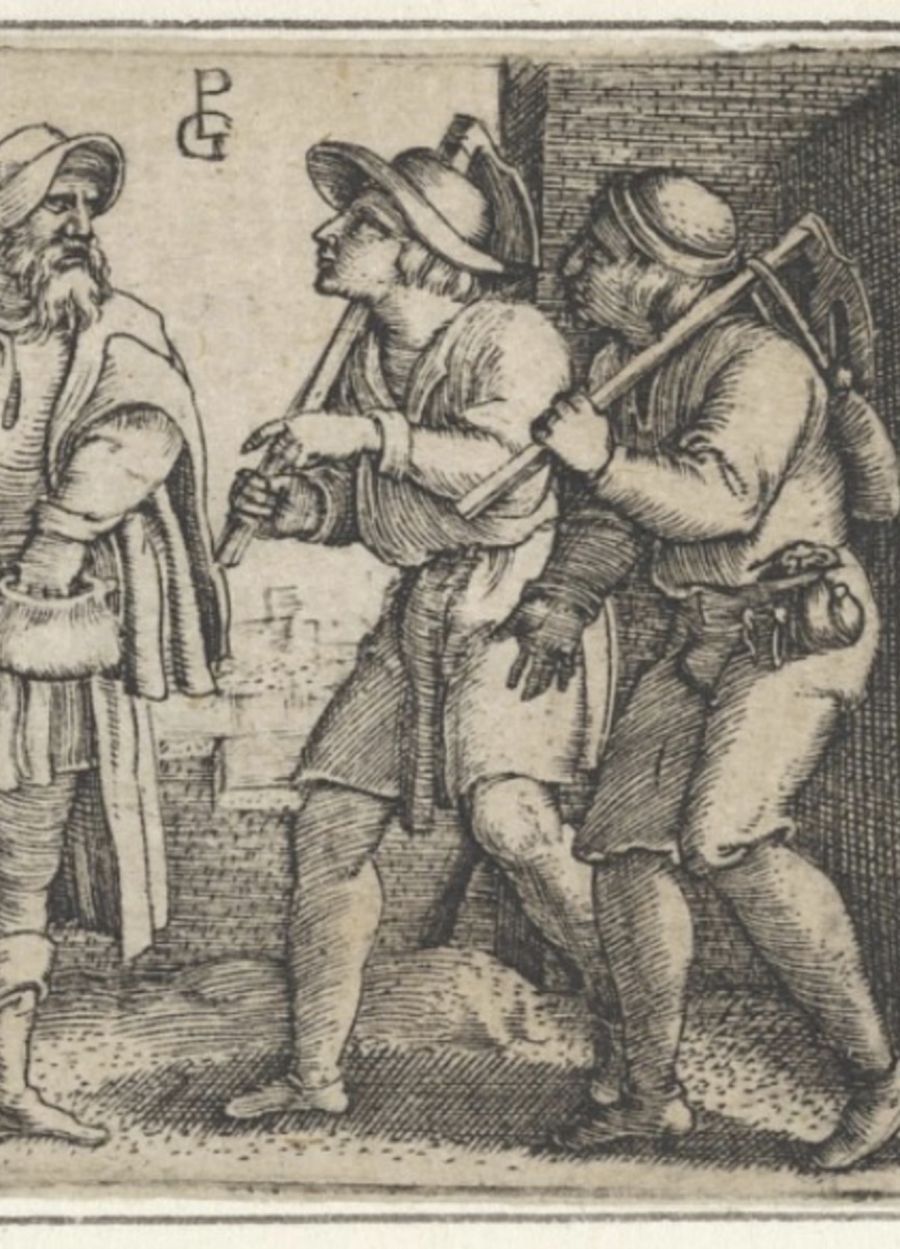
‘Which of the two did the will of his father?’ This question from Jesus seems simple, almost too simple. Once again we find ourselves in the vineyard, as we did last Sunday. A father asks his two sons to go and work in the vineyard. The first replies ‘no’, but then changes his mind and goes; the second replies straight away: ‘Yes, sir’, but then does not go. Jesus asks the chief priests and the elders: ‘Which of the two did the will of his father?’ Clearly, he does not wish to test them with a simple riddle: he wants to open their eyes. The answer is obvious: the first. And it is precisely then that Jesus applies the parable to his listeners: you are like the second son. You say ‘yes’ to God; you are religious people, you know the Law, you await the Messiah and pray for his coming; yet when God sends him to you, you do not recognise him and you do not accept his word. It was the Father’s will that his people—and above all his religious authorities—should welcome his Envoy, the Messiah, Jesus. Herein lies the tragedy that will lead to the Passion: precisely those who seemed best prepared to welcome the Messiah will be the ones who refuse to recognise him. Jesus then utters a very strong statement: ‘Tax collectors and prostitutes will enter the Kingdom of God before you.’ He is not praising them because they are sinners. Their sin is certainly no cause for merit. Rather, they are like the younger son: they began by saying ‘no’, but then changed their ways. What happened? They believed the preaching of John the Baptist. John had called everyone to repentance: ‘Bear fruit worthy of repentance.’ The tax collectors and prostitutes, precisely because they recognised their own poverty and sinfulness, were able to listen. The religious authorities, on the other hand, refused to believe John and later Jesus. Matthew probably links this parable to the events that had just taken place in Jerusalem. At the beginning of chapter 21, Jesus had entered the city and the crowd had welcomed him as the Messiah, shouting: ‘Hosanna to the Son of David! Blessed is he who comes in the name of the Lord!’ (Ps 117/118:26). But this enthusiasm was not shared by the chief priests and the elders. When Jesus was teaching in the Temple, they asked him: ‘By what authority are you doing these things? Who gave you this authority?’ In reality, the problem was precisely this: in their eyes, Jesus did not possess the necessary authority to speak in God’s name. Jesus, as is often the case, does not answer directly. He asks them: ‘Where did John’s baptism come from: from heaven or from men?’ They do not dare to reply, because any answer would have put them in a difficult position: to acknowledge John would have meant acknowledging his testimony about Jesus as well.
That is why Jesus tells the parable of the two sons. It is almost a final appeal for their conversion. Jesus does not wish to exclude anyone: he desires the salvation of all. If he speaks harshly, it is because time is now running out: we are on the eve of the Passion. But what had John the Baptist said? He had denounced precisely that religious self-assurance which prevents conversion: ‘Do not say amongst yourselves: “We have Abraham as our father.”’ It is not enough to belong to the chosen people, to know the Law or to hold a religious position. One must bear the fruits of conversion. Perhaps this was the real problem with the authorities: a certain certainty that they already possessed the truth about God, to the point where they were no longer capable of allowing themselves to be challenged by his word.
The tax collectors and the prostitutes, on the other hand, precisely because they recognised themselves as sinners and the poor before God, had more open ears and hearts. The problem, therefore, is not simply being a sinner or being religious. The problem is becoming so certain of one’s own convictions that one is no longer able to hear God when He speaks in a way that differs from what we expect. The parable thus presents us with a much deeper question. It is not enough to say ‘yes’ to God with our lips. Faith is recognised in our lives. It is not enough to know the Father’s will: we must carry it out. And the question that Jesus puts to the religious leaders becomes, today, a question for each of us: Have I truly entered the Father’s vineyard? Does my ‘yes’ to God find expression in my everyday life? Am I still capable of hearing a word that calls me to change? Or do I think I already know everything about God and leave no room for conversion?
The parable of the two sons goes even deeper than that of the labourers of the last hour. There, Jesus questioned the way we judge God’s mercy towards others; here, he questions our very piety. Ultimately, Jesus is not merely asking us: ‘Do you say “yes” to God?’, but: ‘Are you doing the Father’s will?’ Because in the Lord’s vineyard, it is not only what we say that counts, but the concrete response of our lives.
+Giovanni D’Ercole
