
14th Sunday in Ordinary Time (year A) [5 July 2026]
First Reading from the Book of the Prophet Zechariah (9:9–10)
This text could be summarised as follows: for the prophet Zechariah, the Messiah is a King of peace, not of war, and humble like the Servant. ‘Rejoice, O Daughter of Zion’ is a message of consolation in times of war. For thus says the Lord: Rejoice, shout for joy, O Daughter of Jerusalem! ‘Daughter of Zion/Jerusalem’ is not a young woman, but the city itself: it is as if to say ‘Jerusalem, rejoice’. The paradox is that whilst the tone is triumphant, in reality it is a time of war because the prophet Zechariah carried out his mission at the beginning of Greek rule (c. 330 BC), following Alexander’s conquests, and it is an ‘oracle of consolation’. This helps us to understand certain expressions such as ‘He will remove the war chariots from Ephraim and the war horses from Jerusalem; he will break the bow of war and proclaim peace to the nations’. At a time when all seems lost, Zechariah leads Israel to hope in God’s intervention. And when Zechariah speaks of the Messiah, he uses the classic terms of the expected Messiah: a king who brings justice and peace: ‘O God, entrust your judgement to the king… May he rule from sea to sea, from the River to the ends of the earth’ (Ps 71/72). The boldness lies in proclaiming this hope precisely when all human hope has collapsed. Here are three statements by Zechariah, the last of which is decisive. First: “He will proclaim peace to the nations”: it was only after the exile to Babylon that Israel realised that God’s plan encompasses all humanity. Second: “He will remove… from Ephraim… from Jerusalem”: mentioning Ephraim (the North) and Jerusalem (the South) together is a subtle way of announcing the restoration and reunification of the ancient kingdom of David. By the time Zechariah was writing, the North and South had long since lost their unity and sovereignty. Third: The real novelty: “poor and riding on a donkey, a colt, the foal of a donkey”. The donkey is a humble mount. Alexander’s conquerors rode on quite different steeds. In Jerusalem, Solomon had introduced the warhorse and the parade horse, and was reproached for his taste for grandeur. A king on a donkey had never been seen before. Jesus presents himself as the Messiah ‘in the manner of Zechariah’. Isaiah had already glimpsed a humble Messiah (Isaiah 50:6; 53:7). The Servant does not bear the title of ‘king’, but carries out the work of the Messiah and is filled with the Spirit of God. Zechariah, on the other hand, immediately presents the Messiah as King: he takes up the traditional expectation of the Messiah-King. The novelty lies in combining this royal expectation with the humility of Isaiah’s Servant. For his king is humble: the dreams of grandeur, war and power come to an end. Only one thing matters: establishing peace for his people. The four Gospels describe Jesus’ triumphal entry into Jerusalem precisely as the coming of this King riding on a donkey. Matthew (Mt 21:5) and John (12:15) quote Zechariah. Perhaps Jesus himself quoted it to the disciples on the road to Emmaus, whilst ‘explaining to them what was written about himself in the Scriptures’ (Lk 24:27).
Responsorial Psalm (144/145)
In this psalm, it is clear that God’s kingship is mercy towards all. Moreover, Psalm 144/145 is the only one entitled ‘Praise’. Whilst it is true that the entire Hebrew Psalter is called ‘praises’, this is the only psalm actually titled ‘praise’. The tone is one of wonder; the theme is the kingship of the God of the Covenant. In a celebration of the renewal of the Covenant, Israel contemplates the King who protects them freely, without merit. Hence the royal language: “I will exalt you, my God, my King… your faithful ones will proclaim the glory of your kingdom; they will speak of your mighty deeds”. We can discern in this psalm an “alphabet” of tenderness because it is an “alphabetical” psalm, and from Aleph to Tav—that is, “all of life, from A to Z, is immersed in the Covenant, in God’s tenderness”. The verse-by-verse parallelism is very marked: it should be read by two alternating choirs. And it is precisely this parallelism that is instructive, because in the liturgy two pairs of verses are joined which, at first glance, are surprising: “The Lord is faithful in all his words and good in all his deeds; the Lord upholds those who falter and lifts up all who have fallen”. “The Lord is faithful in all his words and good in all his deeds / He is close to those who call upon him, to those who call upon him in sincerity.” This means that God’s justice, truth and faithfulness are nothing other than his mercy. The greatest justice in the world is not that of the scales, but that of love. If we live “according to the Spirit of God”, as Paul urges the Romans – Sunday’s second reading – we set out precisely on this path: a justice that is synonymous with mercy. The King spoken of in the psalm is not like the kings of the earth; he is almighty and good: he desires only our happiness. When Israel speaks of the power of this King ‘not like the others’, it knows that his power is nothing but love: ‘The Lord is good; he is full of compassion and mercy, slow to anger and abounding in love.’ This is the finest summary of the entire biblical revelation. Israel speaks from experience: how many times, especially during the exile in Babylon, did it call upon God and plead for forgiveness and a return… Now the people gathered in the rebuilt Temple sing: ‘The Lord is merciful and compassionate.’ ‘May all your works praise you, O Lord, and may your faithful bless you’—may they bless you!... O God, my King, I will exalt you and bless your name for ever and ever.’ The task is to sing it loud enough for everyone to know: the abundance of the Lord’s forgiveness, tenderness and compassion is for everyone, for God loves humanity and his ‘merciful plan’ encompasses all humanity and the whole of creation. It is easy to see why Psalm 144/145 has become the morning prayer of the people who were the first to learn to speak to God as to a father. For the Jewish believer, the morning – the dawn of a new day – irresistibly evokes the dawn of the final Day, of the world to come, of the renewed creation. The rabbinic tradition of the Talmud states that whoever recites this psalm three times a day ‘can be sure of being a child of the world to come’.
Second Reading from the Letter of Saint Paul the Apostle to the Romans (8:9, 11–13)
For Saint Paul, living according to the Spirit means allowing God’s Love to dwell within us.
The difficulty with this text lies in the word ‘flesh’. For Paul, it does not have the same meaning as it does in our 21st-century English. We contrast ‘body’ and ‘soul’ and risk a huge misunderstanding. When Paul says ‘flesh’, he does not mean the body; when he says ‘Spirit’, he does not mean the soul. Nor does he set two words—‘flesh’ against ‘Spirit’—but rather two expressions: ‘living according to the flesh’ and ‘living according to the Spirit’. For him, it is a matter of choosing between two ways of life, two masters, two courses of action. For Paul, to live ‘according to the flesh’ is to live without God, relying solely on our own strength, confined within the limits of human intelligence and strength. Obviously, that doesn’t get us very far! Or rather, it can take us very far, but in the wrong direction. This is the theme of the ‘two paths’ that recurs constantly in Paul’s writing. Living without God always ends up meaning living far from God, in a state of estrangement that can only get worse. He described this in the opening chapters of the Letter to the Romans, using images from Genesis: to live according to the flesh is to live like Adam – he wants to become like God, but without God’s help. He is mistaken. We, too, sometimes seek happiness on our own, without Him or in opposition to Him, without realising that this is the best way to harm ourselves. ‘Living according to the Spirit’ is the great news
because living ‘according to the Spirit’ means allowing oneself to be guided by Him, and thus living by the power of God: it changes everything! The great news of the text is: ‘The Spirit of God dwells in you’, so ‘you are not under the dominion of the flesh, but under the dominion of the Spirit’. The verb ‘to dwell’ appears three times today: whoever dwells in a house is the master; it is he who is in charge. We have literally become the Spirit’s dwelling places: it is He who is now in command. Our freedom lies in opening the door to Him. We must, however, consider what place we leave for Him in our home, for we are free to open the door to a greater or lesser extent. In many passages, Paul emphasises our freedom: ‘you are not under the dominion of the flesh’ means that we are no longer slaves to the forces of evil; we now have the strength to ensure that true values triumph: love, peace, truth and justice. We have the strength, but we are not obliged: the choice must be made anew at every moment. The more space we make for the Holy Spirit in our home – that is, the more we do what he suggests on the path of love, kindness and forgiveness – the more truly alive we will be. Before his conversion, Paul faithfully observed many moral and religious rules, but the Spirit of Christ did not dwell within him; he still lived ‘under the dominion of the flesh’. And this could have led him to violence and murder, in perfect good faith. Now his whole life is inspired by the Spirit of Christ, to the point of saying: ‘It is no longer I who live, but Christ lives in me’ (Gal 2:20). Two consequences can be drawn for us who are baptised: 1) We shall rise with Christ: a promise for the future. ‘The Spirit will exercise his power in us and bring to fulfilment in us what he brought to fulfilment in Jesus’ (Rom 8:11). 2) Even now, our lives are transformed just as Paul’s was, because we are now ‘under the rule of the Spirit’. ‘I will put my Spirit within you, and you shall live,’ proclaimed Ezekiel (37:14). Paul often speaks of the new spiritual life that springs from Baptism: whilst remaining in our mortal bodies, we can already live by the Spirit of Christ. This is what John calls ‘eternal life’. In practical terms: the Spirit is Love. Simply replace ‘Spirit’ with ‘Love’, and to live according to the Spirit is to allow Him to inspire our words and deeds of love. A few chapters earlier, Paul wrote to the Romans: ‘God’s love has been poured into our hearts through the Holy Spirit who has been given to us’ (Rom 5:5). And to the Galatians he explains the fruits of the Spirit: ‘love, joy, peace, patience, kindness, goodness, faithfulness, gentleness, self-control’ (Gal 5:22): in a word, it is love expressed in all the concrete circumstances of life. Paul is the heir to the prophets: they all affirm that our relationship with God is reflected in the quality of our relationship with others. In the Servant Songs, Isaiah affirms that to live according to the Spirit of God is to love and serve one’s brothers and sisters. As John says: ‘Whoever does not love remains in death… We know that we have passed from death to life, because we love our brothers and sisters’ (1 John 3:14).
From the Gospel according to Matthew (11:25–30)
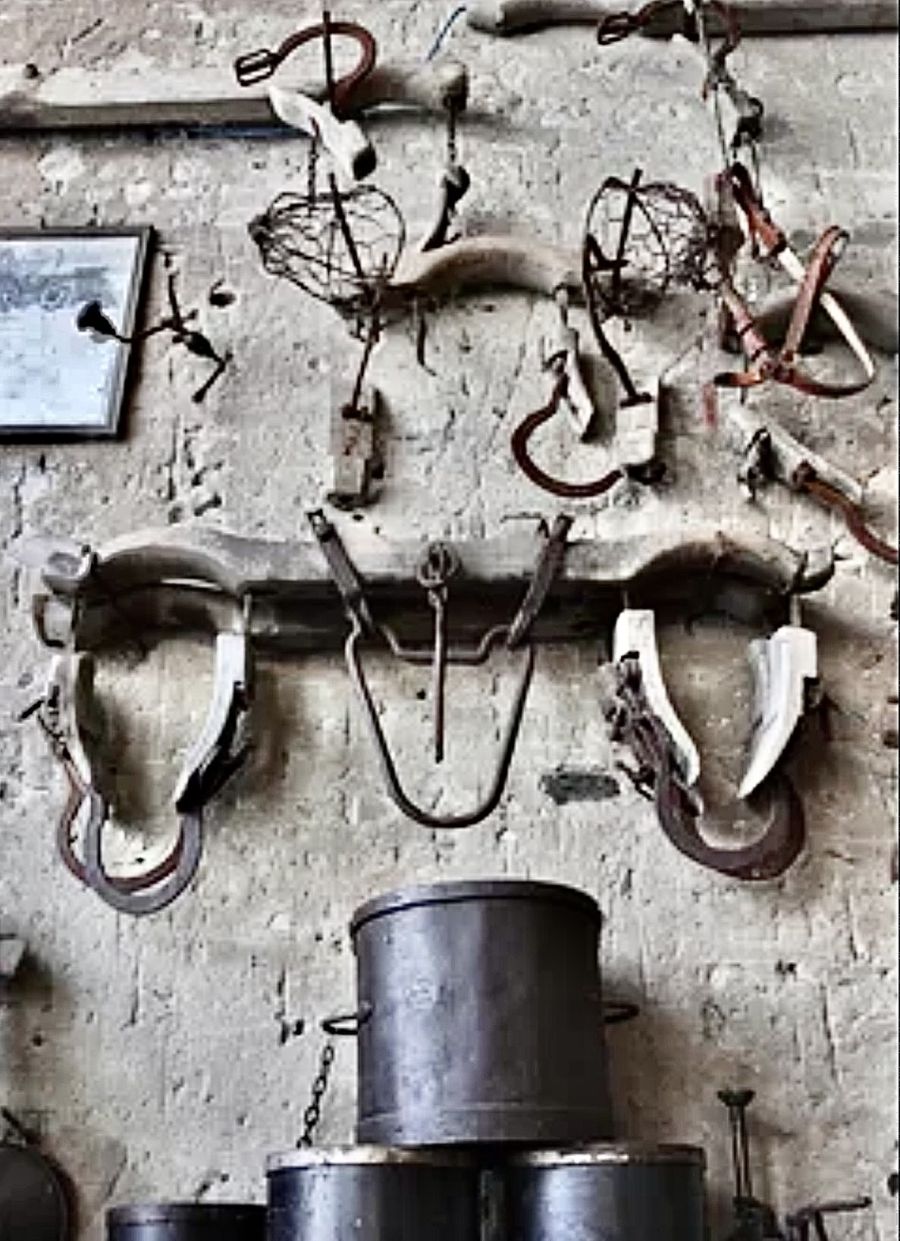
In this text, we find the central theme in Jesus’ ‘gentle yoke and light burden’, which is, in fact, the Law of love that brings rest: ‘ ‘Come to me, all you who are weary and burdened, and I will give you rest.’ What is the ‘yoke’? The yoke is a heavy, solid piece of wood that joins two oxen for ploughing. They join forces, and the stronger one sets the pace. Figuratively speaking, ‘taking up the yoke’ means binding oneself to someone to walk at the same pace, yoked to the same task. In the Old Testament and in Judaism, the expression was commonly used to refer to the Covenant: ‘to take up the yoke of the Torah’, that is, to commit oneself to following God’s Law, knowing that all the strength of the ‘team’ comes from God himself. For a Jew, the service of the Torah is not an unbearable burden; it is the path to true happiness. Ben Sirach said: “You will find your rest in it, and it will become your joy” (Sir 6:28). Jesus takes up this image, linking it to the yoke of the Torah and to rest: “Take my yoke upon you, become my disciples, practise my commandments, and you will find rest for your souls”. And he adds: “Yes, my yoke is easy to bear and my burden is light.” One senses a criticism of certain Pharisees who had turned the Law into a litany of meticulous obligations. Of them, Jesus says: “They tie up heavy burdens, hard to bear, and lay them on people’s shoulders; but they themselves are not willing to move them even with a finger” (Mt 23:4). Meanwhile, the majority of the people struggled to observe all the commandments imposed by the religious authorities and felt the contempt directed at them. Jesus invites his disciples to lay aside these burdens that are too heavy: ‘Take my yoke upon you… my yoke is easy and my burden is light’. His yoke is simply the law of love, and it is He who gives us the strength to bear it. ‘Rest’ was also a familiar word. The Old Testament presented the Promised Land as the place of rest given by God to his people. Conversely, when the people were unfaithful, Psalm 94/95 expressed God’s sorrow: ‘This people’s heart is led astray… they shall not enter my rest’. Taking up that psalm, the Letter to the Hebrews announces a new day when, with Christ, we shall enter God’s rest with confidence: ‘Let us therefore strive to enter that rest’ (Heb 4:11). The absolute novelty is that Jesus identifies himself with God, and he alone can say, ‘I will give you rest. Take my yoke upon you… my yoke is easy…’. The religious leaders were annoyed by this, whilst those who were weary under the weight of their burdens were drawn to the respect and care he showed to each one.
+Giovanni D’Ercole
